

Machine Learning Development & Consulting Services
Empower your business with data-driven intelligence through our Machine Learning Development Services and consulting expertise. We help organizations unlock insights, automate processes, and make smarter decisions with scalable ML solutions tailored to your industry.
- Production ML Engineering & Model Deployment
- Predictive Modeling & Time-Series Forecasting
- MLOps Architecture & Model Lifecycle Management
- ML System Integration & Enterprise Data Pipelines
Our Core Services:

5 star review

5 star review

5 star review
Get In Touch
Our team will get back to you within 8 business hours or less
Your idea is 100% protected by our non disclosure agreement.
Our Expertise Hasn't Gone Unnoticed
Recognized for excellence in AI development, intelligent automation, and enterprise AI solutions with a strong global impact.

4.7/5
Reviewed by Goodfirms with 4.7/5 ratings as per client reviews

4.5/5
Top native app development companies 2023

4.4/5
Reviewed by Clutch with 4.5/5 ratings as per client reviews

5/5
We’re amongst the top app development companies on Upwork

5/5
Listed in the top New York Mobile app development companies

5/5
Interviwed and platinum certified with a 5/5 ratings

4.3/5
Top Flutter App Development Company Dubai 2023.

4.5/5
Top 10 Mobile App Development Companies in Dubai
Recognized as the Most Trusted AI Development Company
Custom Machine Learning Engineering Services
We cover the full ML delivery lifecycle - from data architecture and feature engineering through model training, deployment, and ongoing production operations. Understanding the four primary learning paradigms - supervised, unsupervised, semi-supervised, and reinforcement learning - informs how we architect each engagement.ML Strategy & Architecture Consulting
Before any model is trained, the architecture decisions made upstream - how data is collected, stored, and transformed; how training pipelines are structured; how inference will be served - determine whether the resulting system will perform reliably in production.
Our ML consulting practice starts with your data environment and business problem, not with a pre-selected algorithm. We assess data readiness, define feature engineering requirements, evaluate infrastructure constraints, and produce an ML system architecture designed for the deployment environment it will actually run in - not an idealised lab setting.
Deliverables typically include: data readiness assessment, feature store design, ML infrastructure selection (SageMaker, Vertex AI, Databricks, or open-source Kubeflow/MLflow stack), model evaluation framework, and a phased implementation roadmap.
Our AI Integration Expertise
500+
AI Expects
1000+
Projects Delivered
25+
Industries Served
100+
Global Clients
Machine Learning Development
ML Infrastructure and Technology Stack
We work across the leading ML frameworks, cloud platforms, and MLOps tooling - selecting the right technology for each use case rather than applying a fixed stack regardless of requirements.
Supervised & Unsupervised Learning Frameworks
We build predictive models using Python-native ML frameworks - scikit-learn for classical algorithms, XGBoost and LightGBM for gradient-boosted trees, and custom implementations where standard libraries don't fit the problem. Model selection is driven by the prediction task, interpretability requirements, and the latency constraints of the serving environment. We benchmark multiple approaches before committing to an architecture, and document the evaluation process so that decisions can be revisited as requirements evolve.
Computer Vision: CNNs, Object Detection, and Video Analytics
Our computer vision practice covers the range from image classification to real-time video inference. Architectures include ResNet and EfficientNet for classification, YOLO variants and DETR for object detection, and SegFormer for semantic segmentation. Training runs on GPU infrastructure; inference is optimised for the target environment - edge devices, on-premises servers, or cloud endpoints - using TensorRT or ONNX Runtime where latency requirements demand it. Typical applications include quality control automation in manufacturing, document image extraction, and vehicle or person detection in logistics and security.
NLP and Transformer Models: Text Understanding at Enterprise Scale
NLP in production is different from NLP in research. Beyond fine-tuning transformer models (BERT, RoBERTa, domain-specific variants), the engineering requirements include tokenisation pipelines that handle enterprise document formats, inference latency management for user-facing applications, and evaluation frameworks that measure real task performance rather than benchmark scores. We build NLP systems for document classification, named entity recognition, information extraction, sentiment analysis, and domain-specific text understanding - with particular depth in financial documents and clinical text. Our NLP data preparation and annotation practice ensures training data quality for specialised domains.
Feature Engineering and Data Pipeline Architecture
Feature engineering is where most of the value in an ML system is created, and most of the technical debt is accumulated. We build feature pipelines that are reproducible, version-controlled, and consistent between training and serving - eliminating training-serving skew, one of the most common sources of production model degradation. Pipelines are built using Apache Spark, dbt, or Python-native tooling depending on data volume and latency requirements, with Feast or Tecton for feature store management where a centralised feature registry is warranted
Deep Learning Infrastructure: PyTorch, TensorFlow, and Distributed Training
Deep learning at enterprise scale requires infrastructure beyond a single GPU machine. We configure distributed training across multiple nodes using PyTorch DDP or TensorFlow's distribution strategies, manage training runs on AWS SageMaker, Google Vertex AI, or Azure ML with experiment tracking through MLflow or Weights & Biases, and optimise training pipelines to control compute costs. Model architectures span CNNs, RNNs, LSTM networks, and transformer-based models, with selection driven by the data modality and task requirements rather than architectural fashion.
MLOps Tooling: MLflow, Kubeflow, and Model Registry
We implement MLOps stacks using the tooling appropriate to the organisation's infrastructure maturity: MLflow for experiment tracking and model registry in environments without existing ML platform investment; Kubeflow Pipelines for orchestrated training workflows on Kubernetes; and Weights & Biases for teams that prioritise experiment visibility and collaborative model development. Model serving is handled through FastAPI or Flask endpoints for lower-traffic deployments, and BentoML, Seldon, or Triton Inference Server for high-throughput or multi-model serving environments. All deployments include prediction logging for monitoring and audit purposes.
Cloud ML Platforms: SageMaker, Vertex AI, and Azure ML
Cloud ML platforms - AWS SageMaker, Google Cloud Vertex AI, and Azure Machine Learning - each offer meaningfully different capabilities for training, deployment, and monitoring. The right choice depends on the organisation's existing cloud commitment, data residency requirements, and the specific ML workload. We have delivery experience across all three platforms and help organisations avoid the common mistake of defaulting to a cloud ML platform because it matches their cloud provider without evaluating whether its ML tooling is the right fit for the workload. Where cost control is a priority, we configure spot/preemptible instance usage for training with appropriate checkpointing.
Data Engineering for ML: Spark, Databricks, and Vector Databases
ML systems are constrained by the quality and accessibility of the data that feeds them. We build the data engineering infrastructure that ML requires: batch and streaming pipelines for feature computation, data validation frameworks to catch upstream data quality issues before they reach model training, and vector database integration (Pinecone, Weaviate, pgvector) for similarity search and retrieval-augmented use cases. For organisations using Databricks, we implement ML workflows within the Databricks Lakehouse architecture using MLflow for experiment tracking and Unity Catalog for data governance. For more about how AI and machine learning relate at the infrastructure layer, see our explainer on AI vs ML system architecture.
AI Models We Build and Implement
At Rytsense Technologies, we specialize in developing high-performance AI models that drive real business transformation. By harnessing the latest advancements in artificial intelligence, our solutions empower enterprises to enhance decision-making, increase productivity, and scale seamlessly for future growth.





Use Cases of Machine Learning Solutions
Discover how our cutting-edge machine learning solutions solve complex business challenges and drive measurable impact across various industry functions.
Financial Services
Real-time fraud detection and credit risk scoring for US banking and FinTech. Identify suspicious transactions instantly, reduce financial risk, and improve compliance with AI-driven analytics.
Accounts Payable Services
Automate invoice matching and reduce manual data entry by up to 90%. Streamline invoice processing, minimize errors, and accelerate payment cycles with intelligent document automation.
MRO Procurement Services
Optimize Maintenance, Repair, and Operations spend with predictive sourcing. Forecast demand, prevent stockouts, and reduce procurement costs using data-driven insights.
Category Management Services
Intelligent spend analysis and automated vendor classification for retail. Gain visibility into spending patterns and improve supplier decisions with machine learning-based categorization.
Contract Management Services
Extract key clauses and identify legal risks using advanced NLP-powered machine learning models. Automate contract review, ensure compliance, and reduce legal risks with faster document intelligence.
Why Enterprise Teams Choose Rytsense for ML Engineering
We serve as a trusted technology partner in navigating the complexities of data preparation, model development, deployment, and operationalization. With over 9 years of industry experience, Rytsense helps organizations transform machine learning initiatives into production-ready systems that deliver measurable business outcomes. Our expertise spans the entire ML lifecycle, ensuring models remain accurate, scalable, and aligned with evolving business requirements.
Production-First Engineering
We design for the deployment environment from the beginning of an engagement, not after the model is trained. Inference latency and throughput requirements are defined before architecture decisions are made, data pipelines are built to operate consistently across training and serving environments, and model versioning and rollback capabilities are incorporated into the initial system design.
Full ML Lifecycle Ownership
Many machine learning initiatives fail not because the model lacks accuracy, but because the engagement ends at model delivery. We take ownership of the complete ML lifecycle, including data assessment and preparation, feature engineering, model training and evaluation, deployment, monitoring, and retraining. Rather than handing off experimental notebooks, we deliver fully operational machine learning systems designed for long-term business value.
Domain-Specific ML Engineering
Machine learning solutions that perform well in one industry do not automatically translate to another. Our team brings domain expertise across financial services, healthcare, logistics, retail, and manufacturing, enabling us to build models that reflect real-world operating conditions, reduce development cycles, and accelerate time to value.
MLOps & Operational Reliability
We treat model monitoring and operational reliability as essential components of every deployment. Our MLOps frameworks monitor prediction drift, feature drift, and business performance metrics to identify degradation before it impacts operational outcomes. Automated retraining workflows ensure models remain accurate and reliable over time.
Our Machine Learning Success Stories
Discover how our machine learning development services help enterprises automate operations, improve accuracy, and accelerate AI adoption.
01
Staff AugmentationDedicated Development TeamsDigital Transformation
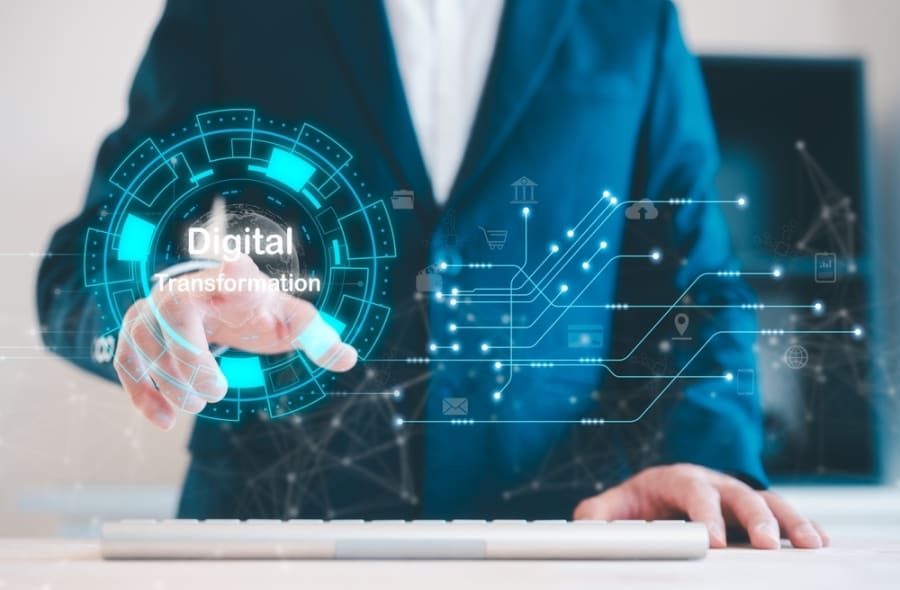
Digital Transformation Through Staff Augmentation
We accelerated their digital transformation by providing a dedicated engineering team through flexible staff augmentation, boosting delivery speed, and cutting hiring delays. The result: faster development, modernized systems, zero full-time overhead.
25%
Reduced Operational Costs
50%
Manual Analytics Automated
20+ Hrs
Time Saved for Strategic Work
02
AI PersonalizationReal Estate AutomationConversational AI
AI-Powered Personalization in Real Estate
We powered a leading real estate platform with an AI-driven personalization engine that delivers smart property recommendations and automated buyer–seller conversations. Higher engagement, faster responses, improved conversions.
50%
Increase in Listing Engagement
20%
Boost in Property Conversions
30%
Manual Processes Automated

03
AI for SustainabilityClimate Tech AutomationData-Driven Decarbonization
AI-Powered Decarbonization Prototype
We built an AI-powered decarbonization research platform that automates carbon data extraction, analysis, and strategic recommendations — dramatically reducing manual research time.
4 months
Time to Prototype Deployment
1,500+
CO₂ Data Sources Integrated
90%
Manual Research Time Reduced

04
Computer VisionAI Model TrainingImage Moderation Automation
AI-Based Custom CV Model for Vehicle Recognition
We enabled a leading U.S. automotive marketplace to automate vehicle verification using a custom AI computer vision model — reducing manual moderation and improving accuracy.
90%
Classification Accuracy
120,000+
Images Processed Monthly
Reduced
Moderation Workload

05
Healthcare AIRevenue Cycle ManagementDenial Management Automation
AI-Powered Denial Management for Healthcare RCM
We helped a U.S. healthcare provider automate denial prevention and claims analysis using AI-powered RCM workflows — reducing claim denials, accelerating reimbursements, and improving operational efficiency.
42%
Claim Denials Reduced
55%
Faster Reimbursements
96%
Clean Claim Rate
Hear What Our Clients Are Raving About
Here, we make almost every genre of applications. You name it and we build it.
"Thoughtfully integrating consumer feedback to improve the UX/UI, Rytsense Technologies has developed a series of consistently improved mobile app iterations. Their competitive pricing structure pairs value with cost savings. The project manager was exceptionally skilled and communicative."

Sujai Soy
Dubai, UAE"Rytsense Technologies was diligent and responsive in solving any issues that came up throughout the development process and still provides excellent support when they are needed. The client feels that Rytsense has really gone above and beyond with their service."

Omar Boyd
Canada"The founder of Rytsense Technologies and the rest of his project team have placed customer service through responsiveness and proper communication above all else, leading to a strong initial product and the opportunity to continue the partnership through multiple iterations and enhancements."

Brendan Buchholz
Brisbane, Australia"Users have reviewed the app positively. Rytsense Technologies was responsive and provided excellent support. Their follow-up is particularly noteworthy."

Owner
United Arab Emirates"Thoughtfully integrating consumer feedback to improve the UX/UI, Rytsense Technologies has developed a series of consistently improved mobile app iterations. Their competitive pricing structure pairs value with cost savings. The project manager was exceptionally skilled and communicative."
Sujai Soy
Dubai, UAE"Rytsense Technologies was diligent and responsive in solving any issues that came up throughout the development process and still provides excellent support when they are needed. The client feels that Rytsense has really gone above and beyond with their service."
Omar Boyd
Canada"The founder of Rytsense Technologies and the rest of his project team have placed customer service through responsiveness and proper communication above all else, leading to a strong initial product and the opportunity to continue the partnership through multiple iterations and enhancements."
Brendan Buchholz
Brisbane, Australia"Users have reviewed the app positively. Rytsense Technologies was responsive and provided excellent support. Their follow-up is particularly noteworthy."
Owner
United Arab Emirates"Thoughtfully integrating consumer feedback to improve the UX/UI, Rytsense Technologies has developed a series of consistently improved mobile app iterations. Their competitive pricing structure pairs value with cost savings. The project manager was exceptionally skilled and communicative."
Sujai Soy
Dubai, UAE"Rytsense Technologies was diligent and responsive in solving any issues that came up throughout the development process and still provides excellent support when they are needed. The client feels that Rytsense has really gone above and beyond with their service."
Omar Boyd
Canada"The founder of Rytsense Technologies and the rest of his project team have placed customer service through responsiveness and proper communication above all else, leading to a strong initial product and the opportunity to continue the partnership through multiple iterations and enhancements."
Brendan Buchholz
Brisbane, Australia"Users have reviewed the app positively. Rytsense Technologies was responsive and provided excellent support. Their follow-up is particularly noteworthy."
Owner
United Arab Emirates❮
❯
Step Into the Future with AI Innovation
Unlock the transformative power of artificial intelligence to reimagine your business operations. Our expertise helps you leverage AI to boost efficiency, enhance agility, and accelerate sustainable growth.

✦ INDUSTRIES
A clear vision that addresses the
specific requirements of every industry.
AI in Healthcare
We create secure, scalable AI healthcare platforms that automate workflows, enhance patient engagement, and support outcome-based care models for US providers.

Why Partnering with Rytsense Technologies Is a Smart Choice
- Recognized by leading platforms like Deloitte, Clutch, GoodFirms, and The Economic Times
- Proven expertise in AI, ML, RPA, NLP, Big Data, and Data Science
- Strict compliance with FDA, HIPAA, GDPR, and other industry regulations
- Strong partnerships with Microsoft Azure, Google Cloud, and AWS

Tech Stack We Use for Machine Learning Development Services
As one of the leading machine learning services providers, we leverage a robust and versatile tech stack to build scalable, intelligent, and future-ready solutions. Our toolkit combines advanced frameworks, libraries, and programming languages to meet diverse business needs and adapt to evolving market demands.
7Ds of Our ML Development Services – A Step-by-Step Process
As a trusted machine learning development partner, we adopt a structured, strategy-led approach to build advanced, custom ML solutions. Our systematic process is designed to drive innovation, optimize efficiency, and deliver measurable business impact at every stage of the development lifecycle.
01 — 07
01 - 07
Discuss
Our US-aligned project managers and machine learning experts work closely with your team to gain a deep understanding of your unique requirements. We emphasize transparent communication to align with your US business vision and objectives—laying the foundation for secure, reliable model training.
02 - 07
Define
Our ML consultants establish clear project guidelines and select the most suitable tech stack tailored to your needs. This stage focuses on data-driven planning and building a strong, secure ML strategy compliant with US regulatory guidelines.
03 - 07
Design
Once the right tools are selected, we carefully create detailed prototypes and wireframes for your ML solution. We prioritize intuitive UI/UX design, ensuring the final product delivers a premium, seamless user experience that resonates with US consumers.
04 - 07
Data Integration
This crucial stage ensures the accuracy and reliability of your ML solution. Here, we gather, integrate, and preprocess data in secure US cloud environments to prepare it for high-performance model training and integration.
05 - 07
Develop
Our expert ML developers transform designs into fully functional solutions. By integrating advanced features and leveraging state-of-the-art ML algorithms, we build models tailored to your US business goals under rigorous coding practices.
06 - 07
Debug
To guarantee a flawless, high-performing ML solution, we carry out extensive manual and automated testing. Our QA team meticulously debugs and resolves issues to ensure absolute security and reliability.
07 - 07
Deploy
After thorough testing and quality assurance, our ML experts proceed with seamless deployment, integrating the solution into your live US cloud environment. Post-launch, we provide continuous support and updates.
Featured Services to Unlock
ML Excellence
Our Engagement Models
Dedicated Development Team
We offer a full-scale dedicated team model, where our skilled developers work exclusively on your project. Leveraging the latest technologies, we build tailored solutions that align perfectly with your business needs and long-term goals.
Team Extension
Augment your in-house capabilities with our expert talent. This model allows you to seamlessly add specialized professionals to your existing team—providing the precise skills and expertise required to accelerate your project.
Project-based Model
Ideal for clearly defined goals and timelines, this model focuses on delivering end-to-end solutions for specific projects. Our development team collaborates closely with you to ensure timely delivery, quality outcomes, and complete project success.
Searching for Insightful Business Content?
Stay informed with our latest blogs and videos, packed with valuable market updates.


Frequently Asked Questions
What is the difference between building a machine learning model and building a machine learning system?
: A machine learning model is a mathematical function trained on data to make predictions. A machine learning system is everything built around that model to make it useful in production: the data pipeline that feeds it consistent, validated inputs; the serving infrastructure that exposes its predictions to consuming applications; the monitoring layer that detects when its performance degrades; and the retraining pipeline that keeps it current as data distributions shift. Most ML projects produce a model. Successful ML projects deliver a system. The gap between the two is where most ML investment fails to generate return.
How long does a typical ML engineering engagement take?
Scope drives timeline more than any other variable. A focused predictive model — fraud scoring, demand forecasting, document classification - with well-prepared data can reach production in 8–14 weeks. A system that requires significant data pipeline work before training can begin adds 4–8 weeks to that baseline. A multi-model ML platform with custom MLOps infrastructure, monitoring, and retraining pipelines is a 4–6 month engagement. The most common timeline overrun is underestimating the time required to prepare training data to the standard the model actually needs - we assess data readiness explicitly before committing to a timeline.
What data does an ML project require, and what if our data quality is poor?
Data requirements vary by problem type, but the consistent requirements are volume (enough examples of the outcomes the model must predict), quality (labels that accurately reflect the intended outcome, without systematic bias), and accessibility (data that can be reliably retrieved in the serving environment as well as the training environment). Poor data quality is common and not automatically disqualifying - the question is whether the cleaning and augmentation work required is feasible within the engagement scope. We conduct a data assessment before project scoping, and we won't recommend an ML approach for a problem where the available data cannot support reliable model performance
What is model drift and how do you detect it?
Model drift refers to the degradation of a deployed model's prediction quality over time, caused by changes in the statistical distribution of incoming data relative to the distribution the model was trained on. This is not a failure mode - it is the expected long-term behaviour of any model deployed in a changing environment. Detection involves monitoring the distribution of input features (data drift) and the distribution of model outputs (prediction drift) against baseline distributions established at training time. Where ground truth becomes available with a lag - as in fraud detection or loan default - model accuracy can be monitored directly. We implement automated drift monitoring with alerting thresholds calibrated to the business cost of acting on false alarms versus missing real degradation.
What is MLOps and what does it include?
MLOps (machine learning operations) is the set of practices and infrastructure required to deploy, monitor, and maintain ML models reliably in production over time. It draws from DevOps practices (version control, CI/CD, automated testing) and applies them to the ML-specific concerns of model versioning, training pipeline automation, inference serving, and performance monitoring. A functioning MLOps implementation covers: experiment tracking and model registry, automated training pipelines with data validation, model deployment with canary or shadow deployment capability, production monitoring for both technical metrics (latency, error rate) and model quality metrics (drift, accuracy where available), and structured retraining workflows. Without MLOps infrastructure, ML deployments require increasing manual effort to maintain as the number of deployed models grows.
How do you handle model interpretability and explainability requirements?
Interpretability requirements vary significantly by use case and regulatory context. For applications where adverse decisions must be explainable - credit scoring, insurance pricing, hiring - we build with model-agnostic explanation frameworks (SHAP, LIME) that can attribute prediction outcomes to specific input features, enabling machine-readable adverse action reasons. For internal decision support tools where speed matters more than individual prediction explanation, we focus on aggregate performance metrics and output distribution monitoring. For healthcare ML, we typically build clinical decision support systems with explicit uncertainty quantification so clinicians know when to treat model output with more or less confidence. We discuss interpretability requirements during project scoping, not after model selection.
Can ML systems integrate with our existing ERP, CRM, or operational software?
Yes, and we treat enterprise system integration as a primary engineering requirement, not an afterthought. ML prediction endpoints are exposed as REST or gRPC APIs with appropriate authentication, rate limiting, and error handling. For ERP and CRM integration, we build connectors that respect the data models and operational constraints of the target system. The most common integration challenges are data consistency - ensuring that the features used at inference time match the features used at training time - and latency - ensuring that prediction latency is acceptable within the workflow of the consuming application. We design for both from the beginning of the engagement.
What is the difference between supervised, unsupervised, and reinforcement learning, and which applies to my use case?
Supervised learning requires labelled training data - examples of inputs paired with known correct outputs - and is the right approach for prediction and classification tasks where historical outcomes exist: fraud detection, demand forecasting, medical diagnosis, customer churn. Unsupervised learning works without labels, finding structure in data without predefined categories - useful for anomaly detection, customer segmentation, and exploratory data analysis. Reinforcement learning trains agents to take actions in environments to maximise a reward signal - relevant for dynamic pricing, recommendation system optimisation, and robotic control, but requiring significantly more infrastructure. The detailed breakdown of ML learning paradigms covers the decision framework in more depth.
Hear from our clients and why 3000+ businesses trust Rytsense Technologies