Key Takeaways
- AI agents go beyond chatbots by understanding context, remembering interactions, and taking actions across tools.
- Personal AI agents work best when designed around user roles and workflows, not just models or prompts.
- Agentic AI personal assistants require orchestration, memory, and integrations to deliver real value.
- Clawdbot simplifies building production-ready personalized AI agents without heavy engineering overhead.
- AI chatbot integration with messaging apps drives adoption by fitting agents into everyday workflows.
- The future of AI is personalized and agent-driven, not one-size-fits-all assistants.
Building AI Agents with Clawdbot: A Practical Guide
Building effective AI agents today means going beyond simple chatbots. With the right design, AI agents can act as personal assistants, understand context, take actions across tools, and adapt to individual users over time. Clawdbot enables this by providing a practical way to design, orchestrate, and deploy personalized AI agents that work across business and personal use cases.
This guide explains how AI agents actually work, how to make a personal AI agent using Clawdbot, and how startups and businesses can deploy agentic AI systems that are reliable, scalable, and useful in the real world.
1. What AI Agents Really Are (and What They Are Not)
An AI agent is a system designed to understand goals, plan actions, and execute tasks often across multiple tools and environments. Unlike standard chat interfaces, AI agents can operate continuously and respond based on context rather than isolated prompts.
A personal AI agent is user-centric by design. It adapts to preferences, remembers prior interactions, and supports ongoing workflows. This is why AI agents are increasingly described as agentic AI personal assistants, not just conversational bots.
2. What Is Clawdbot(Moltbot)?
Clawdbot is a platform designed specifically for building, managing, and deploying AI agents that go beyond basic conversational use cases. Instead of acting as a simple chatbot layer, it provides the underlying structure needed to create personal AI agents that can reason, remember context, and take action across tools and systems.
At its core, Clawdbot helps teams:
- Design agent behaviors aligned with real user goals
- Orchestrate multi-step workflows
- Connect AI agents to internal and external tools
- Deploy agents across web and messaging environments
This makes Clawdbot suitable for startups experimenting with their first AI agent personal assistant, as well as businesses building production-ready personalized AI agents for operations, sales, or customer engagement.
3. Why Clawdbot Is Built for Agentic AI
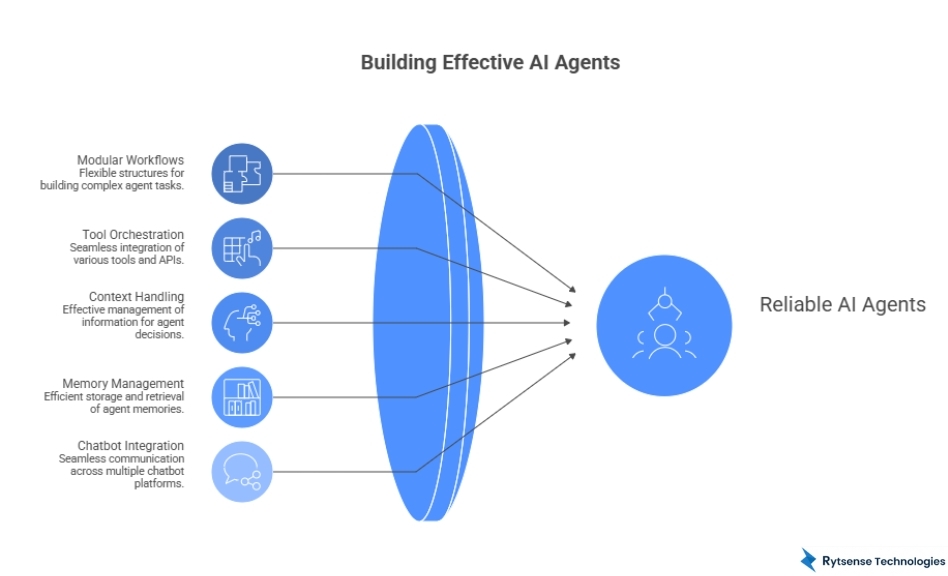
Clawdbot focuses on enabling practical AI agent development rather than experimental demos. It supports:
- Modular agent workflows
- Tool and API orchestration
- Context and memory handling
- AI chatbot integration across channels
This makes it suitable for building AI personal assistants that need to operate reliably in real business environments.
4. Personal AI Agents vs Traditional AI Assistants
Traditional AI assistants typically respond to direct commands and reset after each interaction. In contrast, personalized AI agents:
- Maintain contextual memory
- Adjust behavior based on user patterns
- Perform multi-step actions
- Integrate with external systems
For startups and businesses, this difference directly impacts productivity, user adoption, and long-term value.
Build Your AI Agent with Clawdbot
Create personalized AI agents that understand context, take action, and integrate with your existing tools.
👉 Explore AI Agent Solutions5. Inside the Architecture of a Personal AI Agent
A production-ready AI agent relies on several interconnected layers:

Intelligence Layer
Handles reasoning, language understanding, and decision-making using advanced AI models.
Memory Layer
Stores short-term context and long-term user preferences, enabling consistent personalization.
Action Layer
Connects the agent to tools such as CRMs, databases, calendars, and messaging platforms.
Control Layer
Manages permissions, logging, and safeguards to ensure predictable behavior.
Clawdbot simplifies how these layers interact, reducing complexity without limiting flexibility.
6. How to Make a Personal AI Agent with Clawdbot
Creating a useful personal AI agent starts with clarity rather than technology.
Step 1: Define the Agent’s Role
Decide whether the agent is a research assistant, operational helper, sales support tool, or productivity companion.
Step 2: Build Personalization Intentionally
Effective personalized AI agents adapt based on user role and goals, interaction history, and preferred communication style.
Step 3: Connect Tools and Data
This is where AI chatbot integration becomes critical. Agents gain real value when they can act inside messaging apps, dashboards, and internal systems.
Step 4: Test in Real Scenarios
Observe how users interact with the agent and refine behavior based on actual usage patterns.
Example: Building a Personal AI Agent for a Startup Founder
Scenario: A startup founder wants a personal AI agent that helps with research, daily planning, and internal coordination without switching between tools.
Implementation:
- Role Definition: The agent acts as a productivity and research assistant focusing on market summaries, task priorities, and internal documentation.
- Personalization: Clawdbot enables the agent to learn the founder's communication style (e.g., brief morning summaries) and strategic focus area.
- Integration: Connected to Slack for reminders, Notion for knowledge, and CRM for follow-ups.
Outcome: An agentic AI personal assistant that supports daily work and adapts over time.
Build Your First Personal AI Agent
Talk to our team about your use case and see how Clawdbot can support your AI agent strategy.
👉 Request a Demo7. Designing Personalized AI Agents That Users Trust
Trust is earned through consistency and transparency. A reliable AI agent personal assistant should explain actions when needed, avoid unnecessary automation, respect user data boundaries, and allow human override.
These principles are essential for long-term adoption, especially in business environments.
8. AI Chatbot Integration with Messaging Apps
AI agents are most effective when embedded where users already work. Common integrations include Slack, Microsoft Teams, and web-based support platforms. Seamless AI chatbot integration ensures the agent becomes part of the workflow rather than a separate tool.
9. Open Source AI Assistants: Where They Fit
An open source AI assistant offers transparency and flexibility. Many organizations combine open source AI code assistant components with managed orchestration platforms like Clawdbot to balance customization with operational reliability.
10. Real Business and Startup Use Cases
- Founders: For research, planning, and decision support.
- Sales: For lead follow-ups and pipeline insights.
- Operations: For report automation and internal coordination.
- Support: For personalized agents that retain customer context.
11. Challenges in Building AI Agents (and How to Solve Them)
Common issues include over-automation, poor memory design, inconsistent tool responses, and lack of monitoring. Solving these requires disciplined design, realistic expectations, and continuous iteration.
Discuss Your AI Agent Use Case
Not sure where to start? Get expert guidance on designing agentic AI systems tailored to your business goals.
👉 Talk to an AI Expert12. The Future of Personal AI Agents
Personal AI agents are evolving toward:
- Deeper personalization
- Multi-agent collaboration
- Real-time decision support
- Stronger alignment with human workflows
As adoption grows, AI agents will function as long-term digital collaborators rather than short-term tools.
13. Final Thoughts and Next Steps
If you are exploring how to make a personal AI agent, planning to deploy an AI personal assistant, or evaluating platforms for agentic AI development, the focus should be on usefulness, trust, and integration.
Clawdbot provides a practical foundation for building AI agents that move beyond experimentation and into everyday use. The next step is designing agents that truly work for the people who rely on them.
Meet the Author

Co-Founder, Rytsense Technologies
Karthik is the Co-Founder of Rytsense Technologies, where he leads cutting-edge projects at the intersection of Data Science and Generative AI. With nearly a decade of hands-on experience in data-driven innovation, he has helped businesses unlock value from complex data through advanced analytics, machine learning, and AI-powered solutions. Currently, his focus is on building next-generation Generative AI applications that are reshaping the way enterprises operate and scale. When not architecting AI systems, Karthik explores the evolving future of technology, where creativity meets intelligence.