Key Takeaways
GPT-5 stands out due to its comprehensive intelligence; other models, such as AlphaFold 3, stand out more specifically for scientific applications. Models built on open-source technology such as Llama 4 and BLOOM are cheaper options for businesses that want greater flexibility and data privacy. Multimodal AI solutions such as Gemini Ultra (and others) provide enterprises the ability to comprehensively process documents, as they can analyze text, image, video, and audio. AI accuracy and reliability are also very important parameters that companies should look for in long-term consistency.If a business has AI professional development and data science services from companies like Rytsense Technologies and others, they can more easily navigate the complexities of which model to use.
What Is the Best AI Model in 2026? Top 14 AI Models Businesses Should Watch
What is the best AI model
for businesses looking to gain a competitive edge in the fast changing digital landscape today? Given that staff using AI report a remarkable 80% increase in productivity and that 88% of workers believe
generative AI
models
help them save time and advance group collaboration, it is now critical Choosing the right AI model in order to achieve business success. The adoption of AI technology in U.S. firms more than doubled over the last two years,
rising from 3.7%
in the fall of 2023 to a significant 9.7% as of August 2026, highlighting a need for businesses to understand "
what is the best AI model
to use?"
This detailed guide examines the 14 leading AI models changing the world of enterprises and
What Is the Best AI Model
, from GPT-5 to Claude 4 and Llama 4. The guide contains comparisons, performance data, explanations, and practical advice to assist enterprises in making an informed choice about what AI capabilities will serve their needs and their strategic goals.
Now let's take a closer look at GPT-5, Claude 4, and Llama 4 models. Here's a summary of each model's functionality followed by an
AI model comparison
(summary of the 14 AI models).
Top 14 AI Models Every Business Should Know in 2026
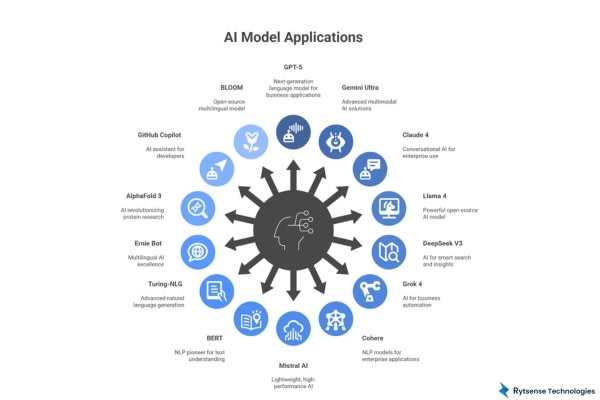
Artificial intelligence in 2026 shows a unique opportunity for businesses to reshape operations, improve customer experiences, and position the workforce to drive innovation. OpenAI’s flagship GPT-4o leads the list in popularity for 2026, manifesting in close to 45% of cloud environments. It indicates some significant consolidation of Top AI models 2026 to proven
enterprise AI solutions
. However, "
what is the best AI model
for my business" typically depends on businesses’ operational, technical, and strategic needs.
AI ModelDeveloperPrimary FocusBest ForKey StrengthGPT-5OpenAINatural Language ProcessingLarge enterprisesAdvanced reasoning and conversationGemini UltraGoogleMultimodal AIHealthcare, Finance, LegalText, image, video, audio processingClaude 4AnthropicEnterprise Conversational AIRegulated industriesSafety and ethical AILlama 4MetaOpen-Source AILarge enterprises with tech teamsComplete customization controlDeepSeek V3DeepSeekSmart Search & InsightsData-driven businessesEfficient parameter usage (37B/671B)Grok 4xAIBusiness AutomationManufacturing, Supply chainWorkflow optimizationCohereCohereEnterprise NLPContent managementEasy API integrationMistral AIMistral AILightweight PerformanceStartups, SMBsFast response timesBERTGoogleText UnderstandingSearch applicationsBidirectional context processingTuring-NLGMicrosoftNatural Language GenerationMarketing, Content creationHigh-quality text generationErnie BotBaiduMultilingual AIInternational businessesCross-language consistencyAlphaFold 3DeepMindProtein ResearchPharmaceutical, BiotechProtein structure predictionGitHub CopilotMicrosoft/GitHubDeveloper AssistantSoftware development teamsCode suggestions and automationBLOOMBigScienceOpen-Source MultilingualResearch, EducationCommunity-driven development
GPT-5 – Next-Generation Language Model for Businesses
Overview
GPT-5 is an advanced natural language processor AI system. The generative AI model provides a unique understanding of language and reasoning. It is an application of AI designed specifically for businesses that require sophisticated AI. It offers a unique quality of content generation for business-critical functions.
Business Applications
- Customer service optimization and automation
- Strategic planning and analytic support
- Complex business scenarios management
- AI-based AI-powered conversational tools for enterprises
- Nuanced communication and stakeholder engagement
- Creative problem solving for business challenges
Key Features
- Advanced natural language understanding
- Sophisticated reasoning capabilities
- Enhanced retention of context
- Improved factual accuracy
- Superb multi-turn conversations
- Understanding context and intent
- Superior content generation algorithms
- High contextual analysis and insight
- Support for decision making
- Seamless integration with enterprise systems
- Scalable performance for a large organization
Use Cases
- Business strategic planning and consultation
- Customer support and service automation
- Marketing and communications content creation
- Technical documentation and knowledge base management
- Executive briefings and reports
- Cross-functional team collaboration and communication
Gemini Ultra – Advanced Multimodal AI Solutions
Overview
Google's Gemini Ultra is an advanced and sophisticated AI. One of the best in
multimodal AI solutions
that focuses on text, image, video, and audio processing in one, unified, coherent system. The outstanding solution for businesses requiring comprehensive
AI-powered tools
for companies as it processes multiple data formats.
It is ideal for enterprise environments looking to process multiple data types simultaneously, evaluating and acting on knowledge across data types. It is a highly sophisticated internet-trained AI system for organizations that need to understand cross-modality with domain-specific knowledge.
Business Applications
- Document reviews that combine images and text
- Creative and management of multimedia content
- Cross-modal processing and analysis
- Improved customer engagement and interaction
- Regulatory and compliance document reviews
- 360º business intelligence across modality types
Key Features
- Unified multimodal processing
- Structured text, image, video, and audio data are unified into a coherent process
- Ability to understand complex visuals
- Ability to correlate and analyze across modalities
- Ability to manage productive workflows for multimedia as a single coherent process
- Ability to enhance document comprehension
Technical Capabilities
- Ability to perform advanced pattern recognition across modalities
- Scalable infrastructure for multimodal processing
Use Cases
- Healthcare document analysis with medical imaging
- Financial reports viewing for charts and graphs
- Legal document review with visual evidence
- Multimedia style content created for marketing in Unity Engine
- Monitoring compliance across document formats
- Interactive reporting and visualization tools
Claude 4 – Conversational AI for Enterprises
Overview
It is an enterprise-focused AI created with the highest standards on trust and accuracy. This is a good option for businesses wanting trustworthy and ethical AI for good performance and safety. It is advanced AI for enterprise conversations, where
AI accuracy and reliability
are foundational business requirements as it has a strong focus on safety and alignment.
Business Applications
- Complicated analytical tasks, and intelligence for business
- Code generation, and support for software development
- Technical documentation and concepts
- Regulated industry operations and compliance
- Enterprise conversational implementations for AI
- Consultation, and decision making for strategic pursuits
Key Features
- Extremely safe and ethical AI implementation
- Outstanding analytics functionality for business insights
- Outstanding code generation and review features
- Detailing documentation and technical notation
- Exceptional advanced AI for enterprises conversational engagements
- Established trust and accuracy in responsibility
Technical Capabilities
- Advanced data protection
- Sophisticated processing engines for analytical tasks
- Enterprise performance and reliability standards
Use Cases
- Compliance and risk analysis for financial firms
- Regulatory documentation and analysis for healthcare
- Legal research support, and technical documentation and notation
- Software development, and coding support
- Corporate strategy consultation and planning
- Development and technical understanding through knowledge transfer
Also Read: Can Cursor AI Be Used for AI Model Development
Llama 4 – Powerful Open-Source Model
Overview
Meta's leading open-source AI model provides unmatched flexibility and customization. It is favored by enterprises, especially larger enterprises for its on-premises deployment solutions. Certain
high-performance AI models
allow complete enterprise control of the AI infrastructure.
It facilitates higher levels of
AI adoption in businesses
, especially larger enterprises. The open-source design allows users to modify and optimize it according to certain business requirements.
Business Applications
- Custom development and deployment of AI infrastructure
- Data privacy protection for sensitive business activities
- Cost-effective scalability for businesses experiencing growth
- Use case development and specialization
- On-premises AI solutions for highly regulated industries
- Collaborative community AI projects to augment AI capabilities
Key Features
- Complete control customization over model performance.
- Cost effective scalability according to an enterprise's growth.
- Data protection privacy enhanced capabilities.
- Community updates and improvements.
- Transparency and documentation in the development process.
- Compatibility across all infrastructure types.
Technical Capabilities
- Full customer control of their AI infrastructure.
- Custom training and fine-tuning-potential.
- A self-contained on-premises deployment and data governance.
- Scalable systems for optimizing performance.
- Open-source modification to tools.
- Community-driven initiatives for development and maintenance.
Use Cases
- Financial entities requiring strict data governance.
- Healthcare entities requiring privacy compliance.
- Government agencies in need of on-premises AI solutions.
- Research entities developing specialized AI use cases.
- Technology companies developing and building
DeepSeek V3 – AI for Smart Search & Insights
Overview
Deep Seek is a modern open-source AI model for 2026 with a total of 671B parameters from which only 37B are activated based on token usage.
AI for smart search
is intended for efficient computational use for smart search and insights. This model itself is intended to find, analyze, and glean insights from information in big datasets. It helps to obtain the benefits of large model AI without an extreme computational burden on a company.
Business Applications
- Support for strategic business decision-making using large-scale data analysis
- Research support across multiple domains
- Market intelligence and competitor insights
- Analysis of consumer buying and preferences for market trends
- Intelligent retrieval of information within a corporation's data
Key Features
- 671B total parameters but selective activation of only 37B
- Low computational power needed
- Low barriers to entry to configure and customize
- The model can be used by businesses of all sizes
- Ability to analyze data and respond in real time
Technical Capabilities
- Ability to search to retrieve precise information
- Ability to process data streams coming in instantaneously
- Ability to recognize trends and patterns within large datasets
- Ability to create actionable business insights automatically
- Ability to retrieve useful information from unstructured data
Use Cases
- Data-informed decision making for business strategy
- Understanding competitive landscape to guide market positioning
- Ability to conduct research in both academic and commercial domains
- Understanding consumer buying or preferences
- Ability to analyze and interpret large amounts of text data
- Ability to predict future trends from historical patterns in data
Also Read: Exploring the Advantages of Using Prompts in AI Model Development
Grok 4 – AI for Business Automation
Overview
The AI model is
designed for business automation AI
applications. This model focuses on optimizing workflows and automating complex business processes. It emphasizes intelligent task management in enterprise settings. This means it can perform more than just executing tasks and can provide meaningful decision-making capabilities. Grok is created to eliminate manual labor and to optimize all of the normal business functions.
Business Applications
- Enterprise process optimization and workflow streamlining.
- Improvement of operational efficiency and productivity.
- Strategic resources management and allocation system.
- Decision support and recommendations based on data.
- Cost savings through automated processes.
Key Features
- Capabilities for high-level decision-making in addition to automation.
- Handling ad-hoc workflows and dynamic creation of processes.
- Intelligent management and optimization of resources.
- Integration with nom-existing business processes.
- Real-time optimization for continuous improvement.
Technical Capabilities
- Optimization of workflows.
- Process automation.
- Decision support systems.
- Allocate resources.
- Prioritize tasks.
Use Cases
- Supply chain management and logistics optimization.
- Human resources automation and employee business processes.
- Financial business operations and automated reporting.
- Customer service and intelligent customer service systems.
- Project management and assignment automation of tasks.
Cohere – NLP Models for Enterprise Applications
Overview
AI tools focused on natural language processing for enterprise use cases. The integrations are fast and easy to implement into existing applications with negligible technical debt. It demonstrates high reliability with open APIs and strong development tools.
The solution is specifically built for enterprises, with auditing, compliance, and scalability considerations already implemented. It is a specialized solution that enables advanced NLP capabilities for business.
Business Applications
- Enterprise content organization and management
- Automated content creation and generation
- Document processing and text classification
- Understanding language and improving communication
- Utilizing sentiment analysis for customer feedback
Key Features
- Powerful interface package for integration ease
- Deployment options that are scalable for growing businesses
- Securely complied with enterprise requirements
- Open APIs to support implementation flexibility
- Minimal technical debt creation approach for integrations
Technical Capabilities
- Powerful interface package
- Scalable deployment
- Securely complied
- Web scraping
- Content generation
Use Cases
- Document classification and organization systems
- Sentiment analytics and customer monitoring
- Automated content generation for marketing and communications
- Enterprise search for retrieval of information
- Multi-language support
Mistral AI – Lightweight, High-Performance AI
Overview
Mistral AI creates comprehensive AI processes optimized for speed and efficiency. It is optimized for fast cycles in an enterprise environment that takes the functionality of an enterprise solution and leverages a speedy approach.
The lightweight architecture is particularly suited to environments with limited resources. They may offer enhanced AI capabilities that would traditionally need to be resource restricted to larger enterprise solutions.
Business Applications
- Edge deployment for operations that are decentralized
- Real-time applications that require a direct response
- A cost-effective enterprise AI deployment
- Environments with limited resources and constrained computing
- High performance applications while considering fit to budget
Key Features
- Light architecture to resource efficiently
- Fast response time to immediate response needs
- Affordable deployment for enterprise businesses that must deploy with cost consideration in mind
- Edge device capability for decentralized computing
- Resource efficiency that comes with maximizing performance against each available computing unit
Technical Capabilities
- Light architecture
- Fast response time
- Affordable deployments
- Edge capability
- Resource efficiency
Use Cases
- Implementations of AI on IoT and edge devices
- Real-time customer service AI or chatbot
- Integration of AI onto mobile and embedded systems
- Cost-sensitive enterprise AI deployments
- Any remote computing needing to work either distanced or triggered
BERT – NLP Pioneer for Text Understanding
Overview
This serves as a useful advantage for
AI for text understanding
. It is an older generation model, but remains great for NLP related tasks. This specializes in determining very careful deep contextual meaning in text data.
As well as being able to process information in a two-way, which causes better understanding of context. The model is proven, has documentation, and a production history.
Business Applications
- Search improvement and enhanced search capability
- Document and content classification
- Semantic analysis for a deeper understanding of the text
- Text mining and information extraction from documents
- Text mining and information extraction from documents
Key Features
- Bidirectional understanding of context for a comprehensive analysis of a text
- Documentation and community support
- Proven and support reliability in a production environment
- Capture superior contextual meaning compared to a single direction model
- Strong foundation for a wide variety of NLP tasks
- Bidirectional understanding of context for a comprehensive analysis of a text
- Documentation and community support
- Proven and support reliability in a production environment
- Capture superior contextual meaning compared to a single direction model
- Strong foundation for a wide variety of NLP tasks
Technical Capabilities
- Bidirectional understanding of context
- Search capability improvement
- Document and content classification
- Semantic analysis
- Proven and supported reliability
Use Cases
- Enterprise search systems and/or information retrieval
- Document classification and content management
- Sentiment analysis and opinion mining
- Question answering systems or chatbots
- Text summarization and content analyzer tools
Turing-NLG – Advanced Natural Language Generation
Overview
The
AI for natural language generation
focuses on high-end applications, and is offering AI content generation capabilities for businesses. It generates human-like text for a variety of business use cases.
In fact, it even generates high-quality text arrays from marketing copy to technical documentation. When you think
What Is the Best AI Model
, it is one of them as it offers the content generation model providing high-value generation capabilities for multiple content categories and use cases.
Business Applications
- Automated, high-volume creation of marketing and communications content
- Maintenance and creation of technical documentation
- Marketing copy and promotional content
- High-volume personalization of communications at enterprise scale
- Creative writing and content ideation
Key Features
- Generates consistency and high-quality writing similar to human text generation
- Provides scalability and text generation for high-volume content generation
- Offers content type support for varied business functions
- Integrates advanced capabilities for professional content generation
- Produces and maintains quality and consistency across all generated content
Technical Capabilities
- Content generation
- Technical documentation
- Marketing communications
- Personalization of communications
- Text generation scalability
Use Cases
- Automatic creation of marketing content and materials for campaign activity
- Technical manual/documentation generation
- Personalized communications with customers and emails
- Creative writing and content ideation assistance
- Content generation for large-scale platforms or digital distribution
Ernie Bot – Multilingual AI Excellence
Overview
Baidu’s
multilingual AI solutions
are developed to support cross-border business operations. It acknowledges the challenge of managing multiple languages. It exhibits excellent performance capabilities across multiple languages and markets.
It could be an optimal approach for an international company in entering assorted global markets. Ernie Bot even allows for the same professional operations level without deploying several AI systems for separate locations.
Business Applications
- Cross-border business operations and global expansion
- Worldwide customer support and/or service, with the same multilingual support
- Content creation across both language and cultural contexts
- Market analytic capabilities for multiple international
- Cost effective management of global business operations
Key Features
- Multilingual support capabilities across various international markets
- Performance levels remain consistent in all languages
- Global deployment capabilities in world-wide areas
- Culturally adaptable to meet regional situations
- Reduces overall complexity and cost of managing global business operations
Technical Features
- Multilingual support capabilities
- Performance consistency
- Global deployment
- Cultural adaptation
- Regional optimization
Applications
- International customer support and service operations
- Global content localization and translation services
- Cross-cultural marketing campaigns and communications
- Multinational business analytic and insights
- Regional market conditions analysis and cultural application adaptation
AlphaFold 3 – AI Revolutionizing Protein Research
Overview
AlphaFold3 indicates a new generation of artificial intelligence for
protein prediction AI
structures, which comes with broad implications for a variety of industries. It changes the way pharmaceutical, biotechnology, and healthcare organizations do business.
Notably, it predicts protein structure, thus shortening drug and development time, while providing a better understanding of which proteins behave in predictable ways that businesses can use to their competitive benefit. Overall, it allows the development of therapeutics to happen more quickly with higher probability of success and in a more cost effective manner.
Business Applications
- Acceleration of pharmaceutical research and development
- Innovation and development in biotechnology
- Medical advancements and optimization of complex healthcare solutions
- Life sciences research enhancements and competitive differentiation
- Reduced costs and optimized time to develop therapeutics
Key Features
- Ability to predict protein structure
- Discover "ready to market" in a reduced timeframe
- Optimizing research expenses based on systematic processes
- Underscoring your medical advancements to provide breakthrough results
- Understanding of complicated protein behaviors
Technical Capabilities
- Accelerated discovery
- Therapeutic development with exceptional plans for marketing
Use Cases
- Drug discovery and pharmaceutical development
- Biotechnology research and protein engineering
- Medical research and therapeutic targets
- Innovations in healthcare and concomitant therapies
- Research initiatives in life sciences both commercial and academic
Know More: Top 10 Use Cases of Conversational AI in Healthcare
GitHub Copilot – AI Assistant for Developers
Overview
This transformation can change how
software development
is conducted in organizations generally, but especially in enterprise software development. With this solution, you'll receive intelligent suggestions for encapsulating code with automated testing support.
It will greatly improve software development workflows that will result in increased productivity. GitHub CoPilot is an
AI developer assistant
as it will reduce development time, improve code quality and reduce time to delivery. It has been developed to easily plug into existing software development workflows.
Business Applications
- Getting work done faster in enterprise software development on average
- Improving development team productivity and processes
- Improving code quality and to standardize language across software projects
- Accelerate software delivery without changing existing workflows
- Enabling AI to be used by technical teams to maintain a competitive advantage in code development speed
Key Features
- Intelligent suggestions for writing code
- Automated testing support to improve code reliability
- Optimizing work processes in software development
- Quality improvements through AI co-review and suggestions
- Seamless integration of GitHub co-pilot into existing software development tools
Technical Capabilities
- Test Generation
- Natural Language Interaction
- Autonomous Coding (with Agent mode)
- Troubleshooting and Bug Handling
Use Cases
- In enterprise software development projects & applications
- Code review quality assurance
- Automated testing & debugging capabilities
- Onboard and train new software developers
- Modernize and refactor legacy code development projects
BLOOM – Open-Source Multilingual Model
Overview
Bloom is the AI model conducted in open-source AI that embodies the advantages of collaborative development. Bloom demonstrates multilingual performance that is driven by community input and contributions. As an open-source AI model, Bloom provides companies with access to advanced AI capabilities that have used open development.
Bloom is one of the largest
open-source AI models
available that has been developed for multi-language capabilities. Bloom does a good job of processing language without licensing issues and vendor lock-in affecting the solution.
Business Applications
- Multilingual international business communication
- The ability to implement AI open-source with no vendor dependencies
- Lower-cost solutions for processing language, even in multiple markets
- The collaborative development and customization of AI applications
- Transparent AI solutions for compliance and audit
Key Features
- Community-driven development
- Multilingual language capabilities
- Model and operational transparency
- No vendor lock-in, to easily run in a business
- Collaborative development with community contribution
Technical Capabilities
- Community driven
- Multilingual capabilities
- Transparency
- No vendor lock-in
- Collaborative development
Use Cases
- International business communication and content processing
- Open-source AI research and development projects
- Multi-language projects and services that are sensitive to cost
- Educational and academic research implementations
- Community-driven AI innovation and customization operations
What Is the Most Powerful AI Model in 2026?
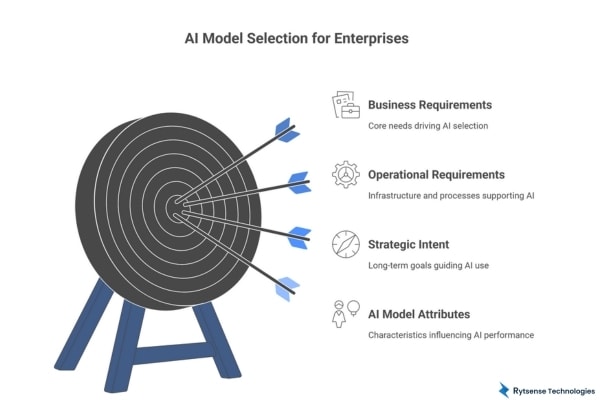
Establishing the best AI model relies on understanding that "most powerful" will always depend on the business case specifications. AI models have specializations that improve their performance for problems, tasks, and solutions. So, the most powerful choice is contingent on business requirements and specifications.
The most powerful AI model for any organization aligns with multiple factors for their operational requirements, underlying infrastructure, and strategic intent. The term power also has many dimensions in AI, including speed of processing, accuracy, adaptability, and customized use cases.
Accuracy & Reliability: Which AI Models Perform Best?
Accuracy and reliability are essential components for enterprise deployment of AI since businesses expect an enterprise solution to reliably perform across various scenarios.
Enterprise AI solutions
are expected to maintain reliable performance for a variety of cases and circumstances.
When assessing
what is the best AI model
in terms of whether it is more consistently accurate or reliable, organizations will have to account for their consistency. The consistency of behaviour, errors, and use in edge cases or unexpected inputs. These models are considered reliably appropriate for enterprise use:
Enterprise AI solutions
need to perform reliably under varied circumstances, so reliability must be as important to a business as peak performance capabilities. Companies should consider
AI models for business
for sustained performance, not just for benchmark peak performance.
How to Choose the Right AI Model for Your Business?
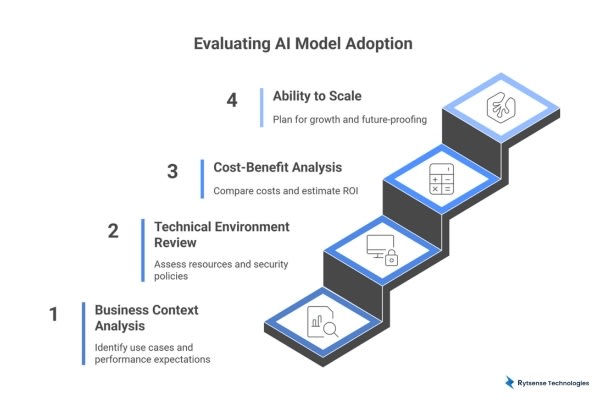
Selecting the right AI model will be a consistent, disciplined effort to work through the business context, technical parameters, and the business strategy. While, recognizing that there are many factors to consider that affect your ability to implement and ultimately create value over time.
Business PriorityRecommended Model TypeKey Consideration Cost-effectivenessMistral AI, Open-source modelsBudget constraintsData securityLlama 4, Claude 4Privacy and complianceRapid deploymentCohere, GitHub CopilotQuick integrationGlobal operationsErnie Bot, BLOOMMultilingual supportAdvanced capabilitiesGPT-5, Gemini UltraCutting-edge performanceSpecialized needsAlphaFold 3, DeepSeek V3Industry-specific requirements
Key Evaluation Factors:
1. Business Context Analysis
- Identify potential use cases and applications
- Understand performance expectations and success criteria
- Assess integration with existing systems
- Plan for scalability, if required
2. Technical Environment Review
- Assess computational resource environment
- Understand data privacy and security policies in place
- Assess the development team capabilities
- Evaluate options and constraints for deployment
3. Cost-Benefit Analysis
- Compare the upfront licensing costs across models
- Review total cost of ownership, breakdown that incorporates your technology infrastructure
- Determine estimated timescales for return on investment (ROI)
- Cost of maintenance and support
4. Ability to Scale and Future-Proof
- Review your growth path and scalability
- Determine model upgrade paths for longevity
- Understand your vendor support and development plans
- Consider the evolution of technology
Organizations like Rytsense Technologies, the
Best AI Development Company in USA
, provides
AI Development Services
so you can get expert opinions about whether or not to get guidance when making those complicated decisions.
Build Your Own GPT-Powered AI Agent Today
Developing custom AI agents is a substantial competitive advantage for innovative organizations. By creating AI agents, businesses can build customized solutions for specific operational needs and customer use cases.
An overview of the steps for building an AI agent:
1. Defining Requirements
- Establish specific tasks and goals for AI agent.
- Identify target users groups and their interactions.
- Establish success metrics and criteria.
- Document technical and functional requirements.
2. Selecting and Customizing a Model
- Select appropriate base model based on requirements.
- Incorporate your custom training data and complete fine-tuning process.
- Model agent customized prompts and behavior limits.
- Establish security and compliance metrics.
3. Integrating and Deploying
- Integrate agent within current organizational systems.
- Establish security and compliance.
- Establish monitoring and optimizing processes.
- Plan release and user engagement strategies.
4. Ongoing Improvement
- Analyse agent performance & collect user feedback.
- Implement cycles of improvement and upgrades to solutions.
- Expand based on business operations.
- Optimize for performance and cost.
Organizations with experienced partners in AI development can ensure the successful implementation of
custom AI agent development
, and continue to optimize so that they provide measurable value to your business and competitive advantage.
The area of
AI models for enterprises
is evolving rapidly with new capabilities and improvements being introduced regularly. Successful AI Implementation in business requires continuous awareness of advances, clarity in business needs, and thoughtful consideration in selecting AI solutions or
What Is the Best AI Model
.
AI solutions that are congruent with their strategy and which provide the potential for value. As it is necessary for businesses to use current
best AI software
2026
or custom AI agents, businesses that make thoughtful decisions about AI model selection will set themselves up for competitive advantages in a world driven by Artificial Intelligence.
Meet the Author

Co-Founder, Rytsense Technologies
Karthik is the Co-Founder of Rytsense Technologies, where he leads cutting-edge projects at the intersection of Data Science and Generative AI. With nearly a decade of hands-on experience in data-driven innovation, he has helped businesses unlock value from complex data through advanced analytics, machine learning, and AI-powered solutions. Currently, his focus is on building next-generation Generative AI applications that are reshaping the way enterprises operate and scale. When not architecting AI systems, Karthik explores the evolving future of technology, where creativity meets intelligence.