Key Takeaways
Agentic AI adoption in healthcare will surge from 1% to 33% by 2028 with the market reaching $208.2 billion.
Autonomous AI agents reduce clinician cognitive workload by 52% through intelligent workflow automation.
Implementations show 20% reduction in sepsis mortality and 40% decrease in administrative burden.
Successful adoption requires phased implementation with focused pilots and comprehensive staff training.
Future AI will enable personalized preventive care through multimodal data analysis and precision medicine.
Agentic AI for Healthcare: Transforming Workflows and Outcomes
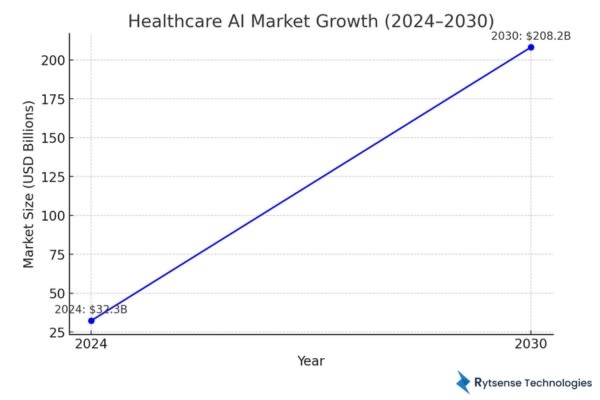
Agentic AI for healthcare indicates a major shift in the care delivery process and the way healthcare organizations function, supported by advanced AI development services and healthcare software development services. By 2028, Gartner anticipates that the percentage will rise to 33 percent. The healthcare AI market is projected to increase from $32.3 billion to $208.2 billion, representing a 524 percent growth between 2024 and 2030.
Currently, 94 percent of healthcare organizations believe that AI is a driving function of their organization and 86 percent are actively using AI, particularly healthcare AI solutions and AI automation services . This data demonstrates the pace at which healthcare organizations are integrating agentic AI systems that have the capability to make decisions independently, operationalize complex activities within workflows, and learn from healthcare data, which is the key point.
Understanding Agentic AI for Healthcare
What is Agentic AI for Healthcare?
Agentic AI for healthcare is a class of autonomous artificial intelligence systems that operate independently, as the name implies. Agentic AI systems are able to act in a task-directed manner independent of human direction, by making decisions informed by the contextual data to observe and use, while typical AI is bound to inference and actionable data in response to human guidance. These innovations are typically developed by a custom AI development company or enterprise AI solutions provider.
The most sophisticated agentic AI systems in healthcare will be capable of utilizing real-time patient data to identify problems, recommend treatment plans, schedule appointments, and execute workflows according to prescribed protocols, all without the need for step-by-step human supervision. These implementations are often supported through AI integration services and predictive analytics services in Health Care.
They will implement these functions through artificial intelligence and agentive systems that utilize machine learning algorithms; natural language processing; and formally adopted frameworks for decision-making that can interpret context, prioritize tasks using contextual clues, and actions prescribed within peer-reviewed clinical guidelines. Organizations often work with machine learning development services,NLP development services, and data engineering services to enable these capabilities.
The AI agent for healthcare is designed around three main components, or system layers:
- perception (the layer that gathers data)
- decision-making (the layer that processes that data)
- action (the layer that executes the decision)
The perception layer collects and aggregates data from multiple sources, including electronic health records, medical imaging, lab results, and clinician–patient interactions. The decision layer then processes this data using validated clinical algorithms and learned patterns to generate accurate recommendations for diagnosis, treatment, and workflow optimization.
Finally, the action layer has the ability to actually carry out the recommendations made by the decision layer, whether that's updating a record, sending notifications, creating a report, or even activating workflow steps assigned to the clinician. It is that independent ability to carry out a recommendation made by the decision-making layer. It separates agentic AI in healthcare from other AI tools that exist in healthcare that only make recommendations.
Importance of Agentic AI in Modern Healthcare
Today, healthcare systems are confronted by a set of long-standing issues now exacerbated by unprecedented new normalities faced in healthcare visit schedules, clinician shortages, administrative burden, and increasing patient volumes from, largely, the pandemic. Historical visit volumes reached 2024 levels beyond those of pre-pandemic, with over 46% of medical U.S. groups reported seeing more patients relative to 2021, but with staffing challenges.
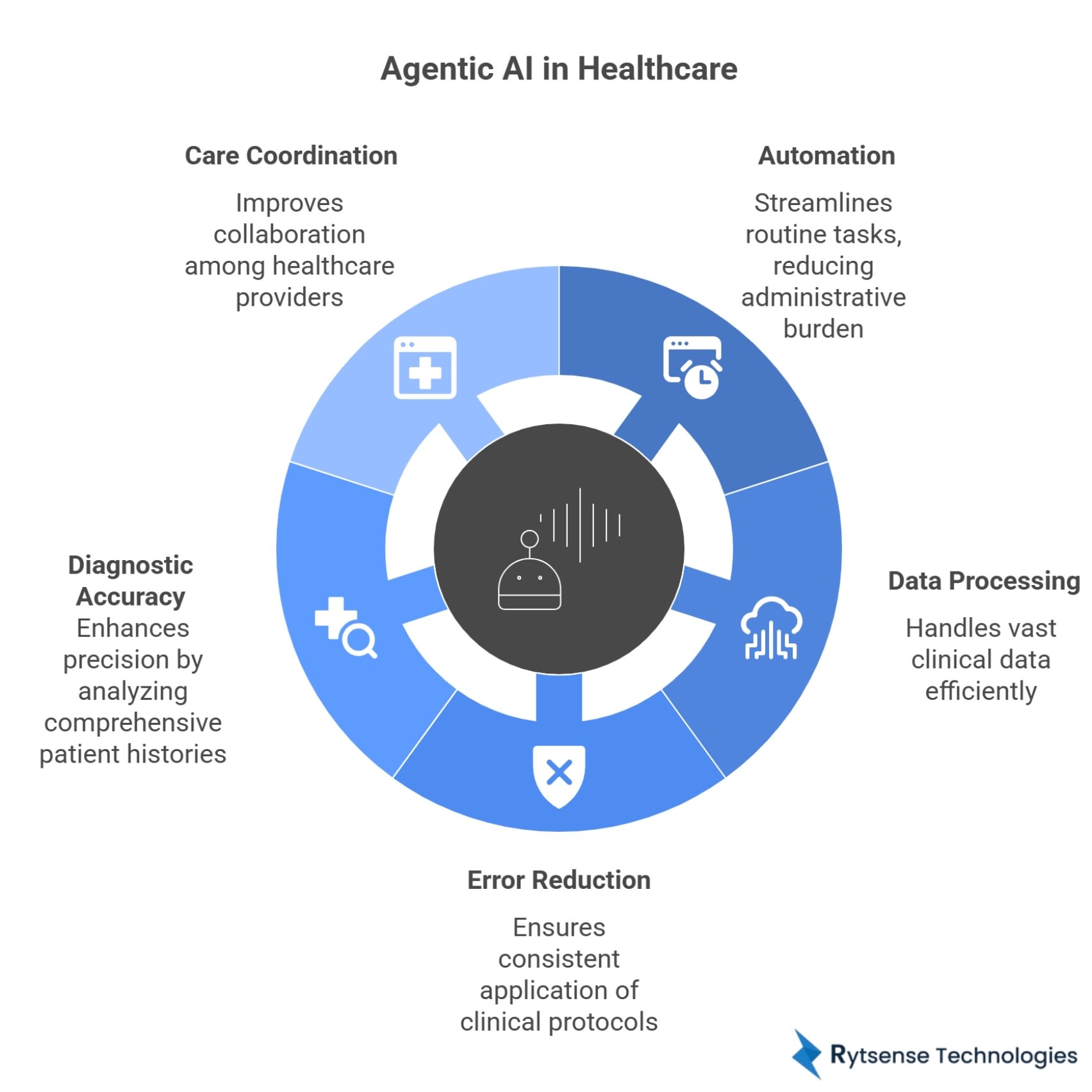
Globally, forecasted estimates suggest that by 2025 there would be over 180 Zettabytes of data generated, more than one-third of which would be generated from healthcare, which otherwise considered only represents the 3% of the healthcare data that has ever been effectively utilized. However, agentic AI can alleviate these pressures by automating routine tasks, processing vast clinical data, and allowing clinicians to focus on cases that require their expertise.
The significance of agentic AI in the context of healthcare providers extends beyond automation and into reducing medical errors by applying clinical protocols consistently, enhancing diagnostic accuracy by examining comprehensive patient histories, and improving coordination of care among multiple providers. Some agentic AI systems have been shown to reduce cognitive workload upwards of 52% while ensuring that clinicians continue to work at a high level of quality.
| Capability | Traditional AI | Agentic AI |
|---|---|---|
| Data Analysis | Single data source | Multimodal integration |
| Recommendations | Static guidelines | Dynamic, context-aware |
| Learning | Periodic updates | Continuous improvement |
| Risk Assessment | Rule-based | Probabilistic modeling |
| Adaptation | Manual reconfiguration | Autonomous adjustment |
Key Capabilities of Agentic AI for Healthcare
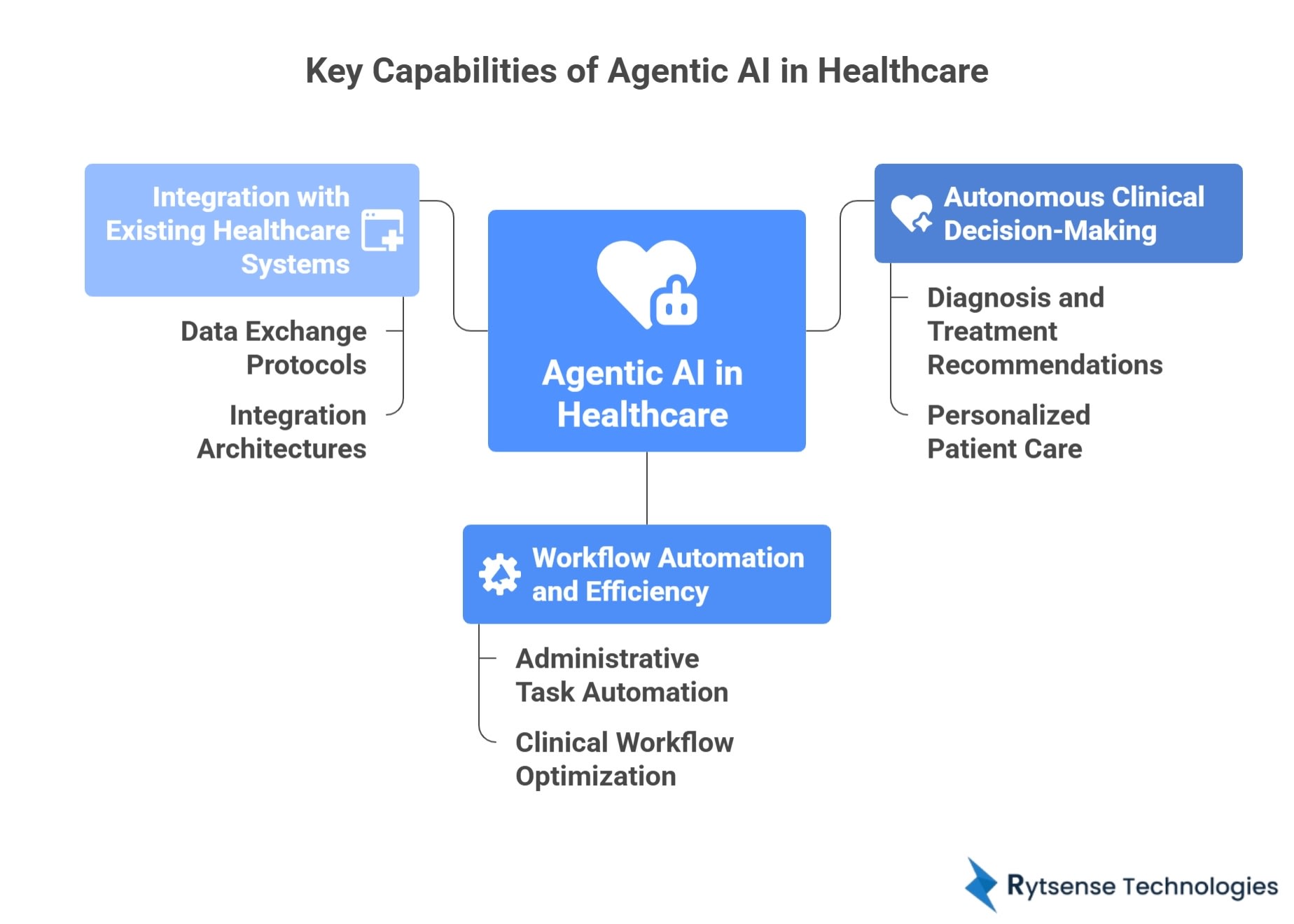
Autonomous Clinical Decision-Making
The development of AI agents focuses on enhancing clinical decision support capabilities. Agentic AI analyzes patient symptoms, medical history, laboratory results, and imaging data to create a shortlist of diagnoses and options for treating the presenting diagnosis.
The AI can apply clinical guidelines, evidence-based treatment guidelines, and learned patterns built from thousands of previous cases through trial and error to make recommendations. One important distinction between basic decision support tools and agentic AIs is the ability to weigh competing factors, risk levels, and personalize recommendations based on specific patient circumstances, an area supported by predictive analytics services.
The agent's decision-making capability describes a system that is continually learning from outcomes. When a treatment is delivered with success or failure, the agent updates its algorithms to make better recommendations in the future.
This overall capacity to learn and change, agentic ability to work effectively in complex scenarios, including patients that possess multiple chronic diseases, avoid drug interactions, and predict complications before they occur, is often supported by enterprise AI solutions and healthcare AI solutions.
Workflow Automation and Efficiency
Agentic AI can automate repetitive administrative and clinical workflows that take up a considerable amount of clinician time. These systems can perform tasks such as appointment scheduling, insurance verification, prior authorization requests, prescription renewals, and documentation tasks, all supported by AI automation services.
Through natural language inputs, agentic AI can efficiently identify and extract all necessary information from physician notes, populate EHR systems accordingly, and create billing codes without any data entry by hand.
While the technology could be used in many ways to enhance workflow efficiency in healthcare, the specific agency technology configurations developed for use in healthcare represent a type of workflow automation: AI voice agents. These agents utilize conversational AI to communicate with patients, resulting in processes often executed in a phone call or chat interface.
Integration with Existing Healthcare Systems
Successfully deploying agentic AI hinges on its ability to integrate with the healthcare IT ecosystem of an institution. Today’s sophisticated agentic AI platforms connect to electronic health record systems, laboratory information systems, radiology systems, billing software, and patient portals using standardized healthcare data exchange protocols such as HL7 FHIR and DICOM. Such integration enables real-time access to data and allows for bidirectional communication between AI systems and any clinical applications.
Integration architecture is generally delineated into three design concepts: embedded agents that operate within existing applications, standalone agents that interface with applications using APIs, and hybrid models that leverage both embedded and standalone architecture. This choice will depend on the organization's needs, capabilities, and regulatory requirements. Agentic AI for healthcare providers that have been integrated appropriately will maintain data protection, comply with privacy regulations,and provide audit trails of all automated activities.
Ready to explore agentic AI for your healthcare organization?
Rytsense Technologies specializes in building autonomous AI agents that streamline workflows, improve decision-making, and enhance care delivery.
Solving Healthcare Challenges with Agentic AI
Reducing Clinician Burnout
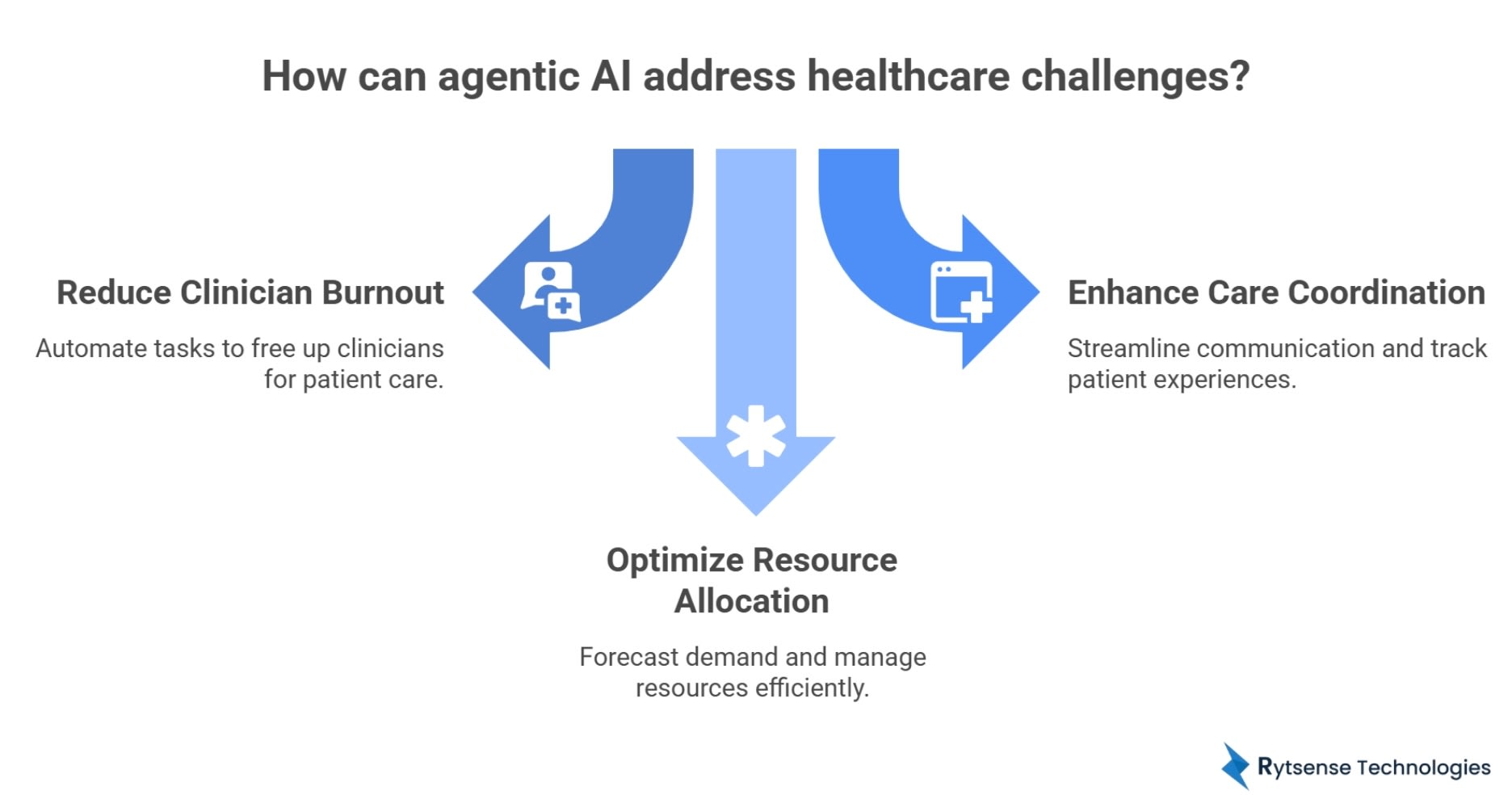
Clinician burnout is driven by administration overload, documentation requirements, and fragmented workflows. For example, clinicians work almost two hours on administrative tasks (non-billable feeling work) for every hour spent in direct patient care.
Agentic AI targets clinician burnout by automating documentation with ambient listening technology to capture and convert patient conversation into clinical notes. Our information systems manage your inbox by categorizing, sorting, and prioritizing clinician messages based on message urgency and automating responses to routine messages.
Less cognitive work allows clinicians to focus on patient relationships and clinical decision-making that are inherently more difficult. For example, agentic AI technologies can handle routine prescription refills, test result notifications, appointment schedules, and follow-up visits without interrupting clinician workflow.
Enhancing Care Coordination
With increasing involvement of multiple specialists, transitions in care, and responses to chronic conditions, care coordination becomes increasingly complex. Agentic AI enables coordination through tracking of the patients' experience across various care settings, setting up timely follow up appointments, helping the patient to monitor adherence to medications, and identifying gaps in patient care for care teams. These systems are able to identify patients who miss appointments, have pending test results that require action, or are starting to show signs of clinical deterioration.
For patients with chronic conditions, agentic AI will coordinate the care between primary care physicians, specialists, pharmacists, and home health providers. The system will assist in ensuring all providers have up-to-date information about the patient, arrange screenings that need to occur, and facilitate communication if a change in the care plan is necessary.
Optimizing Resource Allocation
Healthcare venues are faced with persistent demand to maximize resources for high-quality care. Agentic AI technologies assess past patterns, present capacity, and projected demand to inform staffing levels, operating room slots, bed assignments, and equipment allocation. Other agentic AI systems forecast patient admissions rates, predict the length of hospitalization, and identify potential delays prior to impacting operations.
Resource optimization extends to patient matching for clinical trials, in which agentic AI identifies patients who meet specific inclusion/exclusion criteria so they may participate. Financial resource allocation will also be enhanced by agentic AI identifying unnecessary testing, actionable alternatives that are less expensive, and reducing waste in supply chain management.
Real-World Applications of Agentic AI for Healthcare
AI in Diagnostics and Imaging
The health systems context encompasses a wide range of occupations across the selection of healthcare facilities where agentic AI technologies are being applied. AI agents in health systems can provide concierge service support for health professionals and patients, linking the health information technology ecosystem, while guiding patients through the healthcare process.
The patient's journey involves choices ranging from simple to complex, within systems that can be overly complicated. Additionally, patient engagement is critical to improve the effectiveness of their participation in their healthcare experience. Agentic AI for healthcare has the potential to augment human interaction by effectively conveying information to the patient to enhance the care experience and help inform in the patient's journey.
Patient Engagement and Personalized Care
Agentic AI in healthcare changes patient engagement through personalized communication and active outreach. Virtual health assistants utilizing agentic AI will assess symptoms, provide health education, share medication reminders, and collect patient-reported outcomes between visits. Communication style is adjusted for different patients based on their communication preferences, level of health literacy, and engagement styles.
When creating personalized care plans, agentic AI emphasizes on a patient’s goals, and includes attention to social determinants of health and the behaviors of the patient. The personalized care plan modifies recommendations based on clinical progress, identifies barriers to adherence to the care plan or health behavior, and makes recommendations for intervention to improve the health outcome.
In chronic disease management, agentic AI for healthcare providers will facilitate the development of personalized patient monitoring protocols, warn the care team when health trends are concerning, and work with community resources referrals to address social and personal needs.
Case Studies: Hospitals and Clinics Implementing Agentic AI
Several healthcare organizations have successfully developed agentic AI with measurable results. One large academic medical center deployed an agentic AI for sepsis prediction that analyzes vital signs, laboratory values, and clinical documentation to identify patients at risk. The agent alerts rapid response teams, recommends diagnostic tests, and suggests treatment protocols. The implementation of an agentic AI has led to a 20% reduction in sepsis mortality rates and also earlier initiation of treatment.
An outpatient clinic network deployed agentic AI voice agents for appointment scheduling and patient intake. The agent handles 70% of calls related to appointment scheduling without human involvement, collects full patient histories prior to their visit, and identifies patients needing preventive services. Overall, this reduced the workload of administrative staff by 40% and improved adherence to appointments by 25%.
A regional hospital system has deployed agentic AI for emergency department triage. The agent analyzes the patient's chief complaints, vital sign measurements, and medical histories to assign an acuity level, predict likelihood of admission, and suggest diagnostic pathways. The agent also standardised triage across 4 hospitals, is now reduces wait times for the most ill patients by 30%, and will make it easier to deploy resources in the emergency department.
Read Our Case study:
AI-Powered Automation / Healthcare Automation| Challenge Category | Common Issues | Mitigation Strategies |
|---|---|---|
| Technical | Integration complexity | Use standardized APIs and protocols |
| Data | Quality and completeness | Implement data governance programs |
| Clinical | Workflow disruption | Involve end-users in design |
| Regulatory | Compliance uncertainty | Engage legal and compliance teams early |
| Financial | Implementation costs | Start with high-ROI use cases |
Transform diagnostics, operations, and patient engagement with intelligent AI systems.
Partner with Rytsense Technologies to design, develop, and deploy custom agentic AI solutions tailored to your clinical and operational needs.
Implementing Agentic AI for Healthcare
Step-by-Step Adoption Strategies
Successful implementation begins by identifying one or two use cases where agentic AI provides measurable value. Organizations should evaluate their existing workflows, identify concrete pain points, and prioritize applications where specific return on investment can be proven with acceptable certainty.
When evaluating use cases, organizations can focus their implementation on pilot projects at first, where the implementation can become more robust in a controlled environment before deployment across the organization. This strategy allows individuals and teams to learn, refine workflow and processes, and gain increased confidence in AI capabilities to transform productivity or outcomes.
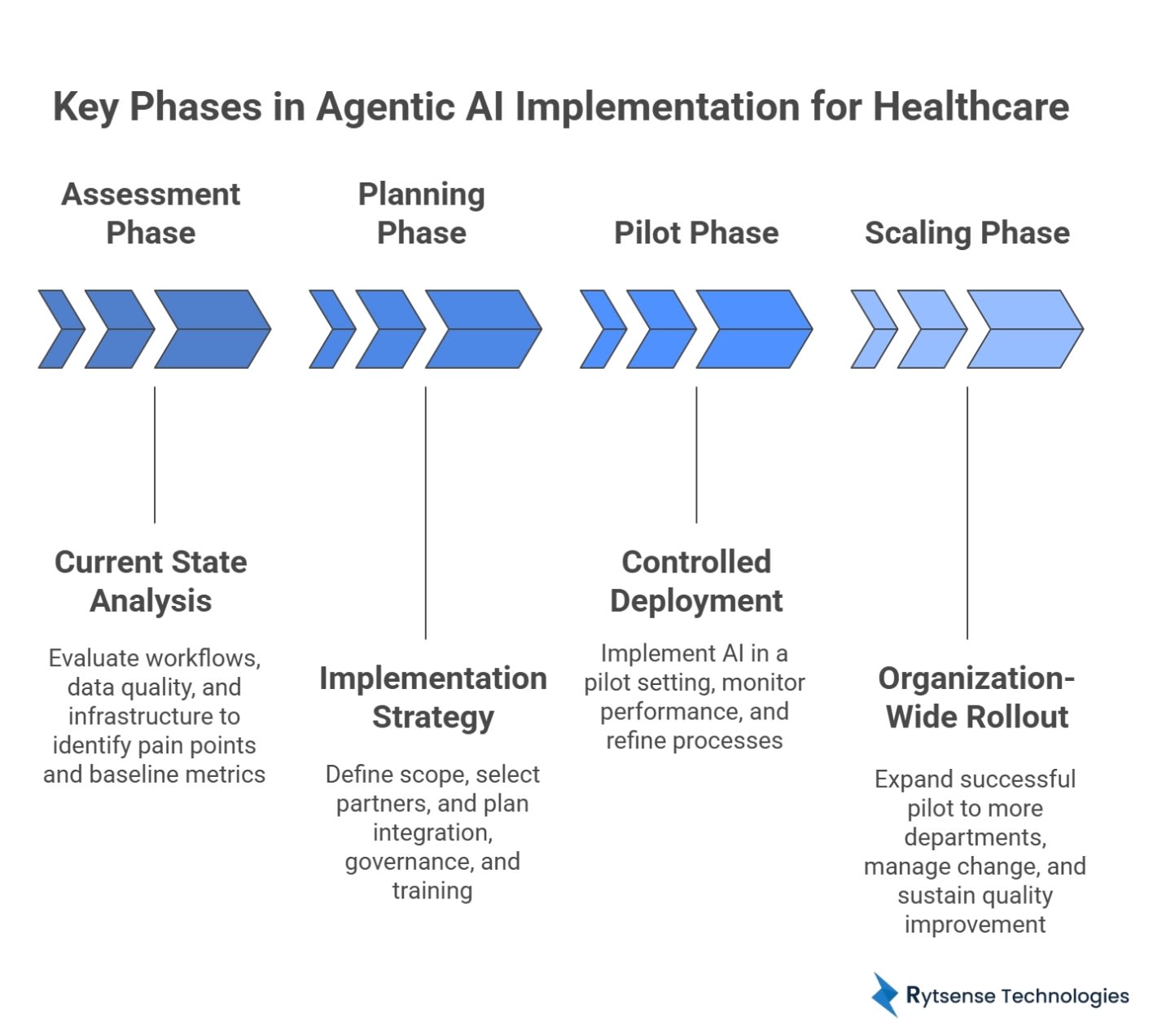
The implementation process includes the following phases:
Assessment Phase: Determine the current state, including workflow inefficiencies, data quality, technical infrastructure, and the workforce that will interact with agentic AI solutions. Identify specific problems that agentic AI may help alleviate and quantify the expected improvements with baseline metrics.
Planning Phase: Determine the implementation scope, specific agentic AI development partners and platforms with those able to provide guidance on the governance structure and training programs. Develop plans for integration into existing processes, including regulations or compliance.
Pilot Phase: Implement agentic AI in controlled situations and closely observe performance through a monitoring process. Collect input from users, measure performance against the agreed-upon baseline metrics, and make adjustments as necessary within the agentic AI. Identify and modify support processes, adjust workflows, and engage users in the changes, deliberating implications as there may be substantial effects observed during this pilot.
Scaling Phase: Scale the successful pilot to departments or facilities. Engage in change management, reaffirm to staff timely support and required training, while looking for ways to sustain the continuous quality improvement process even after the staff have changed. Measure metrics across projects, connecting performance with qualitative and quantitative supportive staff outputs.
Overcoming Challenges
Challenges in implementation encompass technical complexity in integrating AI systems; issues with data quality; clinician pushback; concerns about regulatory compliance and obligations; and potential disruptions to workflow. To overcome challenges, organizations should utilize strong change management skills and motivate change through open discussion of the capabilities of AI and its limitations, and fully include the personnel who do the work in decision making about the design of use cases.
Technical challenges necessitate advancing technology infrastructure, interface standards, and systems of data governance. Organizations must emphasize adequate network bandwidth, storage, and computing capabilities to operate AI system workloads. Necessary data quality improvement initiatives should identify issues related to missing documentation, inconsistent documentation, and standardized documentation.
The adoption of AI systems by clinicians is predicated upon demonstrating meaningful value that doctors will adopt (and clients will benefit). When benefiting clinicians from AI systems, organizations must provide autonomy as clinicians do not want to be burdened with additional processes.
Include all physicians as early as possible in the selection and implementation of the AI system, provide sufficient resources for training to include the physicians, and design the AI system as an extension of clinical thinking without negating it. Transparency through governance and accountability of AI systems is critical to assuaging concerns about liability, algorithmic bias, and patient safety.
Measuring Impact and ROI
To measure the impact of agentic AI for healthcare, it is critical to create clear metrics in the clinical, operational, and financial areas. Clinical metrics consist of diagnostic accuracy, treatment follow-through, complication rates, and patient outcomes. In operational metrics, you will want to measure workflow efficiencies, clinician time savings, patient throughput, and resource use. In the financial realm, measure cost savings, revenue increase, and ROI.
In addition to being attentive to and tracking lagging indicators, it is important to track leading indicators. Some leading indicators (system usage rates, user satisfaction scores, and compliance with process) will give you an early indication of the success of the implementation. Some lagging indicators (outcomes, readmission rates, and incidence of costs per case) will show you long-term value. You should track performance reports against baseline metrics and industry benchmarks.
To calculate ROI, you need to take into consideration the costs of implementation (software licensing, integration, training, and ongoing maintenance) against the benefits (labour savings, efficiency increases, increased revenue, and cost avoidance). Most health systems see a positive ROI within 12–24 months for agentic AI applications that are implemented appropriately. Document and promote the successes to the organization to build buy-in for future investment.
Future Trends in Agentic AI for Healthcare
Advancements in AI Technology
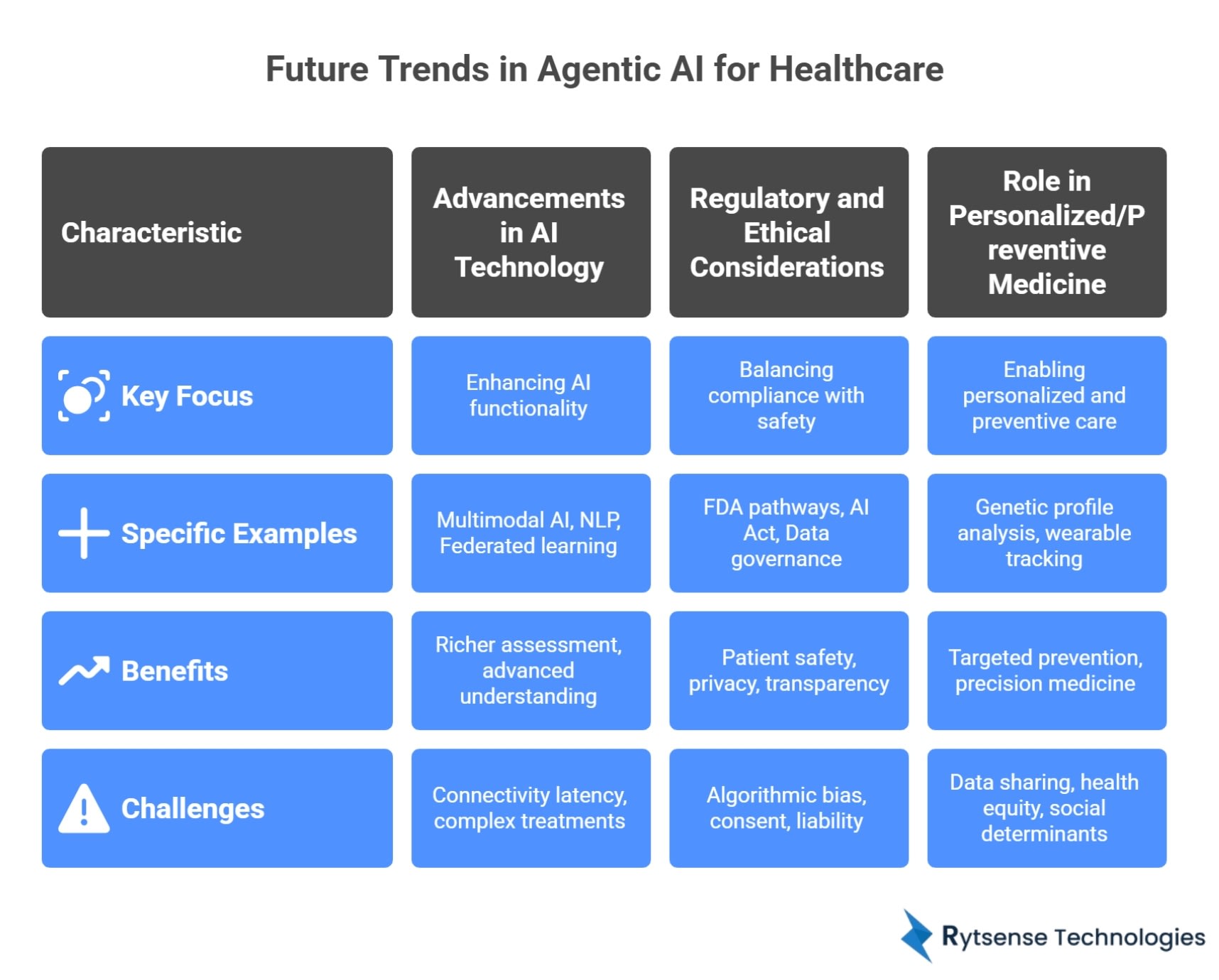
Emerging technologies will greatly enhance agentic AI functionality. Multimodal AI systems will employ text, images, voice, and sensor data in the same scenario, all of which will enable richer patient assessment. Natural language processing will allow advanced AI agents to understand complex medical terminology, process clinical nuances, and produce documentation comparable to that produced by human clinicians. Federated learning will enable AI systems to learn new information from relevant data, while the data remains distributed and private.
Agentic AI systems will be combined with generative AI to create personalized patient educational materials, generate treatment protocols for unprecedented scenarios, and simulate clinical decision outcomes. Edge computing will enable on-site AI processing that reduces the impact of connectivity latency to enable real-time decision support, even with inconsistent connectivity. Quantum computing will one day support accelerated drug discovery, genomic analysis, and advanced optimization of complex treatments.
Regulatory and Ethical Considerations
Regulatory structures are evolving to understand agentic AI in healthcare. The FDA established pathways for AI-based medical devices, including predetermined change control plans that allow algorithms to improve over time. European regulations through the AI Act classify healthcare AI according to different risk levels and apply corresponding requirements. Organizations must balance regulatory compliance with patient safety and privacy. to ensure the safety of patients and privacy of data.
Ethical considerations of AI in healthcare include algorithmic bias, transparency, accountability, and equitable access. AI systems trained on non-representative populations may perform poorly for underrepresented groups. Organizations must take bias testing steps, use diverse training datasets, and monitor performance according to patient demographics. Transparency requirements may mandate disclosure to patients that AI has influenced the course of clinical action, which leads to challenges regarding consent, trust, and privacy.
Data governance frameworks must account for prior patient consent for AI analyses and sharing health care data across institutions. Data governance requirements should articulate patient rights to opt out of automated AI-driven decisions.
Health or healthcare organizations must establish clear policies to document the levels of human oversight that uniquely apply to it, liability for AI assumptions and/or mistakes, ability to appeal AI recommendations. Organizationally, there is a tenuous balancing act of promoting innovative approaches to clinical context and protecting patients from robots making healthcare decisions, which requires collaborating among health care providers, technologists, and regulators.
The Role of Agentic AI in Personalized and Preventive Medicine
Agentic AI will spur the movement toward advanced, personalized, and preventive medicine. Systems will be developed to analyze individuals’ genetic profiles, environmental exposures, lifestyle circumstances, and social determinants, leading to individualized risk calculations and targeted prevention plans. AI agents can then be utilized to continuously track patient health through wearable devices, spotting early indications for disease processes and intervening before conditions become acute.
Agentic AIs will also be utilized to enable precision medicine–using one or determinants, these systems will determine matches between individual patients and therapies that are most suited to their molecular characteristics, planning, implementing actions to accurately predict their responses to treatment while providing continual adjustment to the treatment plan in real-time.
AI will assist in population health management efforts aimed at identifying high-risk people, linking them to appropriate preventive interventions, while also addressing gaps in health equity and social determinants. This proactive approach should address the costs of health care through better population health outcomes. Meanwhile it will greatly assist in making bigger strides towards overall population health improvement.
How Rytsense Technologies Empowers Healthcare with Agentic AI
Rytsense Technologies offers comprehensive agentic AI solutions specifically suited for healthcare organizations looking to innovate clinical practices and improve patient care delivery. Our team has developer experience implementing AI agents in full lifecycle (from assessment to deployment to optimizing a system). More specifically, we develop customized AI agents that leverage existing infrastructure in healthcare systems, including EHR systems, laboratory systems, and imaging networks.
We use our own evidence-based framework to develop AI agent applications spanning a variety of use cases in healthcare including clinical decision support, clinical workflow automation, patient engagement, and optimizing a system. We have developed engaging AI voice agents for healthcare, utilizing natural dialogue to schedule appointments, intake patients, conduct follow-up calls with patients, and coordinate care. AI agents reduce the administrative burden and help enhance patient experience, access, and engagement.
Rytsense Technologies utilizes a collaborative approach to implementation, working alongside clinical and operational leaders to pinpoint high-value opportunities and conceptualize solutions that integrate seamlessly into work processes. Our team provides complete training, change management, and performance monitoring to help confirm success in the organization. We implement strong governance programs focused on data security, regulatory compliance, and clinical safety standards.
Our AI agent for healthcare solutions has been designed with advanced capabilities such as multimodal data analysis, predictive analytics, and continuous learning algorithms. Importantly, we account for explainability and transparency so the clinician understands AI recommendations and retains necessary oversight. Rytsense Technologies works with healthcare systems, hospital networks, specialty clinics, or outpatient facilities of any kind that wish to harness agentic AI to improve efficiency, accuracy, and patient outcomes.
Healthcare using agentic AI can have powerful transformative impacts. Through a strategic partnership with Rytsense Technologies, healthcare organizations can benefit from advanced agentic AI capabilities and technical expertise, implementation support, and ongoing optimization services to maximize return on investment and achieve transformational outcomes.
Conclusion
Agentic AI in healthcare signifies a paradigm shift in the way medical institutions support the delivery of care, clinical operations, and clinician support. With proven capabilities in performing autonomously, automating workflows, and integrating systems, agentic AI will address some of the significant challenges facing the healthcare system today. It includes clinician burnout, addressing care gaps, and resource inefficiencies.
There are already real-world implementations that show measurable improvements in efficiency, accuracy, and improved patient outcomes. As technology and regulatory environments continue to mature, Agentic AI will help realize a more personalized and preventative approach to medicine. Healthcare organizations that partner with experienced providers such as Rytsense Technologies will be able to use best practices to successfully deploy these agentic AI tools and make advances to improve care delivery.
Accelerate Healthcare Transformation with Agentic AI
Whether you're aiming to reduce clinician burnout, automate workflows, or enable personalized care, Rytsense Technologies delivers secure, scalable, and compliant AI solutions that drive measurable outcomes.
Meet the Author

Karthikeyan
Connect on LinkedInCo-Founder, Rytsense Technologies
Karthik is the Co-Founder of Rytsense Technologies, where he leads cutting-edge projects at the intersection of Data Science and Generative AI. With nearly a decade of hands-on experience in data-driven innovation, he has helped businesses unlock value from complex data through advanced analytics, machine learning, and AI-powered solutions. Currently, his focus is on building next-generation Generative AI applications that are reshaping the way enterprises operate and scale. When not architecting AI systems, Karthik explores the evolving future of technology, where creativity meets intelligence.