Key Takeaways
Generative AI toolkits for app development help speed up building modern applicationsMost real-world projects use a combination of toolsThe right choice depends on your specific use caseSome tools are easier to start with, while others offer more controlWorking with a Generative AI Development Service can simplify implementation
Generative AI Toolkits for App Development: What to Use in 2026
Building applications today is no longer just about writing code—it’s about choosing the right tools that help you move faster and build more efficiently.
That’s where generative AI toolkits for app development come in. They simplify complex tasks, reduce development time, and make it easier to create applications that feel responsive and intuitive.
At the same time, not every toolkit fits every use case. Some are ideal for getting started quickly, while others are designed for handling larger systems and long-term growth.
This guide explores the most practical options available in 2026 and helps you understand how to choose the right tools based on what you’re building.
What Are Generative AI Toolkits for App Development
Generative AI toolkits for app development are collections of tools, frameworks, and APIs that allow developers to add advanced capabilities to applications without building everything from scratch.
Instead of manually handling complex processes, these toolkits help streamline development and reduce the amount of work required to deliver functional features.
They are commonly used to:
- Build chat-based features within applications
- Generate content dynamically based on user input
- Process and manage large volumes of data
- Improve user interaction and personalization
What makes these toolkits valuable is their ability to simplify development while still allowing flexibility. Developers can focus more on the application itself rather than the underlying complexity.
In many modern applications, these tools form a foundational layer that supports user interaction, automation, and content handling.
Best Tools for App Development in 2026
A number of toolkits have proven to be reliable across different types of applications. The following options are widely used in real-world projects and continue to evolve with developer needs.
1. OpenAI
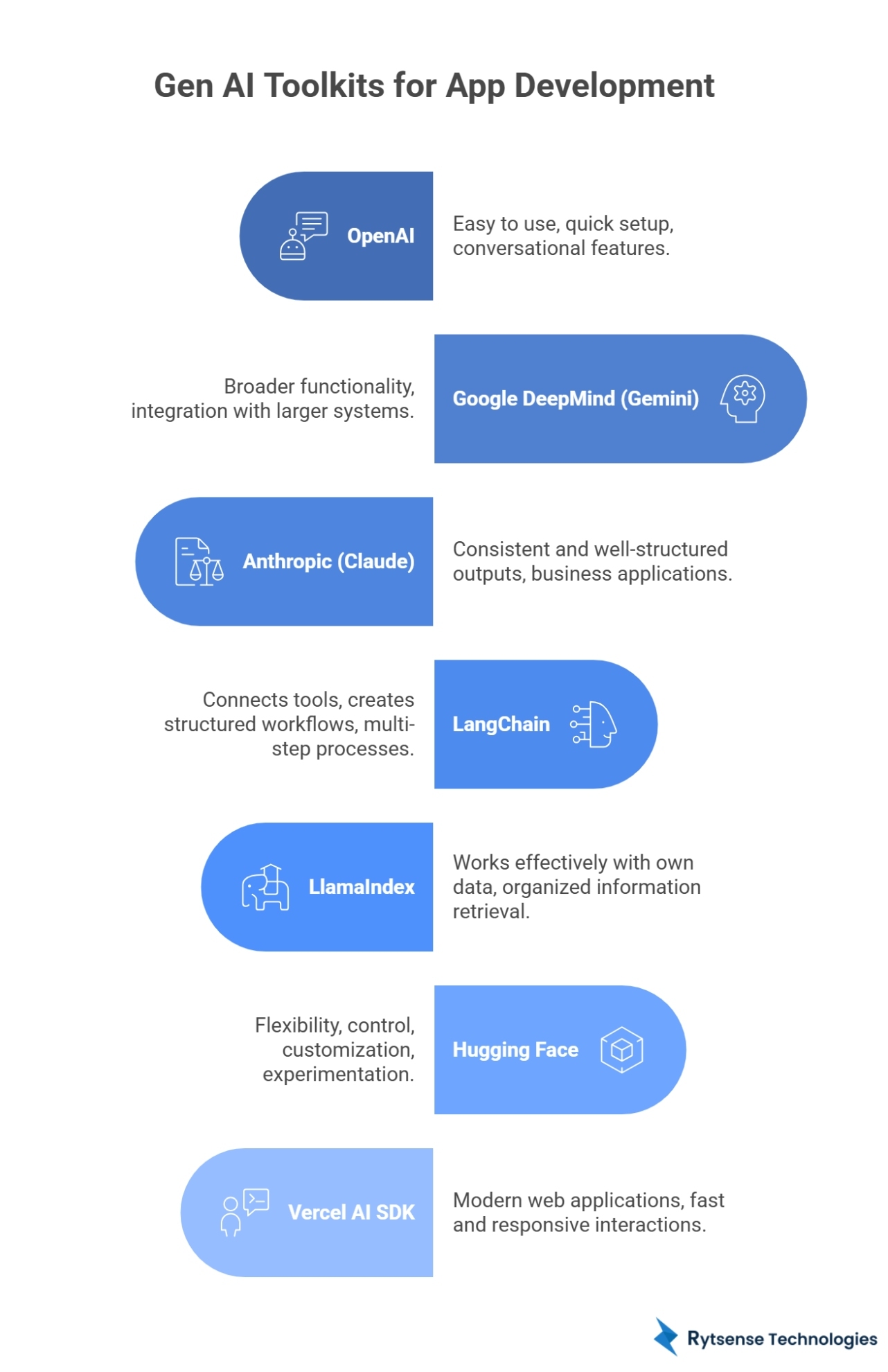
This toolkit is often chosen for its ease of use and quick setup. It allows developers to add conversational and content-based features without extensive configuration.
Best suited for:Chat-based applicationsWriting assistantsInteractive tools
Why it works well:Straightforward integrationReliable performance across use casesClear and accessible documentation
For teams looking to build and launch quickly, this is a practical starting point.
2. Google DeepMind (Gemini)
This option is well-suited for applications that require broader functionality and integration with larger systems.
Best suited for:Applications handling multiple input typesSearch-related featuresBusiness-focused platforms
Key advantage:Works efficiently within the Google ecosystemHandles larger workloads effectively
It is commonly used in projects where scalability and system integration are important.
3. Anthropic (Claude)
This toolkit is known for producing consistent and well-structured outputs, making it a strong choice for business applications.
Best suited for:Document-heavy workflowsCustomer-facing platformsInternal business tools
Why it stands out:Processes longer inputs efficientlyMaintains clarity and structure in responses
It is often selected when reliability and output consistency are key priorities.
4. LangChain
LangChain helps developers connect different tools and create structured workflows within an application.
Rather than handling a single request at a time, it supports processes that involve multiple steps.
Best suited for:Workflow-driven applicationsMulti-step processesAdvanced assistant-like features
What it offers:Organizes interactions between different componentsSupports more structured application logic
This makes it useful for applications that require more than basic functionality.
5. LlamaIndex
LlamaIndex is designed to help applications work more effectively with their own data.
It allows developers to retrieve and use stored information in a more organized way.
Best suited for:Knowledge-based systemsInternal toolsDocument-focused applications
Key benefit:Simplifies how data is accessed and used within applications
For applications built around existing data, this toolkit plays an important role.
6. Hugging Face
Hugging Face offers flexibility and is widely used by developers who want more control over their applications.
It is particularly useful in projects that require customization or experimentation.
Best suited for:Custom-built solutionsExperimental developmentOffline use cases
Why it’s popular:Large selection of modelsActive developer community
This toolkit is often chosen when developers want to fine-tune how their application behaves.
7. Vercel AI SDK
The Vercel AI SDK is designed for modern web applications that need fast and responsive user interactions.
It is especially effective in frontend-focused development.
Best suited for:Interactive web applicationsSaaS platformsReal-time features
What makes it effective:Smooth integration with modern frameworksSupports fast and responsive performance
For user-facing applications, this toolkit helps improve overall experience.
How to Choose the Right Toolkit
Selecting the right toolkit becomes easier when you clearly define what you want your application to do.
A simple way to approach this is by matching your use case with the appropriate tool:
Use CaseRecommended ToolkitChat or assistant featuresOpenAI, AnthropicDocument-based systemsLlamaIndexWorkflow-driven applicationsLangChainCustom developmentHugging FaceWeb-based applicationsVercel AI SDK
In many cases, using a combination of toolkits leads to better results. Each tool can handle a specific part of the application, creating a more balanced and efficient system.
For businesses, working alongside a Generative AI development Service can also provide clarity in selecting the right combination of tools based on project requirements.
Common Challenges Teams Face
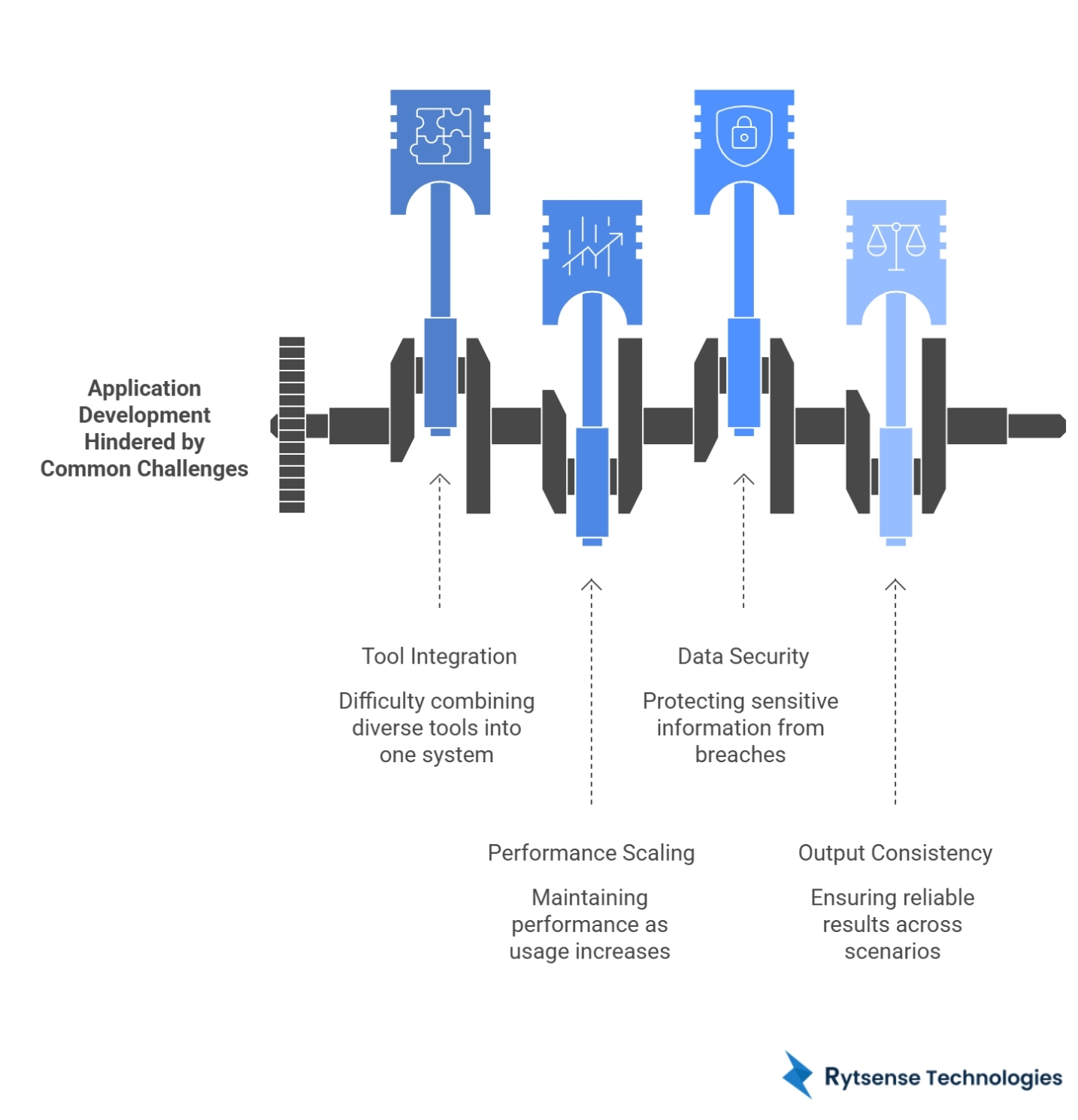
Even with access to capable tools, building a complete application comes with its own challenges.
Some of the most common issues include:
- Integrating multiple tools into a single system
- Maintaining performance as usage grows
- Managing data securely
- Ensuring consistent outputs across different scenarios
These challenges often become more noticeable as applications move beyond the initial development stage.
Without proper planning, they can affect both performance and user experience.
Addressing these issues early in the development process helps create more stable and reliable applications over time.
Conclusion
Generative AI toolkits for app development have made it easier to build modern applications, but choosing the right combination requires careful thought.
Rather than focusing on individual tools alone, it is more effective to look at how they work together within your application.
A structured approach usually leads to better results:
- Start with a clearly defined use case
- Select tools that align with your requirements
- Expand your setup gradually as your application evolves
Taking the time to choose the right tools at the beginning can make a significant difference in how smoothly your application performs in the long run.
Meet the Author

Co-Founder, Rytsense Technologies
Karthik is the Co-Founder of Rytsense Technologies, where he leads cutting-edge projects at the intersection of Data Science and Generative AI. With nearly a decade of hands-on experience in data-driven innovation, he has helped businesses unlock value from complex data through advanced analytics, machine learning, and AI-powered solutions. Currently, his focus is on building next-generation Generative AI applications that are reshaping the way enterprises operate and scale. When not architecting AI systems, Karthik explores the evolving future of technology, where creativity meets intelligence.