Key Highlights:
In this article, you'll learn:
- How manual insurance verification creates delays across the cardiology patient journey.
- Why insurance verification is more complex in cardiology than in many other medical specialties.
- The five key workflow challenges that impact patient access and revenue cycle performance.
- How AI and intelligent automation are helping cardiology practices modernize insurance verification and reduce administrative burden.
Manual Insurance Verification Slows Cardiology Care
A cardiology appointment doesn't begin when the patient walks into the clinic. It begins with insurance verification. Before care can move forward, staff must verify eligibility, confirm benefits, review referrals, and identify prior authorization requirements. When these steps rely on manual work, even minor delays can postpone diagnostic testing, disrupt schedules, and affect the entire revenue cycle.
Why Cardiology Insurance Verification Is Different
Unlike many specialties where patients receive treatment during a single visit, cardiology care often involves multiple appointments, diagnostic tests, and follow ups before a treatment plan is finalized.
A patient's journey may look like this:
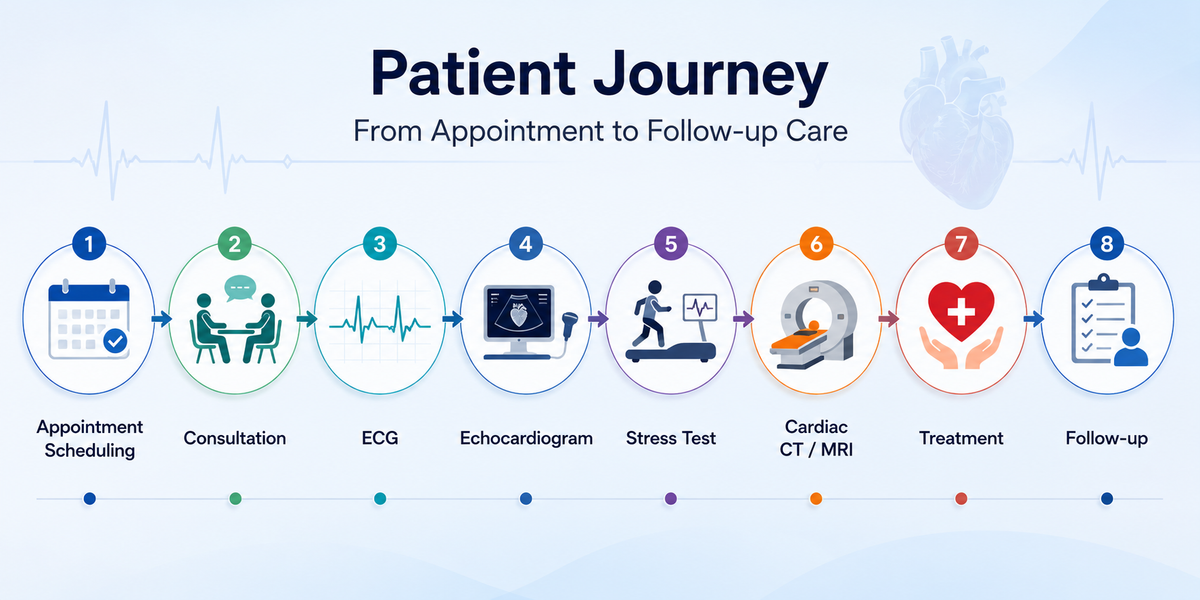
Each stage brings new insurance requirements. A patient may be covered for the initial consultation, but an echocardiogram, stress test, or advanced cardiac imaging can have different benefit rules, prior authorization requirements, or documentation needs.
Insurance verification in cardiology doesn't end at registration. As patients move through different tests and procedures, coverage often needs to be verified again. When this process is manual, it creates unnecessary administrative work and delays that impact both patient care and the revenue cycle.
Where Manual Insurance Verification Starts Slowing the Patient Journey
The biggest challenge isn't a single verification task. It's the series of manual steps that gradually slow a patient's journey from scheduling to treatment.
1. Insurance Information Can Change Before the Appointment
Insurance verification usually starts when an appointment is scheduled. However, cardiology patients often wait days or weeks before undergoing diagnostic tests. During that time, insurance coverage, deductibles, referrals, or health plans may change.
If these changes aren't identified early, staff must reverify coverage, contact the payer, or reschedule appointments, delaying the patient's care.
2. Every Cardiology Service Has Different Coverage Requirements
Verifying active insurance isn't enough in cardiology. Each service, from an echocardiogram and stress test to advanced imaging or cardiac procedures, may have different benefit rules, prior authorization requirements, and documentation needs.
When these checks are handled manually for every appointment, administrative work increases and the risk of missed verification details grows.
3. Staff Spend Too Much Time Searching for Information
Manual verification often requires staff to move between the practice management system, EHR, payer portals, and phone calls to gather the information they need.
Instead of helping patients prepare for care, valuable time is spent searching, verifying, and documenting insurance details. As patient volumes grow, this repetitive work becomes increasingly difficult to manage.
4. Small Verification Delays Disrupt the Entire Schedule
An incomplete insurance verification can delay much more than one appointment. A pending authorization or uncovered procedure may force diagnostic tests to be postponed, affecting physician schedules, imaging resources, and the patient's treatment timeline.
A simple verification issue can quickly become a practice-wide scheduling challenge.
5. Keeping Up With Payer Changes Is Increasingly Difficult
Payer requirements continue to evolve, with frequent updates to coverage policies, authorization rules, and documentation requirements.
Many practices still depend on manual tracking or staff experience to stay current. As payer complexity grows, maintaining consistent and accurate verification becomes more challenging, increasing administrative effort and the likelihood of avoidable delays.
The Next Step in Cardiology Insurance Verification
Manual insurance verification has supported cardiology practices for years, but growing patient volumes and evolving payer requirements are making it harder to manage. As a result, many practices are adopting AI and intelligent automation to reduce repetitive verification tasks, improve patient access, and strengthen revenue cycle performance.
Continuous Eligibility Verification
Insurance verification no longer ends when an appointment is scheduled. Leading cardiology practices are continuously verifying eligibility and coverage as patients move through consultations, diagnostic tests, and follow up visits. AI driven automation helps identify coverage changes early, reducing unexpected delays before treatment.
Smarter Benefit Verification
Cardiology patients often receive multiple diagnostic and procedural services, each with different coverage requirements. Intelligent verification workflows automate routine benefit checks, allowing staff to spend less time reviewing payer information manually while improving consistency across every stage of care.
Earlier Prior Authorization Readiness
Rather than discovering missing authorizations on the day of service, practices are identifying prior authorization requirements much earlier in the scheduling process. Automation helps flag services that require additional review, giving staff more time to resolve issues before they affect appointments or procedures.
Connected Patient Access Workflows
Insurance verification is becoming more closely connected with scheduling, registration, and billing. By keeping insurance information synchronized across these workflows, practices reduce duplicate work, improve collaboration between teams, and create a smoother patient journey.
More Time for Patients, Less Time on Administration
Routine verification tasks no longer need to consume valuable staff time. By combining AI with workflow automation, cardiology practices can reduce repetitive administrative work while allowing patient access teams to focus on patient communication, complex coverage questions, and financial guidance where human expertise makes the greatest difference.
Conclusion
Manual insurance verification is no longer just an administrative task in cardiology. It influences how efficiently patients move from scheduling to diagnosis, treatment, and reimbursement. As practices manage growing patient volumes and increasingly complex payer requirements, adopting AI and intelligent automation can help reduce administrative burden, improve patient access, and build a more efficient revenue cycle.
Meet the Author

Co-Founder, Rytsense Technologies
Karthik is the Co-Founder of Rytsense Technologies, where he leads cutting-edge projects at the intersection of Data Science and Generative AI. With nearly a decade of hands-on experience in data-driven innovation, he has helped businesses unlock value from complex data through advanced analytics, machine learning, and AI-powered solutions. Currently, his focus is on building next-generation Generative AI applications that are reshaping the way enterprises operate and scale. When not architecting AI systems, Karthik explores the evolving future of technology, where creativity meets intelligence.