Key Takeaways
AI helps doctors diagnose diseases faster and more accuratelyIt improves patient care through personalized treatmentsHospitals can reduce costs and save time using automationAI enables early detection of serious health conditionsIt supports better decision-making with data insightsRemote monitoring and telemedicine make healthcare more accessibleAI is transforming healthcare into a more efficient and patient-focused system
Introduction to AI in Healthcare
Artificial intelligence is revolutionizing healthcare by improving diagnosis accuracy, enhancing patient outcomes, reducing operational costs, and enabling personalized treatment plans. From predictive analytics to robotic-assisted procedures, AI is helping healthcare providers deliver faster, smarter, and more efficient care. As healthcare systems face rising demand, staff shortages, and increasing data complexity, AI is becoming a critical enabler of scalable, high-quality care.
Artificial intelligence in healthcare refers to the use of machine learning, natural language processing, computer vision, and advanced analytics to process medical data and support clinical and operational decisions. These technologies can analyze vast amounts of structured and unstructured data, including medical images, patient histories, clinical notes, and genomic data, to generate actionable insights.
Healthcare organizations are increasingly adopting AI to reduce inefficiencies, improve accuracy, and enhance patient experiences. Whether it is assisting doctors in diagnosis or automating hospital workflows, AI is becoming deeply integrated into modern healthcare ecosystems.
Key Insight: AI in healthcare is not replacing doctors. It is giving them sharper tools, more time, and better information to make decisions that save lives.
Key Benefits of AI in Healthcare
1. Improved Diagnostic AccuracyAI-powered systems can detect diseases with a level of precision that complements clinical expertise. By analyzing imaging data such as X-rays, MRIs, and CT scans, AI helps identify abnormalities at earlier stages, reducing misdiagnosis and improving treatment outcomes.2. Faster Decision-MakingAI systems process large datasets within seconds, enabling clinicians to make quicker, evidence-based decisions. This is particularly valuable in emergency situations where time-sensitive decisions can save lives.3. Cost Reduction in HealthcareAdministrative automation powered by AI reduces the burden of repetitive tasks such as billing, claims processing, and appointment scheduling. This leads to significant cost savings and allows healthcare staff to focus more on patient care.4. Enhanced Patient ExperienceAI-driven chatbots and virtual assistants provide instant support for appointment booking, symptom checking, and follow-ups. This improves accessibility and ensures continuous patient engagement.5. Better Resource ManagementHospitals use predictive analytics to optimize bed allocation, staff scheduling, and equipment utilization. This ensures efficient operations and minimizes resource wastage.6. Data-Driven InsightsAI enables healthcare providers to extract meaningful insights from complex datasets. These insights help in improving clinical workflows, identifying trends, and making informed strategic decisions.Did You Know? AI diagnostic tools are now FDA-cleared for detecting diabetic retinopathy autonomously — without requiring a physician to review every image. This is one of the first fully autonomous AI diagnostic applications approved for clinical use in the United States.
How AI Improves Patient Outcomes
AI plays a crucial role in shifting healthcare from reactive treatment to proactive care. By continuously analyzing patient data, AI systems can identify early warning signs of diseases and recommend preventive measures.
For example, predictive models can assess the risk of conditions such as diabetes, cardiovascular diseases, or sepsis. Early detection allows healthcare providers to intervene before the condition worsens, improving survival rates and reducing hospital readmissions.
AI also supports clinical decision-making by providing evidence-based recommendations, ensuring that patients receive the most effective treatments available.
Want to Improve Patient Care with AI?Discover how AI-powered solutions can streamline operations, enhance diagnosis, and deliver better patient outcomes for your healthcare business.Get a Free AI Consultation
AI in Diagnostics and Early Detection
Diagnostics is one of the most impactful areas where AI is making a difference. AI algorithms trained on large datasets can identify patterns that may not be visible to the human eye.
Applications include:
- Detecting cancer in early stages through imaging analysis
- Identifying neurological disorders such as Alzheimer's disease
- Diagnosing heart conditions using ECG data
- Screening for eye diseases like diabetic retinopathy
Early detection not only improves patient outcomes but also reduces treatment costs significantly.
Role of AI in Personalized Medicine
Personalized medicine is transforming how treatments are designed and delivered. AI analyzes genetic information, lifestyle data, and clinical history to create customized treatment plans tailored to individual patients.
This approach ensures:
- Higher treatment effectiveness
- Reduced adverse drug reactions
- Faster recovery times
AI also helps in identifying which patients are more likely to respond to specific treatments, enabling precision healthcare.
AI in Hospital Management and Operations
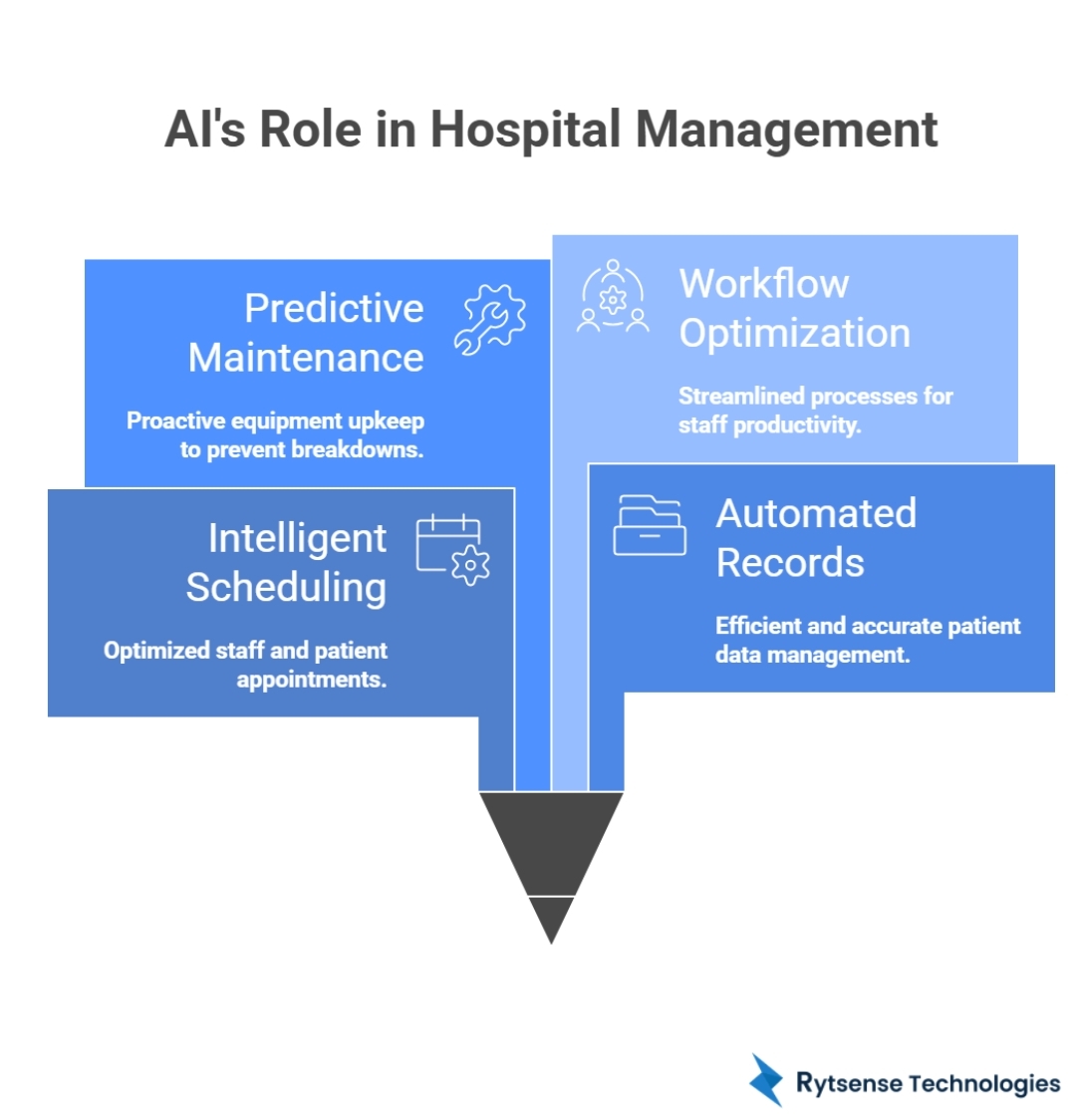
Healthcare facilities often struggle with operational inefficiencies. AI addresses these challenges by automating and optimizing workflows.
Key applications include:
- Intelligent scheduling systems
- Automated patient record management
- Predictive maintenance of medical equipment
- Workflow optimization for staff
By reducing administrative burdens, AI allows healthcare professionals to focus more on delivering quality care.
Enhancing Drug Discovery with AI
Traditional drug discovery processes are time-consuming and expensive. AI accelerates this process by analyzing biological datasets and predicting potential drug candidates.
Benefits include:
- Reduced research timelines
- Lower development costs
- Faster clinical trials
- Improved success rates
AI is also playing a key role in developing treatments for complex diseases and emerging health threats.
AI in Remote Monitoring and Telemedicine
With the rise of digital health solutions, AI-powered remote monitoring and telemedicine are becoming essential.
Wearable devices and smart sensors collect real-time health data, allowing doctors to monitor patients remotely. AI analyzes this data to detect anomalies and alert healthcare providers.
Telemedicine platforms enhanced with AI offer:
- Virtual consultations
- Automated symptom analysis
- Remote diagnosis support
This improves healthcare accessibility, especially for patients in rural or underserved areas.
Real-World Use Cases of AI in Healthcare
AI is already being used across various healthcare domains:
RadiologyAI assists in interpreting medical images with high accuracyOncologyAI helps in identifying cancer patterns and recommending treatmentsCardiologyPredictive models assess heart disease risksPathologyAI analyzes lab samples for faster diagnosisMental HealthAI-powered apps provide therapy support and early detection of mental health conditions
These real-world applications highlight the transformative potential of AI in improving healthcare delivery.
Challenges and Ethical Considerations
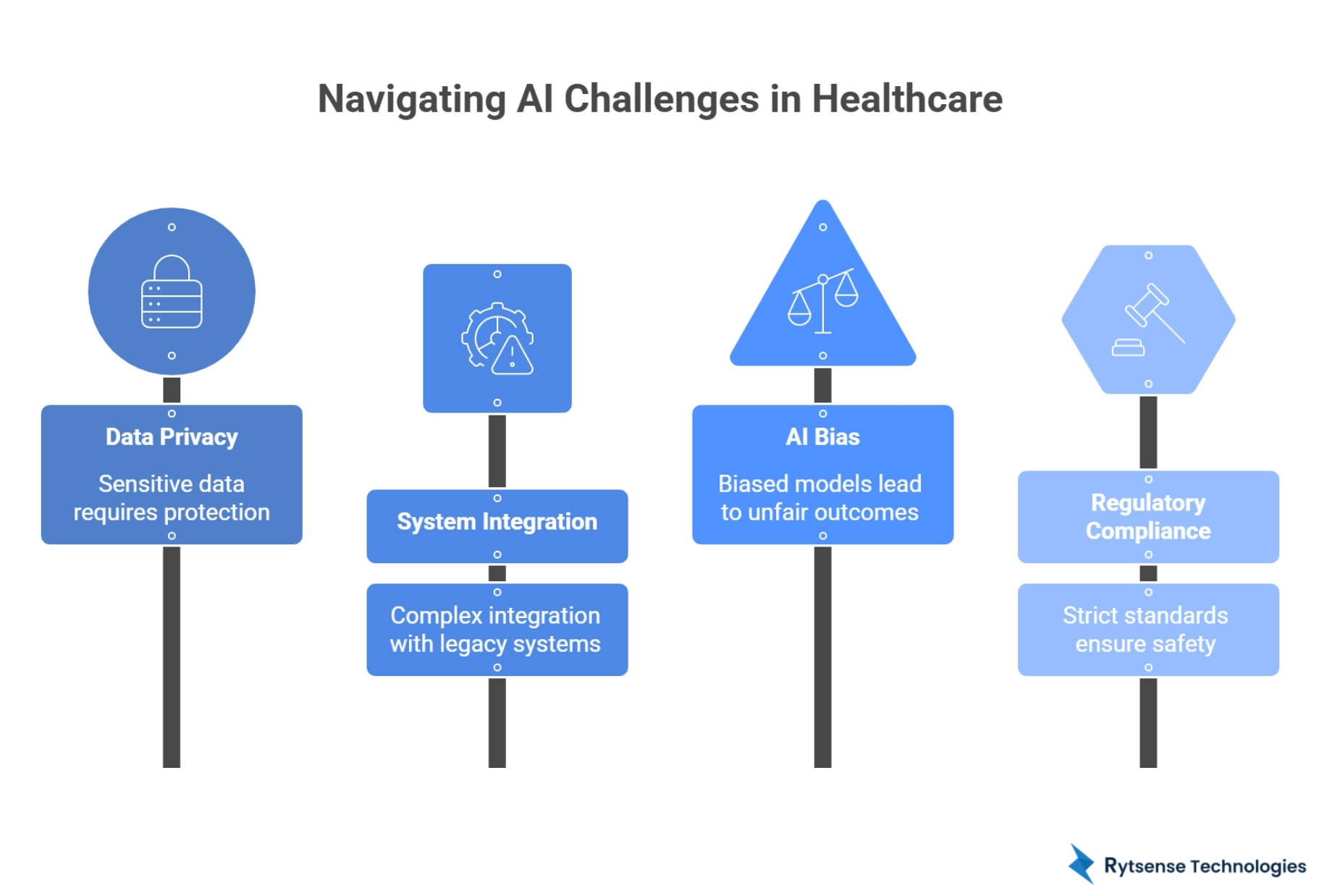
While AI offers numerous benefits, it also presents challenges that must be addressed:
Data Privacy and SecurityHealthcare data is highly sensitive. Ensuring data protection and compliance with regulations is critical.Integration with Existing SystemsIntegrating AI with legacy healthcare systems can be complex and requires careful planning.Bias in AI ModelsAI systems must be trained on diverse datasets to avoid bias and ensure fair outcomes.Regulatory ComplianceHealthcare AI solutions must comply with strict regulatory standards to ensure safety and reliability.
Addressing these challenges is essential for the successful adoption of AI in healthcare.
Future of AI in Healthcare
The future of AI in healthcare is promising, with continuous advancements in technology.
Emerging trends include:
- AI-powered robotic surgeries
- Advanced predictive analytics for disease prevention
- Integration of AI with Internet of Medical Things (IoMT)
- Real-time clinical decision support systems
As AI continues to evolve, it will play a central role in creating a more efficient, accessible, and patient-centric healthcare system.
Ready to Build AI Solutions for Healthcare?From predictive analytics to intelligent automation, start transforming your healthcare services with scalable AI technologies.Talk to Our AI Experts Today
Conclusion
The benefits of AI in healthcare are transforming the industry by improving accuracy, efficiency, and patient outcomes. From early diagnosis to personalized treatment and operational optimization, AI is reshaping every aspect of healthcare delivery.
For startups, healthcare providers, and businesses, adopting AI is a strategic step toward innovation and growth. Organizations that embrace AI-driven solutions will be better positioned to deliver high-quality care, reduce costs, and stay competitive in an evolving healthcare landscape.
Meet the Author

Co-Founder, Rytsense Technologies
Karthik is the Co-Founder of Rytsense Technologies, where he leads cutting-edge projects at the intersection of Data Science and Generative AI. With nearly a decade of hands-on experience in data-driven innovation, he has helped businesses unlock value from complex data through advanced analytics, machine learning, and AI-powered solutions. Currently, his focus is on building next-generation Generative AI applications that are reshaping the way enterprises operate and scale. When not architecting AI systems, Karthik explores the evolving future of technology, where creativity meets intelligence.