1.How Much Does It Cost to Build an Ecommerce Mobile App Like Noon?
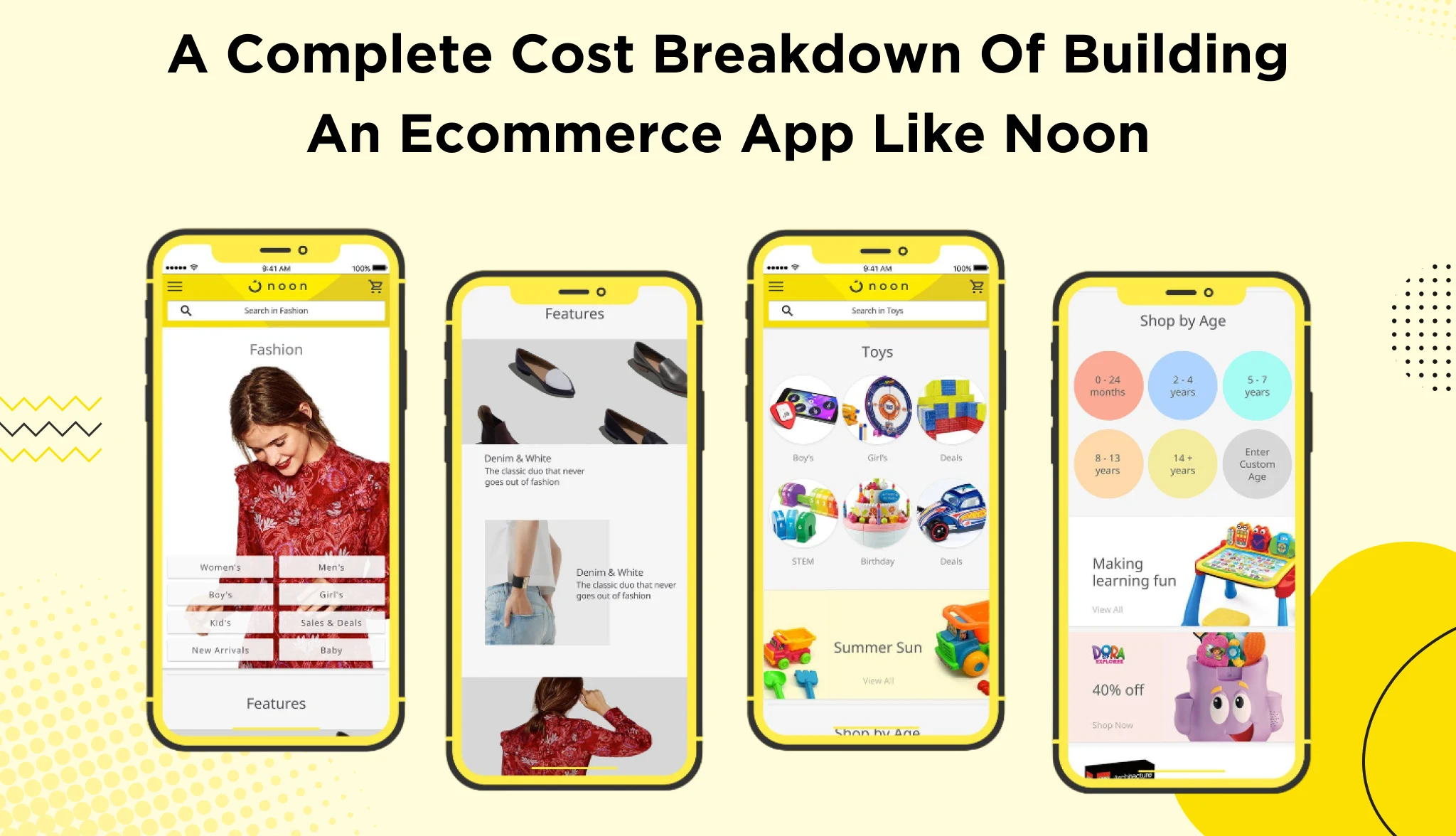
The global eCommerce market continues to thrive, with projections set to surpass $7.5 trillion by 2025. As more consumers embrace online shopping, businesses must evolve by launching their own e-commerce mobile apps to stay competitive in the digital landscape. A prime example of success in the Middle East is Noon, a UAE-based eCommerce giant offering millions of products at competitive prices. If you're planning to build an eCommerce mobile app like Noon in 2025, understanding the development cost, essential features, and process is crucial to ensuring success.
In this companion, we’ll break down:
● The step-by-step development process
● Must-have features for a Noon-like app
● Cost breakdown based on complexity
● Monetization strategies
● Why partnering with an educated mobile app development company in Dubai can ensure success
2.Understanding the Noon App Model

Noon is one of the leading e-commerce platforms in the UAE, known for its:
● Stoner-friendly interface
● Affordable pricing
● 8 million products
● Fast delivery & secure payments
To replicate its success, you need a well-structured
ecommerce mobile app development cost
The Middle East’s e-commerce market is booming, and apps like Noon have set high standards for online shopping experiences. If you're planning to develop a similar e-commerce app, this step-by-step guide will walk you through the entire process—from market research to post-launch strategies. Know
mobile app development process: A step-by-step Guide for 2025
3.Step-by-Step Process to Make an Ecommerce App Like Noon
3.1.Market Research & Planning
Before diving into development, you need a solid understanding of your market, competitors, and unique selling points.
Key Steps:
Identify Your Target Audience
● Demographics: age, gender, income level, location (UAE, KSA, etc.).
● Shopping Habits: Preferred payment methods, peak shopping times, popular product categories.
Analyze Competitors (Noon, Amazon.ae, Namshi)
● Strengths: Fast delivery, discounts, user-friendly UI.
● Weaknesses: limited payment options, poor customer support.
Define Your Unique Selling Points (USPs)
● Same-day or next-day delivery in key cities.
●
AI-driven personalized recommendations.
● Multilingual & multi-currency support for regional users.
Choose a Business Model
● B2C (Business-to-Consumer): Direct sales to customers (like Noon).
● B2B (Business-to-Business): Bulk orders for businesses.
● Hybrid Marketplace: Allow third-party sellers (similar to Noon’s marketplace).
3.2.Feature Selection
The functionality and user experience (UX) of your software are critical to its success.
A. User Panel Features
Registration/Login:
● Email, phone (OTP), social media (Google, Facebook, Apple).
● Guest checkout option.
Product Search & Filters:
● Smart search with auto-suggestions.
● Filters (price range, brand, ratings).
Multiple Payment Options:
● Credit/debit cards (Visa, Mastercard).
● Digital wallets (Apple Pay, Samsung Pay).
● Cash on Delivery (COD)—crucial for Middle East markets.
Order Tracking & Notifications:
● Real-time delivery updates via SMS/push notifications.
● Estimated delivery time display.
Reviews & Ratings:
● Customer feedback system with photo/video uploads.
B. Vendor Panel Features (For Sellers)
Inventory Management:
● Add/edit products and stock alerts.
● Bulk upload via CSV.
Sales Analytics:
● Revenue reports, order trends, customer behavior insights.
Multi-Store Management:
● Manage multiple outlets from a single dashboard.
C. Admin Panel Features (For Backend Control)
Dashboard Overview:
● Total sales, active users, and revenue analytics.
Promotion & Discount Management:
● Flash sales, coupon codes, and loyalty programs.
User & Vendor Management:
● Approve/block sellers, handle disputes.
3.3 Development & Testing
A. UI/UX Design
Wireframing: Sketch app layouts (Figma, Adobe XD).
Prototyping: Interactive mockups for user testing.
Final UI Design: High-fidelity designs with branding (colors, fonts).
B. Backend Development
Server Setup: Cloud hosting (AWS, Google Cloud).
API Integration: Payment gateways, SMS, email services.
Security Measures:
● SSL encryption.
● Two-factor authentication (2FA).<br/
C. Quality Assurance (QA) & Testing
Functional Testing: Check all features (login, checkout).
Performance Testing: Load speed, server response.
Security Testing: Penetration testing for vulnerabilities.
3.4.Choosing the Right Tech Mound
CategoryTechnologiesFrontendReact Native, Flutter (Cross-platform), Swift (iOS), Kotlin (Android)BackendNode.js, Python (Django), FirebaseDatabaseMongoDB (NoSQL), MySQL (SQL)Payment GatewayStripe, PayPal, Razorpay, Telr (Middle East)Cloud StorageAWS S3, Google Cloud Storage
3.5.Launch & Post-Launch Support
A. Soft Launch (Beta Testing)
Release to a limited audience for feedback.
Fix bugs before full launch.
B. Marketing & User Acquisition
App Store Optimization (ASO): Optimize title, keywords, and screenshots.
Digital Marketing:
● Social media ads (Instagram, Facebook).
● Influencer collaborations (UAE-based bloggers).
● Google Ads targeting "online shopping UAE."
C. Regular Updates & Maintenance
Feature Enhancements: Add new payment methods and languages.
Bug Fixes & Security Patches: Keep the app secure.
Customer Support: 24/7 chat, email, and call support.
4. How Much Does It Cost to Make an Ecommerce App Like Noon?
The ecommerce mobile app development cost varies based on
● App complexity
● Features & functionalities
● Development platoon position
● Tech mound
4.1.Cost Breakdown
App TypeEstimated CostTimelineBasic MVP (Core features)$15,000–$30,0003–6 monthsMid-Level App (Advanced UI, analytics)$30,000–$80,0006–9 monthsEnterprise-Grade (AI, AR, multi-vendor)$80,000–$150,0009–12 months
4.2.Factors Affecting Development Cost
● Development Platoon Position
○ USA/UK: $50–$150/hour
○ India/UAE: $20–$50/hour
● Design Complexity
○ Custom UI/UX vs. templates
● Third-Party Integrations
○ Payment gateways, analytics tools
● Conservation Costs
○ 15–20% of original cost annually
Speak with a leading Dubai mobile app development company for a comprehensive cost estimate.
5.How to Monetize an Ecommerce App Like Noon?
● Commission Freights (5–15 per sale)
● Subscription Plans (Premium enrollments)
● In-App Advertisements (Applicable elevations)
● Vendor Registration Freights
6. Why Invest in an Ecommerce Mobile App?
The eCommerce sector is changing quickly, and if you’re not changing with it, you might fall behind. Developing a custom eCommerce mobile app will give your brand a competitive advantage by delivering a better customer experience, making more sales, and improving internal workflows. Here are some reasons to design and develop an eCommerce mobile app:
6.1.Advanced Brand Visibility
By keeping your brand on the user's home screen, a mobile app helps them see and remember it. Push notifications, personalized offers, and app-specific deals keep driving business recall.
Check out our
eCommerce Website Development Services
, to integrate launched app solutions without frustration.
6.2.More Client Engagement
A mobile app improves client engagement more than a website. A mobile app makes it easy for clients to buy, with fewer clicks and features like one-click checkout, wishlists, and assigned recommendations. Mobile app users will spend 50% more time engaging with your app product than website users, leading to higher sales conversions for you.
If you're looking for professionals to develop a solution to increase engagement!
Hire WooCommerce Developers
for a tailored solution.
6.3.Multiple Profit Aqueducts
An eCommerce mobile app will give you several revenue channels, just off the top of my head:
Cross-selling through affiliate marketing integrations
Products and subscriptions that can be sold in-app
Advertisers/sponsored listings
The more channels of revenue you have, the more profitable you can be.
6.4.Data-Driven Decision Making
A mobile app can provide real-time analytics about user behavior and purchase patterns. When you use your own app, you receive and own the user referral history - use the data to refine your marketing strategy and optimize your inventory. Good client and product data can even assist you with customer retention.
7. Conclusion
Structuring an eCommerce mobile app like Noon requires careful planning, the right tech mound, and a professed development platoon. The mobile app development cost ranges from $15,000 to $150,000, depending on features and complexity. If you are looking for a dependable development mate,
Rytsense Technologies
offers end-to-end eCommerce mobile app development services acclimatized to your business requirements.
Meet the Author

Co-Founder, Rytsense Technologies
Karthik is the Co-Founder of Rytsense Technologies, where he leads cutting-edge projects at the intersection of Data Science and Generative AI. With nearly a decade of hands-on experience in data-driven innovation, he has helped businesses unlock value from complex data through advanced analytics, machine learning, and AI-powered solutions. Currently, his focus is on building next-generation Generative AI applications that are reshaping the way enterprises operate and scale. When not architecting AI systems, Karthik explores the evolving future of technology, where creativity meets intelligence.