1.Where can I hire talented full-stack developers in India?
India has quickly become a global technology hub, offering a vast pool of talented full-stack developers known for their expertise, innovation, and affordability. Hiring dedicated full-stack developers can be a game-changer for any company seeking to develop or grow online products. India, with a strong IT industry and huge talent pool, has made itself the most in-demand destination for businesses across the world. India has emerged as a global hub for software development, offering a vast pool of skilled full-stack developers known for their expertise, agility, and cost-effectiveness. From startups to global enterprises, companies choose to
hire developers from India
for their ability to deliver robust digital solutions at scale. But there are so many different platforms and options available, it can be hard to figure out where to start. This is addressed in this blog entry, in addition to discussing the most reliable ways of hiring the best-in-class full-stack developer in India, both when you’re looking to hire locally or remotely. One of the most important reasons India excels in the tech talent landscape is the total volume of highly skilled and experienced developers flooding the market annually.
With a solid background in computer science and exposure to state-of-the-art training programs, Indian developers are equally proficient in both frontend and backend technologies—be it. React,
AngularJS
, Vue.js or Node.js, Python, and Ruby on Rails. Most of them also have practical experience with cloud platforms, APIs, and DevOps tools, which makes them top performers for an agile full-stack development team. The combination of collaborative thinking and English language proficiency prevalent among Indian IT professionals is an additional boost to their aptness for global projects. There are multiple reliable platforms and methodologies through which you can leverage this pool of talent.
2. What is Full-Stack Development? Key Skills and Roles
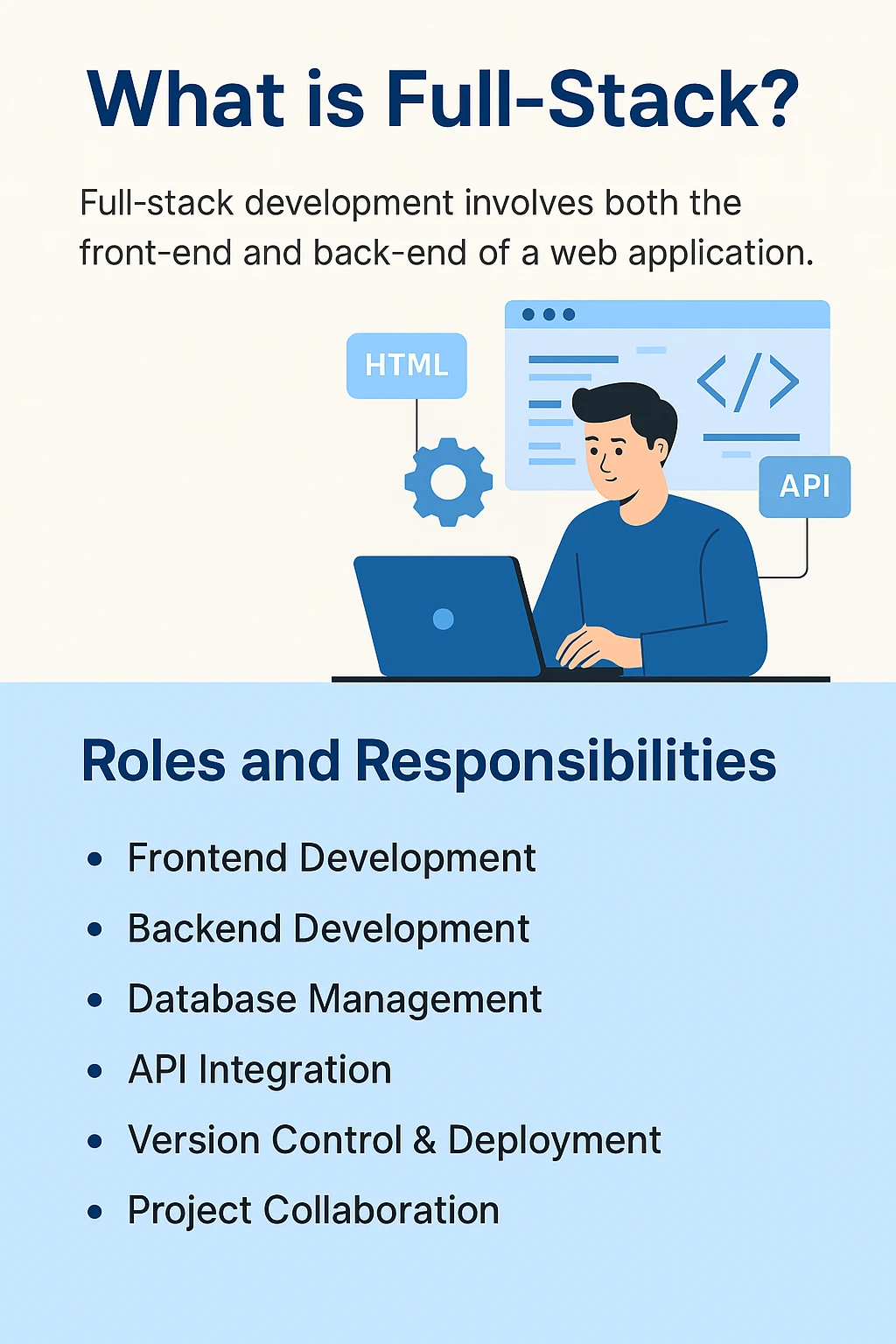
A full-stack developer works on both the client-facing (frontend) and server-side (backend) aspects of a web application.
Role and Responsibilities of a Full-Stack Developer
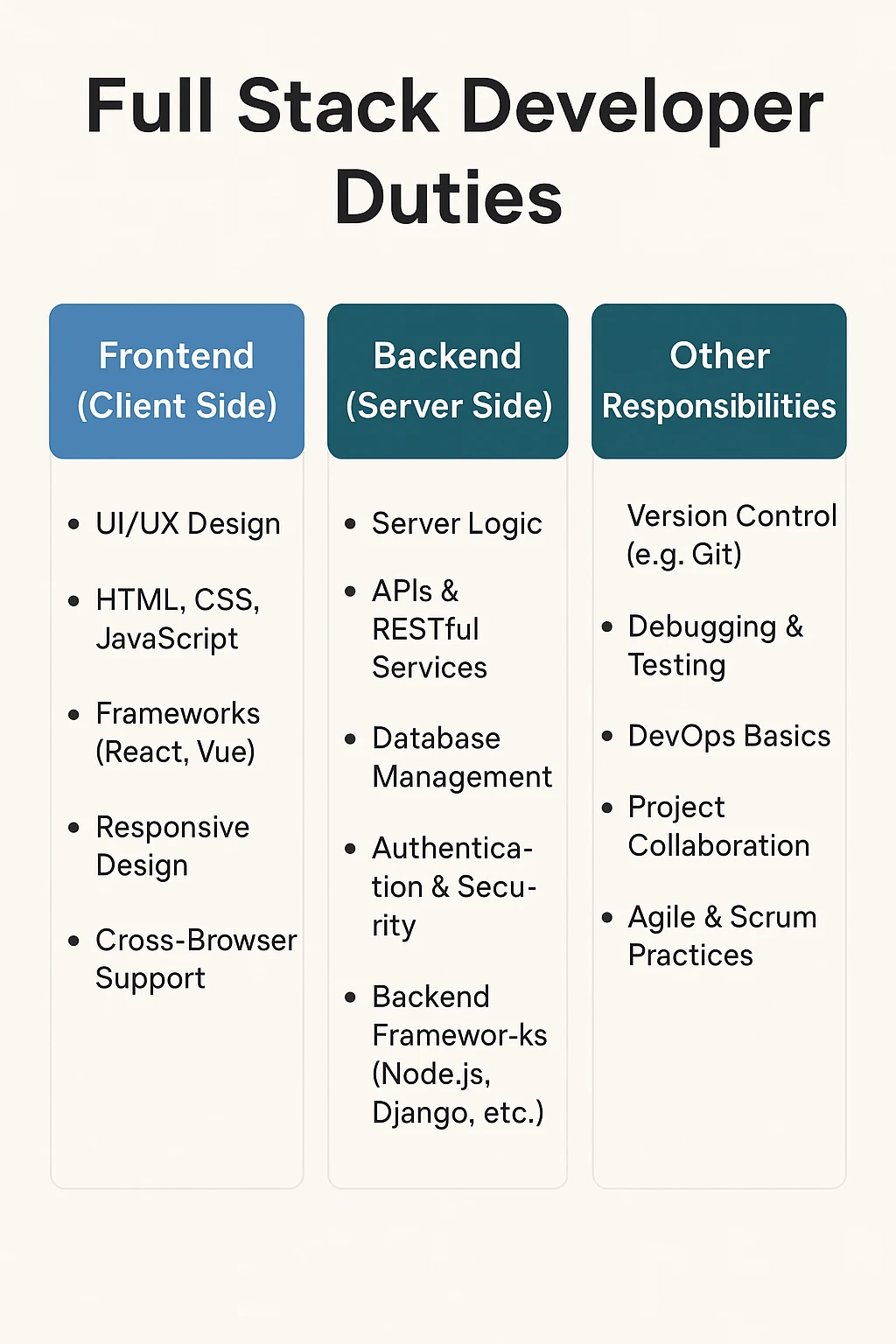
1. Frontend Development
● Create and optimize intuitive, user-friendly interfaces.
● Ensure cross-browser compatibility.
● Enhance UX/UI performance and responsiveness.
2. Backend Development
● Design servers and databases
● Be responsible for authentication, authorisation, and data processing.
● Guarantee the scalability and the security of the applications.
3. Database Management
● Design and maintain databases
● Optimise your queries and data structures.
● Use backup and disaster recovery tools effectively.
4. API Integration
● Develop and maintain RESTful or GraphQL APIs
● Integrate 3rd party services, e.g, Payment Gateway, Email, etc. Version Control
5. Deployment
● Work with version control tools like Git.
● Deploying applications to a server or cloud infrastructure
● Monitor and troubleshoot production issues.
6. Project Collaboration
● Collaborate with designers, testers, and project managers.
● Contribute to agile/scrum methodologies.
● Interpret business requirements into technical solutions.
3. The Power of Being Multi-talented: Why Companies Employ Full Stack Developers
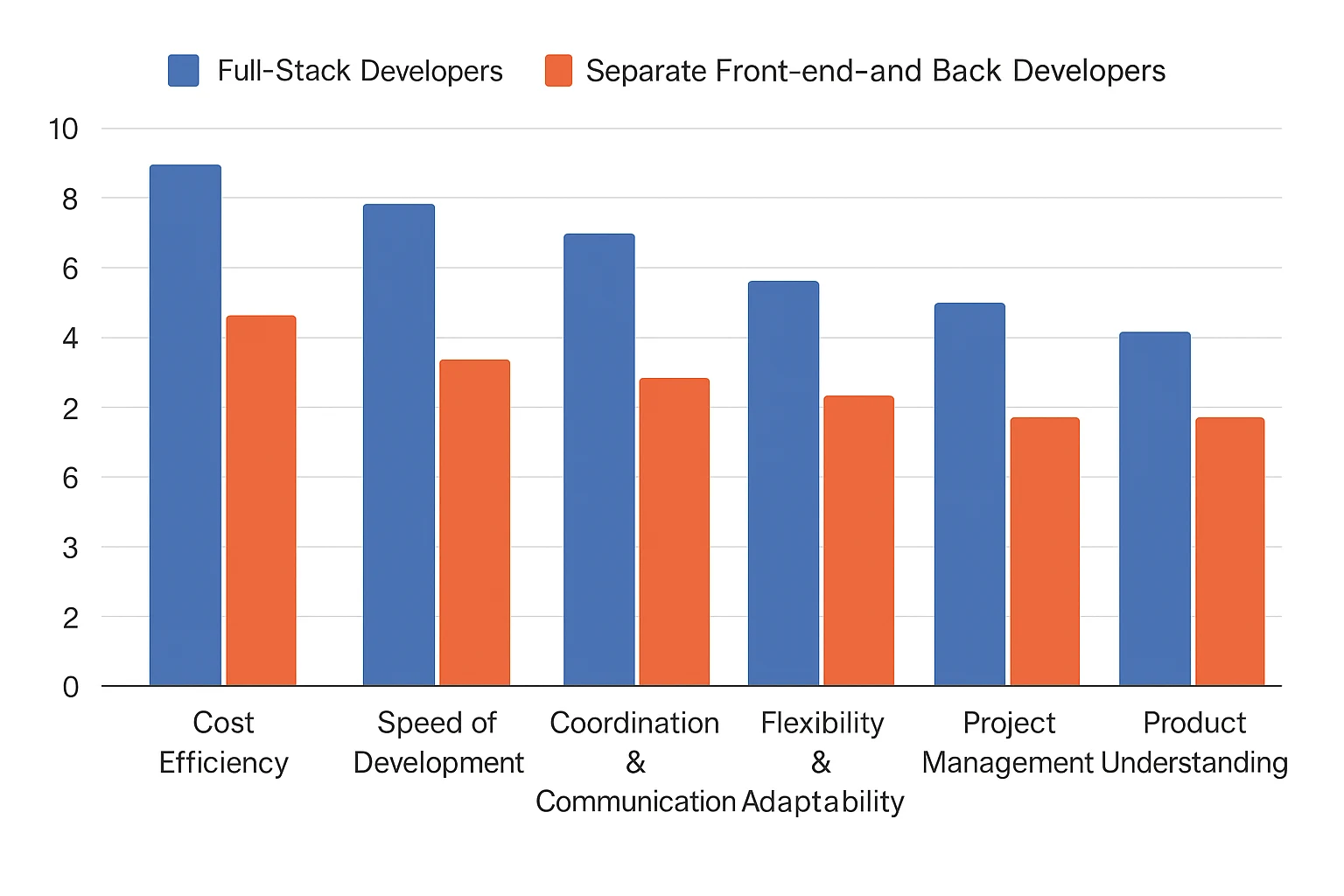
Versatility is extremely valuable in software development. Full-stack developers bring a versatile skill set that can transform how your projects are developed and managed. That is why companies are opting to employ full-stack developers.
1. What Is Versatility in Development
Flexibility in software development means possessing the skill to develop on different technologies and levels of an application. A hire full-stack developers can do both frontend (users' perspective) and backend (server and database) work. Having such a broad set of skills allows them to create and maintain a complete application without relying on others, which is greatly valued by businesses for its flexibility.
2. Cost Savings for Businesses
Hiring a full-stack developer will cost companies less because one person will perform the job of multiple experts. Hiring dedicated full-stack developers benefits the whole process rather than hiring separate frontend and backend developers, saving on coordination and hiring expenses while reducing project timelines.
3. Improved Communication and Collaboration
Communication gap between various parts of the development team decreases when an engineer knows the whole stack. Makes for clearer insight, and enables better-fitting and better-functioning solutions.
4. Faster Problem Solving and Flexibility
Full-stack developers possess end-to-end application knowledge, making them able to fix issues instantly across the entire system. This responsiveness helps companies adapt more quickly, release new features efficiently, and fix bugs without engaging many team members.
5. Ensuring Startup and Small Businesses
For startups and small companies, resources are usually limited most of the time. Full-stack developers allow startups to build scalable products quickly without needing large development teams. This enables quick growth and innovation, which helps them stay competitive.
4.The Hardest Part About Hiring a Full-Stack Developer: The Recruitment Process – What You Should Know When Hiring a Full Stack Developer
When you
hire a full-stack developer
, you're looking at much more than just technical ability—it requires some analysis on your end, in terms of what your team needs and what your company is looking for. Evaluate past projects—review GitHub repositories, portfolios, or case studies to validate expertise or live project demos to assess real-world proficiency. Consider whether you need someone who is more front-end, back-end, or evenly balanced. In the hiring process, evaluate both soft and hard skills: technical skills in the languages and tools of relevance are important, but so are communication, problem-solving, and working effectively in cross-functional teams. Cultural compatibility must also come into your choice, as a developer with values and a work style that match yours can make for a more matching and effective working environment. Clearly Define the Role Put down the technologies, frameworks, and tasks covered—front-end, back-end, or both.
Technical Requirements
● Enumerate necessary programming languages, tools, and frameworks (e.g., JavaScript,
React
, Node.js, Python, databases). Assess Problem-Solving Skills
● Utilize actual coding issues or portfolio critiques to measure the candidate's capacity to develop and debug intricate systems. Evaluate Communication and Teamwork
● Full stack developers tend to cross-functional teams; effective communication and teamwork abilities are a must. Cultural and Organizational Fit
● Search for candidates whose values, mode of working, and attitude are congruent with your firm culture.
● Evaluate Past Work and Experience – Request code samples, GitHub profiles, or live project demos to assess real-world proficiency.
● Balance Soft and Hard Skills - Technological skills are important, but adaptability, curiosity, and learning orientation are important as well.
● Communicate - job responsibilities, growth opportunities, company culture, and working conditions to draw real interest from candidates.
● Use a Structured Interview Process - Employ technical tests, behavioral interviews, and even trial exercises for an all-around assessment.
● Plan for Onboarding and Retention - An onboarding plan and career development pathway, well-designed, assists in retaining high performers after hire.
Difference Between Frontend and Backend Developers
Here is the Comparison of Frontend vs Backend Developer Skills
Frontend developer
- They build the visible parts of a website or application. A Frontend Developer will commonly work with technologies like HTML, CSS, JavaScript, and frameworks such as React or Angular to build the portion of the product that users interact with directly.
Back-end developer
- This provides all of the server tasks and database work. They are the people you never see, working in languages like
Python
, Java, Node.js & PHP that secure your data, handle the communication with the server, and tune the application performance.
Experience LevelAverage Annual Salary (INR)Salary Range (INR)Entry-Level (0–2 years)$4,800 – $7,200$2,160 – $14,400Mid-Level (3–5 years)$8,400 – $14,400$3,600 – $24,000Senior-Level (6+ years)$14,400 – $21,600+$7,800 – $48,000
Hiring Methods
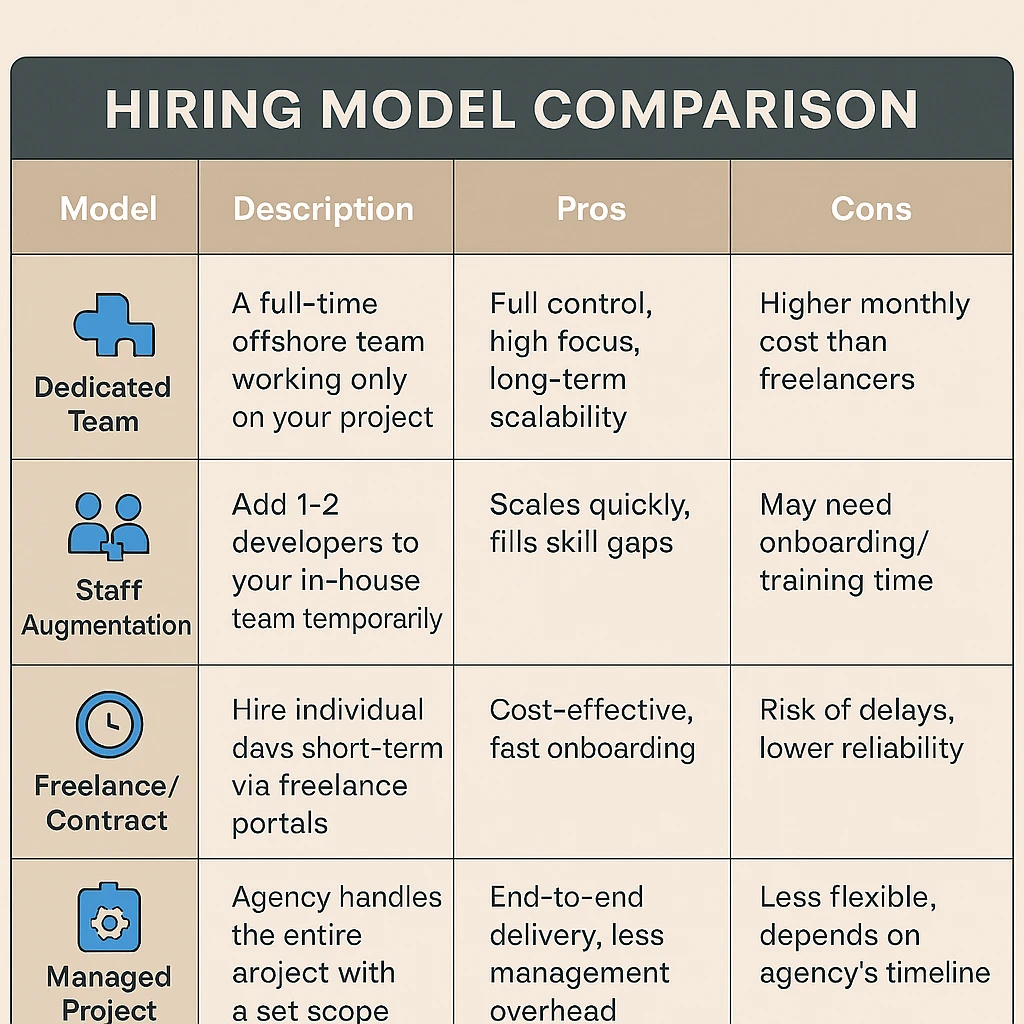
1. Offshore Development Agencies
● Pre-verified developers for full-time engagement
● Project managers in the loop
● Affordable mid-range option, very dependable
● Long-term, scalable projects or startups are best suited
2. Freelance platforms
● Freelance platforms are a competitive rate option
● Fast hires, good for short gigs
● Freelance platforms may offer quick hires but often lack control and long-term reliability.
3. Hired Talent Marketplaces
● Pre-screened pool of developers for technical & soft skills
● High quality, reliable for work from home
● Pricier than freelancers, but less expensive than in-house
● Ideal for mid to long-term hires
4. Job Boards
● Perfect for in house-remote teams and direct hires
● High control over hiring
● The longer way round requires HR and vetting
● Moderate to high cost, depending on benefits/salary
5. Technical Marketplaces
● Codility is a platform that assesses developers’ skills through coding challenges.
● Great for a start-up that has a very specific tech stack requirement
● It allows filtering candidates based on performance, challenge success rate, or ranking.
● Great quality potential at a less-than-premium price
Top Cities in India for Full-Stack Talent
● Bengaluru (Bangalore) – The Silicon Valley of India.
● Hyderabad – Abundant talent pool, especially for cloud and enterprise solutions.
● Pune – Large full-stack and DevOps communities.
● Delhi NCR – Covers Noida and Gurgaon, tech centers with a corporate and startup mix.
● Chennai & Kochi – Low-cost emerging alternatives.
5.Conclusion
India has a platform and hiring model that matches every business and budget. Whether you’re a startup in need of flexibility or an enterprise after reliability and scale, with options ranging from
Hire Coders in India
development agencies to vetted talent platforms to job boards, we offer affordable access to elite full-stack talent. Freelance networks would cater to quick jobs, and for long-term work, the network would have curated portals where you can 100% rely on the quality of skills. The right hiring method depends on your project scope, timeline, and desired control level. With India’s vast talent pool and competitive pricing, finding skilled full-stack developers has never been easier.
Meet the Author

Co-Founder, Rytsense Technologies
Karthik is the Co-Founder of Rytsense Technologies, where he leads cutting-edge projects at the intersection of Data Science and Generative AI. With nearly a decade of hands-on experience in data-driven innovation, he has helped businesses unlock value from complex data through advanced analytics, machine learning, and AI-powered solutions. Currently, his focus is on building next-generation Generative AI applications that are reshaping the way enterprises operate and scale. When not architecting AI systems, Karthik explores the evolving future of technology, where creativity meets intelligence.