1.How much does it cost to hire AI Developers

Artificial Intelligence (AI) is now a vital part of the modern business landscape, helping companies shape their future strategies. As organizations become more data-driven and rely heavily on machine learning, the need to
hire AI developers
with specialized expertise is growing rapidly. AI brings enhanced productivity, smarter decision-making, and highly personalized customer experiences—but building and managing these intelligent systems requires substantial investment. To hire AI developers with the right skills—such as machine learning, deep learning, and natural language processing (NLP)—companies often face high costs. These costs vary depending on the developer’s experience level, the complexity of the project, and geographical location. With demand for skilled AI professionals far exceeding supply, businesses are increasingly competing in a tight talent market, often engaging in bidding wars to secure the best candidates.
2.AI Development Company in India
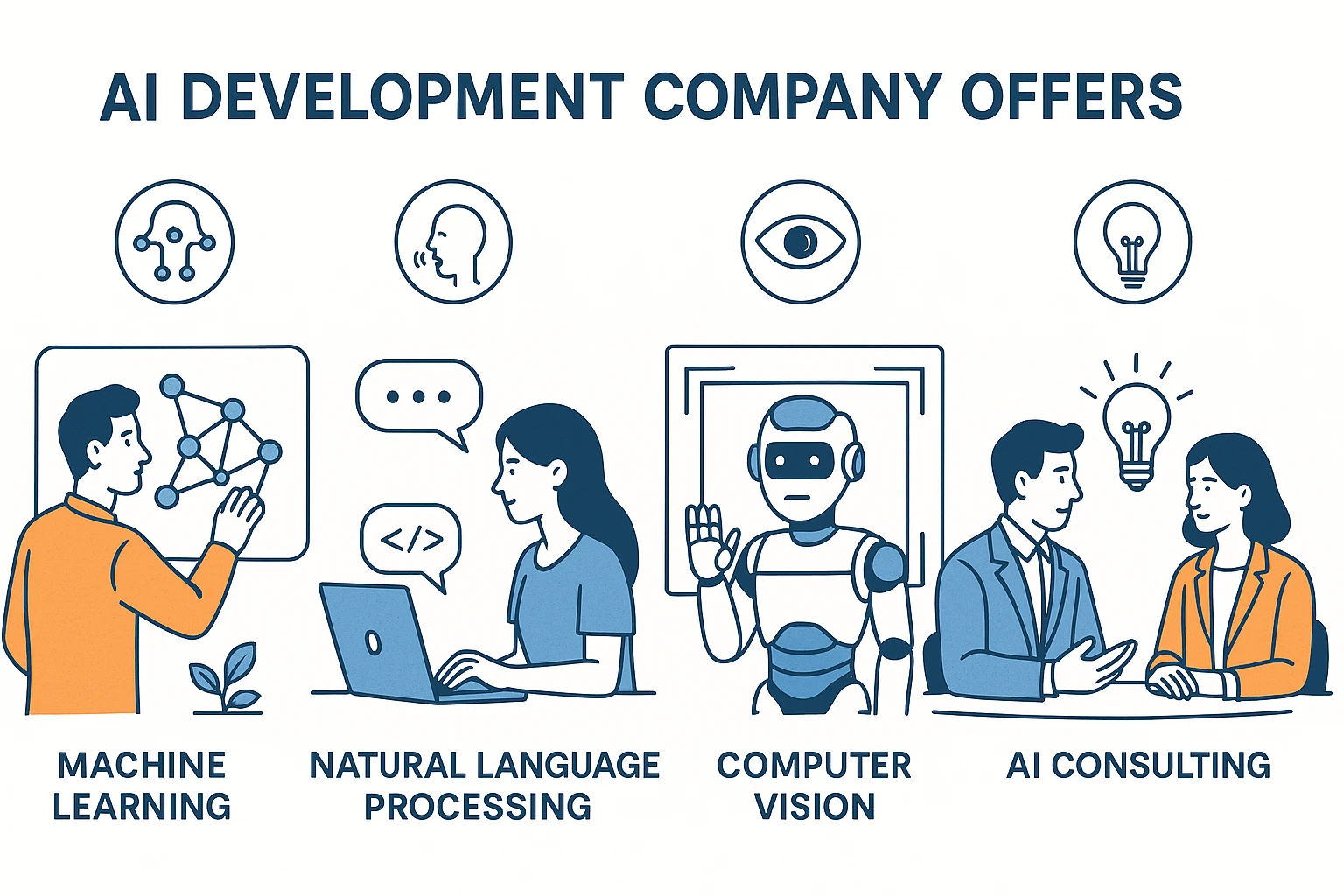
AI Development Company in India to plan and build intelligent data-driven solutions for enterprises from different verticals. By utilizing technologies such as machine learning, natural language processing, computer vision, and deep learning, these companies are able to build custom AI models and applications. Indian AI firms are admired for doing everything from AI chatbot/recommendation engine building, business process automation, or predictive analytics system creation― all these are done in a technical but cost-effective, scalable way. As a startup trying to validate AI idea or a big enterprise with aggressive scaling of hiring AI developers in production, collaborating with an AI development company in India .
3.Understanding the Role of AI Developers
Software developers
work on developing applications, systems, or tools that use artificial intelligence to do. An AI developer connects data science and software engineering to transform data (or models) into products — that is, recommendation systems, smart assistants, fraud detectors, automated decision making, etc., from raw data and from models
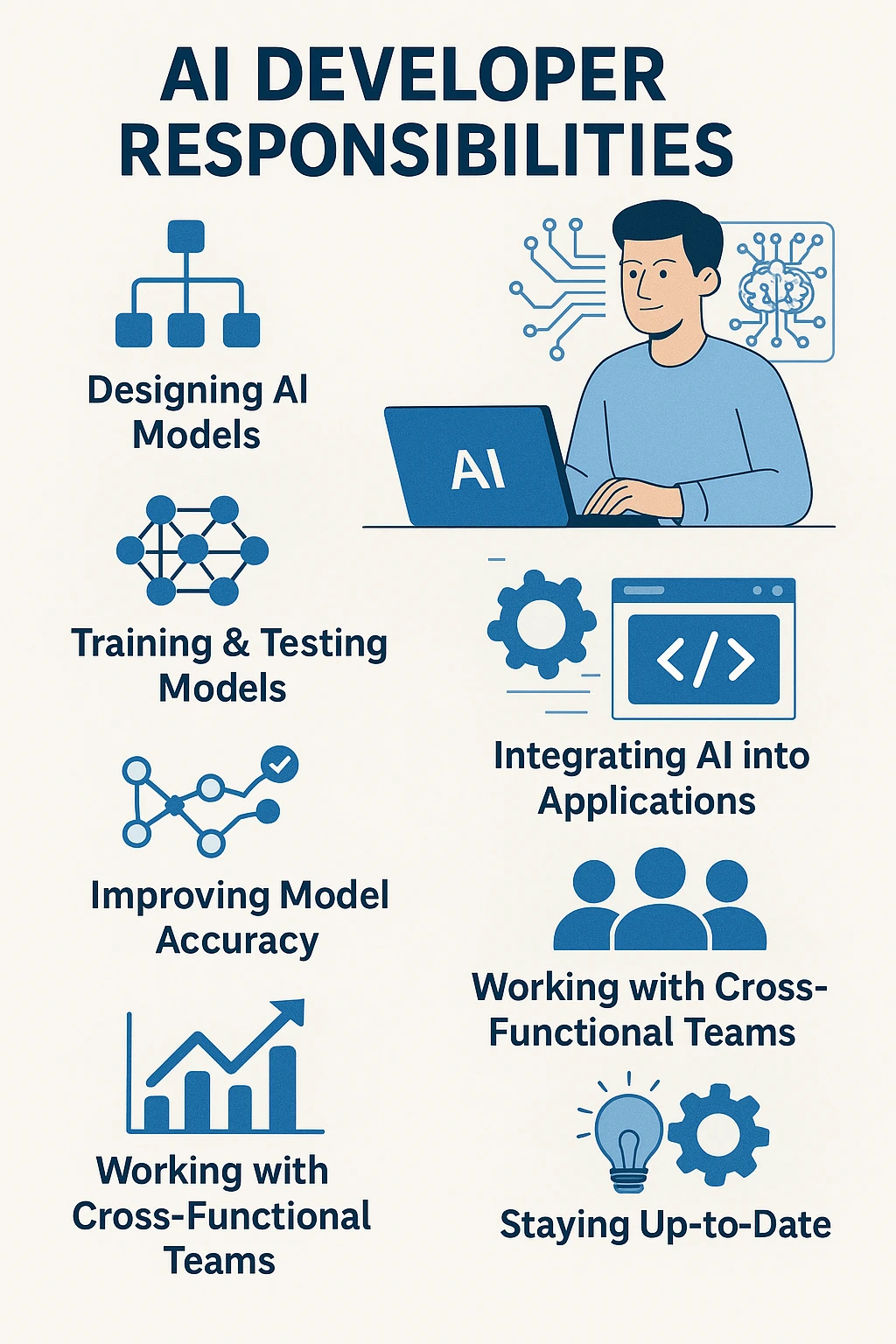
3.1 Developers Job Responsibilities
1. Designing AI Models
● Build machine learning algorithms for particular tasks.
● Select Models ( Neural networks, decision trees) based on the problem.
2. Data Collection & Preprocessing
● Problems — Gather and clean data for model training.
● Prepare high-quality, spine-quality datasets
3. Training and testing models
● Use frameworks such as TensorFlow, PyTorch, or Scikit-learn to train large datasets in AI models.
● Testing and validating the models, which assures correctness & performance
4. Utilising AI in Applications
● Add AI: function with web, mobile, or desktop apps
● Developing APIs or other systems that can consume the capabilities of AI
5. Enhancing the Accuracy of Model
● Make it a practice to continuously monitor, evaluate, and fine-tune your AI models even after deployment.
● Regularly update the model and retrain the algorithms when needed to ensure optimal performance and accuracy over time.
6. Collaborating with Cross-Functional Teams
● Partner with Data Scientist, Product Managers, UX / UI designers, engineers.
● Transform business problems into technical solutions.
7. Keeping in touch
● Keep Up to Date, Keep Relevant(Don't Become Dated)
● Develop and innovate with the latest in AI.
● Explore the new algorithms, tools and industry trends.
4.How to Hire AI developers
Step 1: Know Your Requirement
● What do you want to achieve? (chatbot, prediction engine, NLP, CV)
● Hire the talented developers
Step 2: Hiring type
● Employer for Ongoing, Long-term work
● For longer-term plans and projects, look in-house.
● End-to-end delivery for the complete agency, from scratch.
● Now presents you to write a JUNIOR Job posting exclusively about the job and me.
● List technical requirements, things to do, scope of project and deliverables.
● Note libraries or specific model types as TensorFlow, PyTorch, and Python.
Step 3: Screen Candidates
● See portfolios and GitHub
● Assess if they have domain knowledge, communication skills and deeper AI problem-solving ability.
Step 4: Technical Assessment
<br/ ● Provide them with a coding challenge or a mini AI model sample
● With tools such as HackerRank, Codility, or a take-home homework
Step 5: Interview & Hire
● Float real-world AI applications, debuggin,g and how it scales.
● Check for experiences with actual data sets, cloud deployment & ethical AI
Step 6: Onboard & Link
● Set up access, goals, and collaboration tools
● Response to how the product pursues AI along with the product or business team
5. Must Have Skills for AI Developer
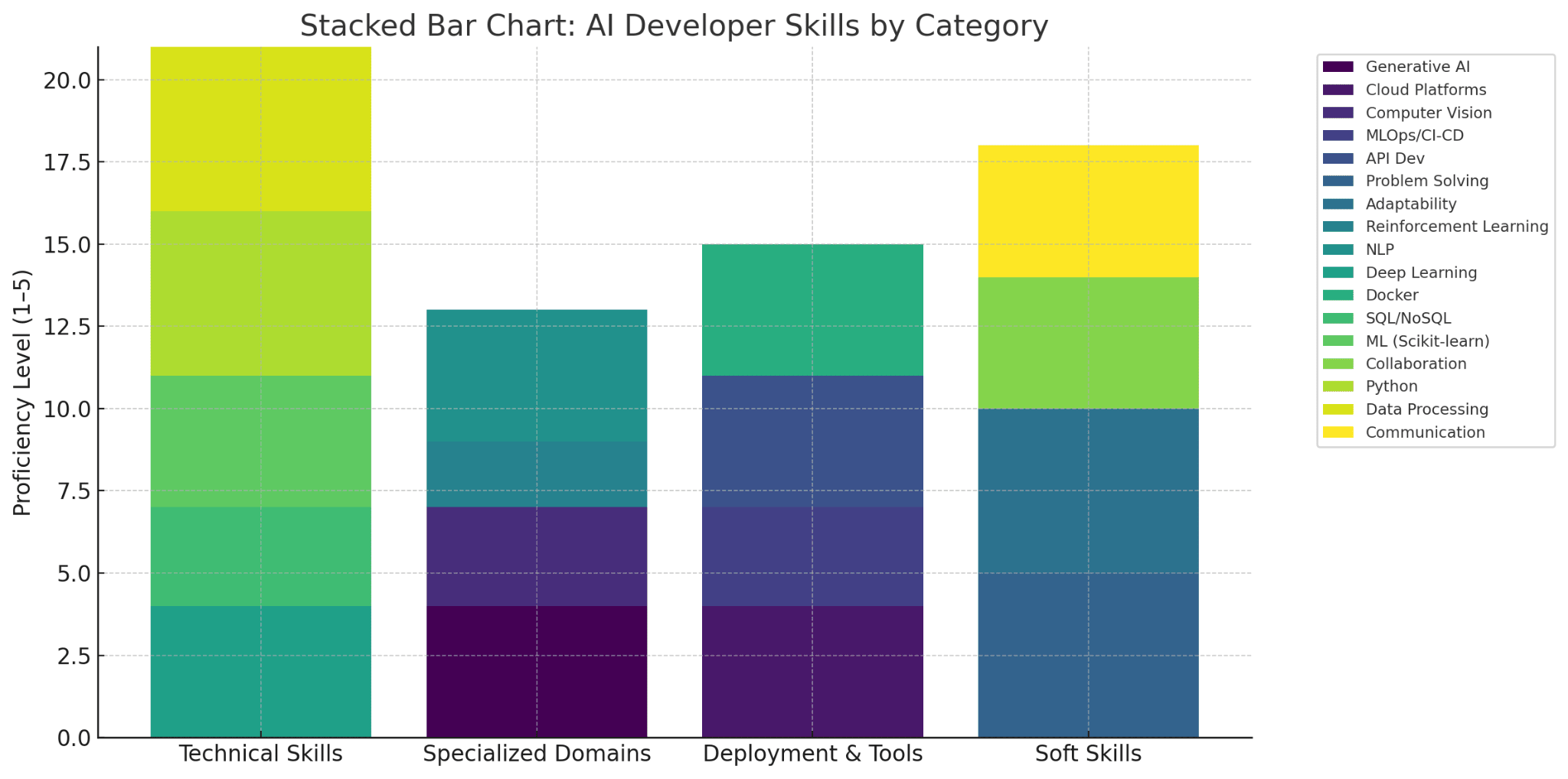
1. Core Technical Skills
● Python / R
● Machine Learning Frameworks : TensorFlow, PyTorch, scikit-learn
● Data : Pandas, NumPy, SQL manipulation
● Model Evaluation & Tuning- Cross-Validation, tuning hyperparameters.
● Probability, linear algebra, and calculus
● Mathematics & Stats
2. Specialized AI
● Text Classification, Sentiment Analysis with the assistance of NLP(Text) (LLM).
● Computer Vision : Image classification, object detection, OpenCV
● Deep learning: Neural networks, CNNs, RNNs, transformers
● under General hire AI developers (LLMs i.e. GPT, diffusion models, prompt engineer)
● Reinforcement Learning : Q-learning, policy gradients
3. Deployment & Tools
● Platforms in the cloud : AWS (SageMaker), Google Cloud (Vertex AI)and Azure ML
● APIs & Integration- REST (Flask/FastAPI), Serving of model
● DevOps/MLOps-Docker, Kubernetes, CI / CD Pipelines, MLFlow
4. Soft Skills
● Problem-Solving-Convert business problems into AI solutions for training machine
● Collaborative Work With data scientists, engineers & product managers
● Adaptable: Continually developing and evolving with new AI tools & snapshots
6. What is the Cost to Hire an AI Developer?
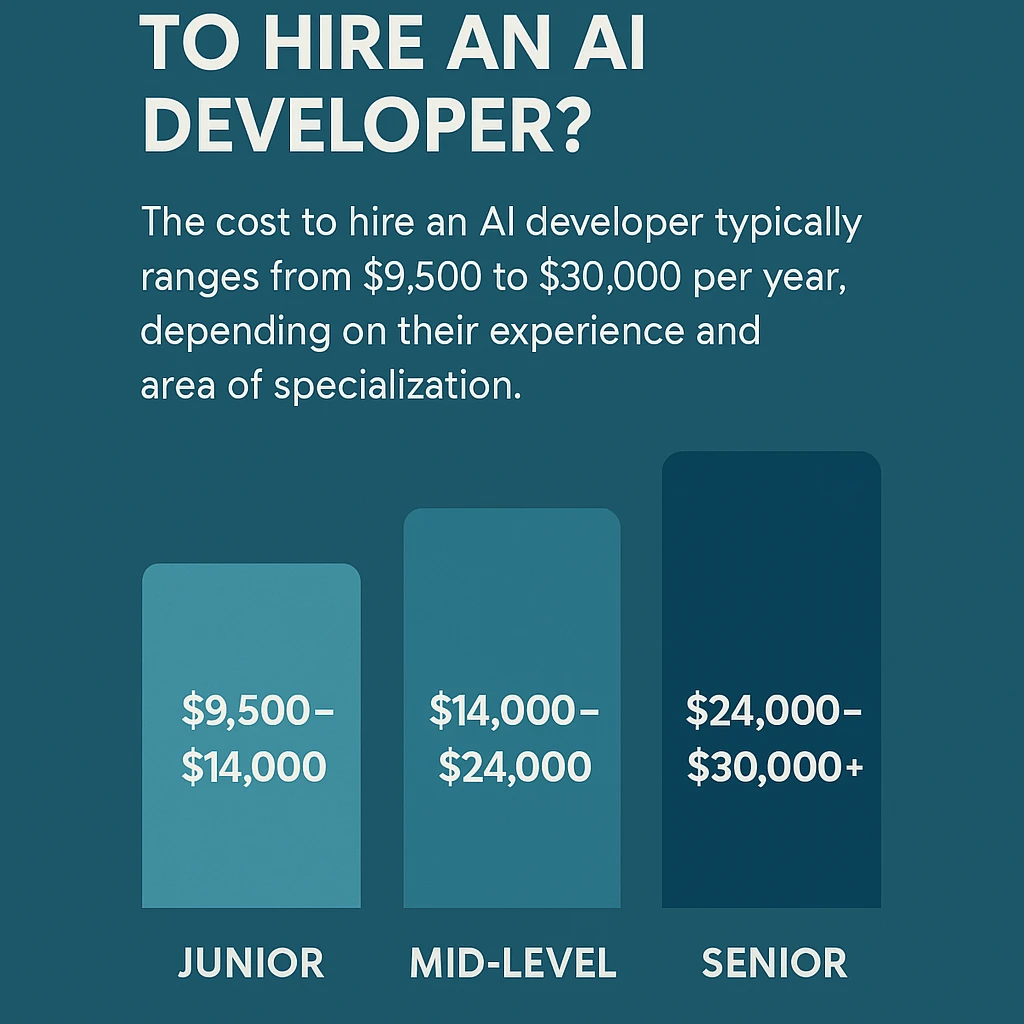
The cost to hire AI developers varies based on the hiring model and location. Here’s a breakdown of the three common options: freelancers, in-house developers, and development agencies or dedicated teams.
1.Freelance AI Developers
Freelancers are great for short-term and turnaround AI projects or when you need something faster than your in-house R&D department can deliver. Junior freelancers can offer $25/hour, highly sought AI practitioners and deep learning /NLP specialists may cost at least $100-$200/hour or even more.
Cost Range:
$25 –> $200/hour depending on exp & location
Pros:
● Only pay for what you require
● Global talent pool
● Quick onboarding
Cons:
● Quality is not the same
● Limited availability/commitment
● Possibly no team collaboration skills
Best for: One-off models or short-term use-cases of AI, required in prototypes and MVPs
2. In-house AI Developers
Keep a full-time AI developer as they provide the support you need like a country. Very good for the companies that are cutting notched AI-driven products or simply pushing continuous AI innovation. Yet, that also comes with more charges i.e. benefits onboarding, apparatus and training.
Annual Salary
● Junior: $10,000 – $20,000
● Mid-level around $20,000 – $40,000
● Senior/Lead: $40,000 – $70,000
Pros:
● Ecosystem integration with your product/team
● Firm and long-term development
● More aligned with the company vision
Cons:
● Overhead costs
● The hiring process takes longer
● Attrition Risk
Best for: AI startups, enterprises needing to implement AI services on the go or develop in-house AI capabilities.
3. AI Agent Development Company or teams
AI-focused and AI Agent development companies offer full stack development, though starting at ideation to deployment. They are usually made of data scientists /developers, project managers, and QA specialists. Of course this is the costliest option, it is also the most sure shot for complex or enterprise-wide projects.
Cost Range:
● $3,000–$6,000 per project
● Rate: $25 – $50/hr
Pros:
● Experienced multidisciplinary teams
● Quick turnaround and scale
● Professional project management
Cons:
● Higher costs
● Lack of control in hiring individual devs
● Communication can be less straightforward
Best for: Enterprise, funded startups & end-to-end delivery or scaling projects
7.AI Market Overview & Trends (2025)
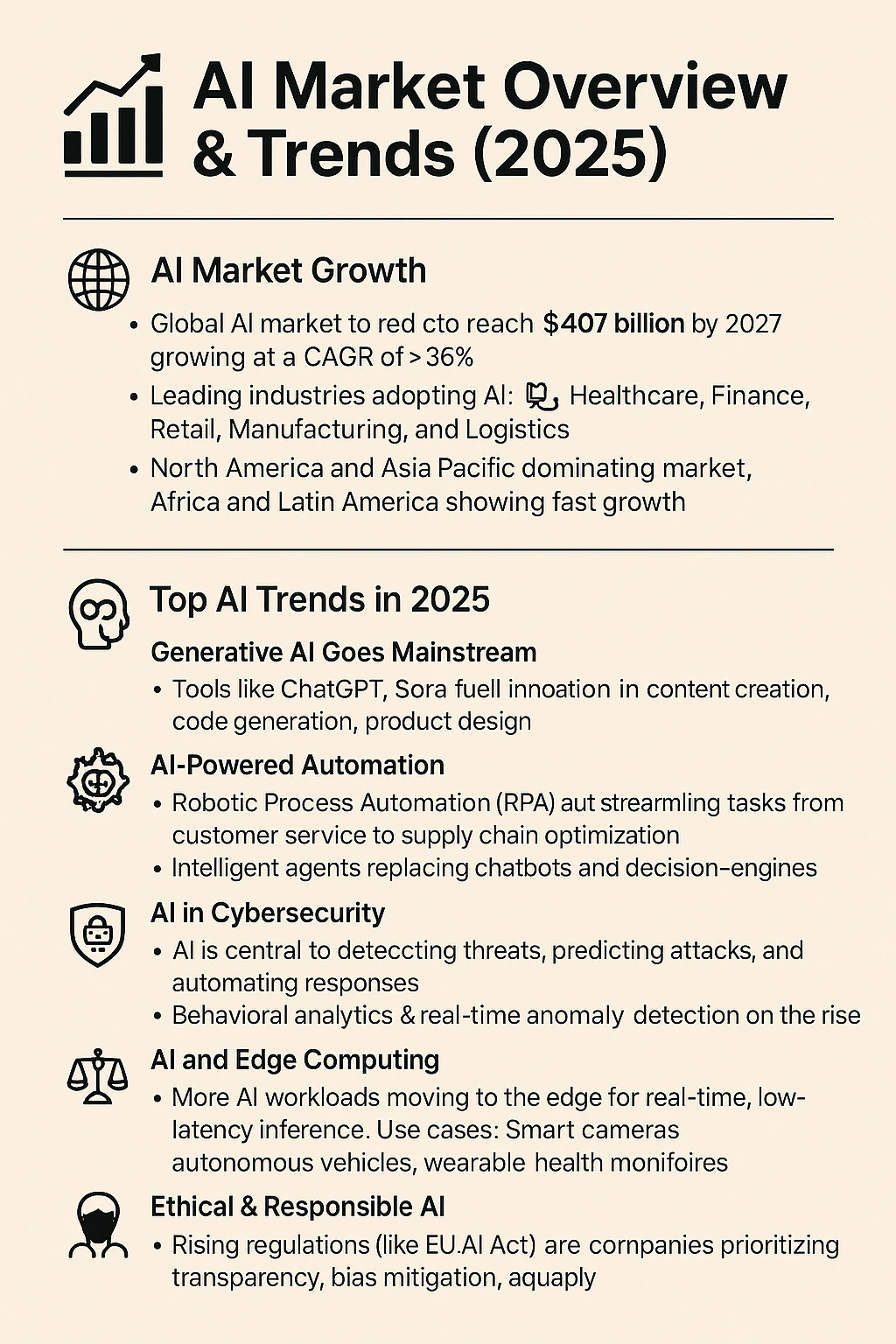
Developing the AI Market
● Top sectors where AI is being deployed: Healthcare, Finance, Retail, Manufacturing, and Logistics
● Market leading region: North America & Asia-Pacific, but Africa and Latin America have fast incremental growth because of higher digitization with talent availability.
Top AI trends in 2025
1. Generative hiring of AI developers goes commercial
● ChatGPT, MidJourney, and Sora are just the tip of the innovation iceberg for content, code, and product generation.
● Organizations are developing bespoke LLMs to match their internal knowledge and use cases
2. AI-enabled Automation
● RPA + AI is automating everything from customer service to supply chain optimization
● Traditional chatbots and decision engines are being anchored on intelligent agents
3. AI in Cybersecurity
● Artificial Intelligence is inseparable from protection and attack prediction & response automation
● Behavioral analytics and anomaly detection in real time are picking up (a lot)>
4. Extreme Computing & AI
● AI workloads are increasingly moving to the edge (smartphones, IoT devices) for low-latency inference
● SMART camera usages, self-driving competencies, wearable health sensors
5. AI & Ethics + Responsible AI
● With more regulations (e.g., the EU AI Act) companies increasingly prioritizing transparency, bias reduction and explainability
● The board-level implementation of AI governance is clear
6. AI Talent Shortage
● The demand for skilled AI developers, ML engineers, and data scientists exceeds the supply
● Companies are drastically valuing upskilling and AI hiring
7. AI | No-Code/Low-Code Platforms
● automated tools for business users that require just writing the code simple, not complex
● AI democratization accelerates in non-technical industries.
8.Conclusion
Cost of hiring AI developers depends on a number of attributes such as its expertise in AI, location where they are located, complexity of project and tech stack needed. Junior: $25-$50/hr; Mid-Level Developers from $50 - $100/hr and senior/Specialized will likely command $100–$200/hr+, or more in some cases While
hiring coders in India
or Eastern Europe (outsourcing hubs) will save more, you will pay premium rates for developers from North America or Western Europe.The skilled AI developers in order to have sustainable, intelligent solutions.
Meet the Author

Co-Founder, Rytsense Technologies
Karthik is the Co-Founder of Rytsense Technologies, where he leads cutting-edge projects at the intersection of Data Science and Generative AI. With nearly a decade of hands-on experience in data-driven innovation, he has helped businesses unlock value from complex data through advanced analytics, machine learning, and AI-powered solutions. Currently, his focus is on building next-generation Generative AI applications that are reshaping the way enterprises operate and scale. When not architecting AI systems, Karthik explores the evolving future of technology, where creativity meets intelligence.