1. Why Invest in ERP Software in 2025?
Software for enterprise resource planning, or ERP, has come essential for companies trying to increase productivity, simplify processes, and improve decision-making. As 2025 gets further, the demand for ERP results is only expected to grow, reaching $242.89 billion globally by 2029 (at a composite periodic growth rate of 10.1). The cost of developing
Custom ERP Software
in 2025 is still a pivotal consideration, however. The answer is not simple; features, deployment models, technology stack, and seller position all affect ERP development costs. All of the cost considerations, pricing protrusions, and tactics to maximize your budget while guaranteeing a top-notch ERP result are broken down in this expansive book.
● Before diving into costs, let’s understand why businesses are increasingly espousing ERP systems
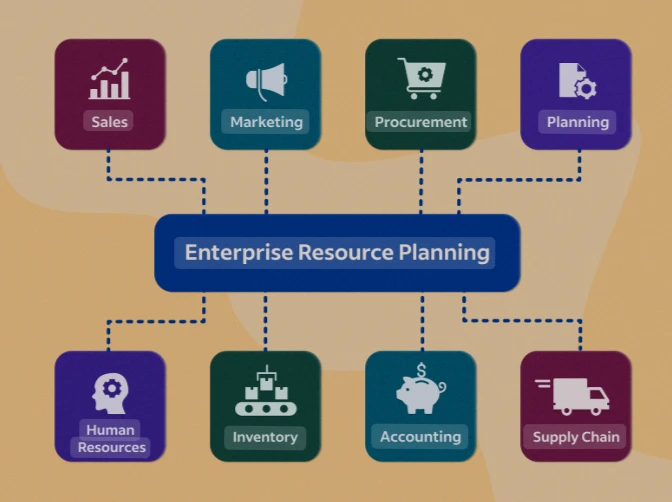
● With the exception of data silos, integrated operations ERP unifies finance, HR, force chain, and CRM onto a single platform.
● AI & robotization ultramodern
ERP systems influence AI
and machine literacy to automate repetitious tasks, reducing homemade crimes.
● Real-Time Analytics Businesses gain practicable perceptivity through real-time reporting, perfecting decision-timber.
● Cost effectiveness By optimizing workflows, ERP reduces functional charges in the long run.
● Scalability ERP allows for expansion without requiring significant system changes as your company grows.
The trend is apparent, as 53 associations have switched to off-the-shelf ERP. ERP is becoming a need for competitive enterprises rather than a luxury.
2.Crucial Factors Affecting ERP Development Costs in 2025
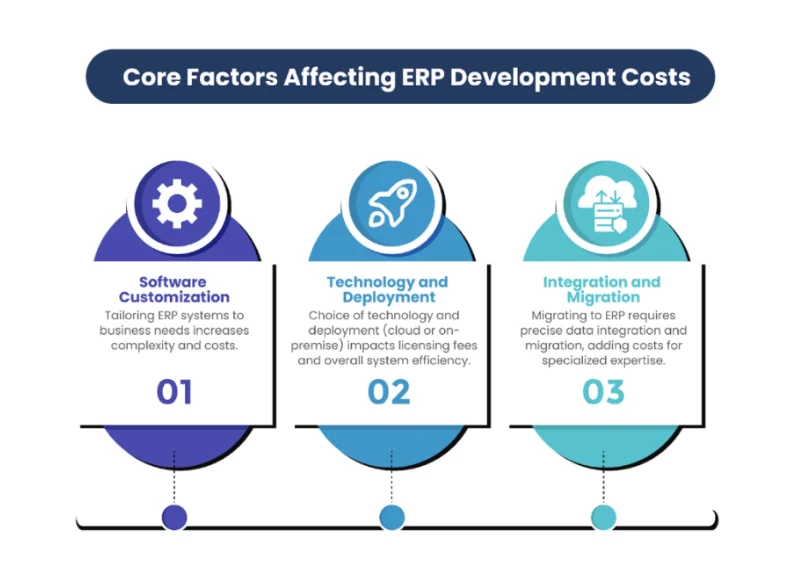
The cost of
ERP Software Development
depends on multiple variables. Then’s a detailed breakdown
3. Key Factors Affecting ERP Development Costs
3.1 Types of ERP Systems
ERP TypeCost RangeStylish ForPall-Grounded ERP$5,000 – $10,000SMEs, startupsPre-Built ERP$8,000 – $15,000Mid-sized businessesCustom ERP$20,000 – $500,000Enterprises with complex needs
● Pall ERP ( e.g., NetSuite, SAP S/ 4HANA pall) is subscription- grounded, taking lower outspoken costs.
● On-Premise ERP ( e.g., Microsoft Dynamics) involves advanced original investment but offers long-term control.
● Custom ERP is acclimatized to unique business processes but is the most precious.
3.2 Features & Modules
Point Complexity Estimated Cost Basic ERP ( Finance, HR, force) $ 10,000 –$ 15,000 Mid-Level ( CRM, BI, Supply Chain) $ 15,000 –$ 20,000 Advanced ( AI, IoT, Blockchain Integration) $ 20,000 –$ 500,000
3.3 Must-have ERP features in 2025
● Fiscal operation
● Force chain & force tracking
● Human Resource Management ( HRM)
● Client Relationship operation ( CRM)
● Business Intelligence ( BI) & reporting
● Mobile availability
● Third-party integrations ( eCommerce, payment gateways)
● Technology Stack
3.4 The choice of tech mound impacts both performance and cost
Tech mound Cost Impact Frontend ( Reply, Angular) Moderate Backend (Python,. NET, Node.js) Moderate to High Database ( MySQL, PostgreSQL, MongoDB) Low to Moderate pall Hosting( AWS, Azure, Google Cloud) Recreating cost AI/ML & Blockchain Integration High
3.5 Development Team & Location
inventor rates vary by region
Region Hourly Rate North America 60 –$150 Western Europe 100 –$200 Asia ( India, Philippines) $30 –$80
Team Options
● Freelancers ($ 25–$ 100/ hr) – parlous for complex systems.
● On-site team – High hires but better control.
● ERP Development Agencies ($ 50–$ 200/ hr) – Contemporary for end- to- end results.
3.6 Deployment & Maintenance Costs
● perpetration & Data Migration $ 5,000 –$ 50,000
● Assisted Training $ 5,000–$ 7,000
● Annual administration of 15–20 percent of the initial development cost
4. Understanding Cost Factors & Optimizing Development Choices
Both on web and mobile platforms, hiring React developers are crucial to the development of dynamic, user-centric applications. Their tasks usually encompass:
Major Responsibilities
1. Developing UI Components
● Create reusable, efficient, and modular components with React.js
● Maintain consistent UI/UX on devices and browsers
2. Writing Clean and Scalable Code
● Write maintainable and structured code using JavaScript ES6+ and JSX
● Adhere to coding best practices and standards
3. State Management
● Use state management with libraries such as Redux, Context API, or Zustand
● Have predictable state behavior throughout the application
4. API and Service Integration
● Call and process data from RESTful or GraphQL APIs
5. Performance Optimization
● Employ methods like lazy loading, memoization, and code-splitting
● Identify and fix bottlenecks for optimal performance
6. Testing and Debugging
● Write unit and integration tests (e.g., Jest, React Testing Library)
● Debug and rectify issues across platforms and browsers
7. Collaboration and Communication
● Having discussion with developer teams
● Engage in agile development cycles (scrum, sprint planning, etc.)
8. Keeping Current with Trends
● Constitutionally learn and adapt new tools and methodologies in the React space
● Keep up with updates on React, Next.js, TypeScript, etc.
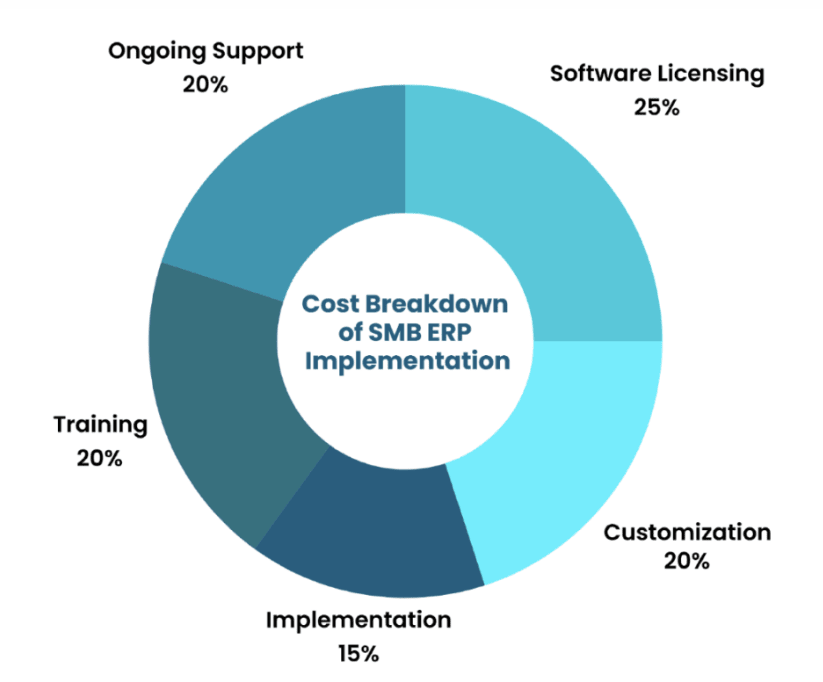
4.1 Key Cost Factors in ERP Implementation
1. Software Licensing & Deployment Model
● On-Premise ERP (higher upfront costs, full control) vs. Cloud ERP (lower initial cost, subscription-based).
● Although hybrid models are flexible, they could make things more complicated.
2. Customization vs. Configuration
●
Custom ERP Software Development
(tailored to exact needs, but costly & time-consuming).
● Pre-Configured ERP (faster, cheaper, but may require process adjustments).
3. Integration with Existing Systems
● Legacy system integration can add costs but ensures smooth transitions.
4. Training & Change Management
● Employee resistance can affect ERP success. Investing in training maximizes adoption.
5. Maintenance & Upgrades
● While on-premise ERP necessitates IT personnel, cloud ERP lowers maintenance costs.
4.2 How to Optimize ERP Development Choices?
● Align
ERP with Business Goals
(e.g., improving supply chain visibility vs. automating accounting).
● Choose the Right Vendor (SAP, Oracle, Microsoft Dynamics, or industry-specific ERP).
● Prioritize Scalability (avoid outgrowing the system too quickly).
● Use Agile Implementation (phased rollout minimizes disruption).
5. ERP Development Cost Breakdown (2025 Estimates)
Cost FactorEstimated Price Range Basic ERP Software$10,000 - $15,000Mid-Level ERP $15,000 - $20,000 Enterprise-Grade Custom ERP$50,000 - $500,000Pall ERP (Periodic Subscription)$100 - $5,000/monthOn-Premise ERP License$10,000 - $100,000Perpetration & Setup$5,000 - $50,000Training$5,000 - $7,000Annual Maintenance15 - 20% of original cost
6. How to Reduce ERP Development Costs?
Start with MVP ( Minimum Viable Product) – Launch with core features first, also scale.
● Choose Cloud ERP – Avoid heavy structure costs.
● Prioritize Essential Features – Avoid unnecessary customizations.
● Offshore Development –
Hire developers
from cost-effective regions.
● Open-source ERP (such as Odoo and ERPNext) has less charges for licensing.
7. Boosts Effectiveness, Reduces Costs, and Drives Growth
How ERP Enhances Business Performance?
7.1 Boosts Effectiveness
● Automation eliminates manual errors (e.g., auto-invoicing, payroll).
● Single Source of Truth prevents data containers, improving collaboration.
● Workflow Optimization speeds up approvals and reduces obstacles.
7.2 Reduces Costs
● Lower Operational Costs (e.g., reduced inventory waste, optimized procurement).
● Fewer IT Expenses (cloud ERP reduces server and maintenance costs).
● Reduced Compliance Penalties (automated reporting minimizes errors)
7.3 Drives Growth
● Better Customer Experience (
CRM integration improves sales & support
).
● Faster Decision-Making (real-time dashboards help spot trends).
● Global Expansion Support (multi-currency, multi-language capabilities).
8. Why choose a Chennai-based software development company to create ERP software?
Chennai has emerged as a global IT hub, particularly for ERP software development, and for good reason. Businesses worldwide—from startups to Fortune 500 companies—are turning to Chennai-based firms for their ERP needs. Let’s break it down in a way that feels real, practical, and human—not just another sales pitch.
8.1 Chennai’s Deep ERP Expertise
Yes, cost efficiency matters, but
custom software development companies in Chennai
real strength lies in its decades of ERP specialization.
● Legacy of ERP Excellence:
Rytsense Technologies
, founded in Chennai, has played a key role in shaping the region’s ERP development landscape, contributing to a strong local ecosystem of skilled ERP professionals.
● Experienced Developers: Many engineers here have 10+ years of experience in SAP, Oracle, Microsoft Dynamics, and custom ERP solutions.
● Domain-Specific Knowledge: Whether it’s manufacturing, healthcare, retail, or logistics, Chennai’s developers understand industry pain points and build solutions that actually work.
8.2 High-Quality Development at Competitive Costs
Let’s be honest: Offshore ERP development often raises concerns about quality. But Chennai flips that narrative.
● Cost-Effective, Not Cheap: Compared to the US or Europe, development costs are 30-50% lower, but the quality matches (or exceeds) global standards.
● Strong English Proficiency: Miscommunication kills ERP projects. The workforce in Chennai speaks English very well, which facilitates collaboration.
● Time Zone Advantage: Overlapping with EU/US mornings allows real-time updates without delays.
8.3 A Culture of Problem-Solving
ERP aims to solve business issues rather than only provide tools. Chennai’s developers think like business analysts, not just programmers.
● Process Optimization Mindset: They don’t just build ERP modules; they streamline workflows to eliminate inefficiencies.
●
Customization Without Bloat
: Many ERP systems fail because they’re over-customized or too rigid. Chennai firms strike the right balance.
● Post-Launch Support: Unlike fly-by-night vendors, Chennai companies stick around for updates, training, and troubleshooting.
8.4 Thriving Tech Ecosystem
Chennai isn’t just a cluster of IT firms—it’s a network of innovators.
● Government & Startup Support: Tamil Nadu’s policies encourage IT growth, meaning more stability for long-term ERP projects.
● Cloud & AI Readiness: Chennai is leading the way in IoT integration, predictive analytics, and AI-driven ERP.
8.5 Proven Success Stories
Numbers talk. Some global brands trust Chennai for ERP because:
✅ A European manufacturing giant reduced operational costs by 22% after migrating to a Chennai-built ERP.
✅ A Middle Eastern retail chain scaled to 50+ stores with a custom inventory management ERP from Chennai.
✅ An
American healthcare provider
cut patient data processing time by 40% with a Chennai-developed HIPAA-compliant ERP.
9.Conclusion
ERP software is not merely a cost; it's a strategic investment. By understanding cost factors and optimizing development choices, businesses can apply an ERP system that boosts effectiveness, reduces costs, and drives growth in 2025 and further. Developing ERP Software in 2025 can range from $10,000 for a introductory system to $500,000 for a custom enterprise result. The final cost depends on
Type of ERP (Cloud, On-Premise, Custom)
● Features & Integrations
● Tech mound & Development Team
● Deployment & conservation
For SMEs, off-the shelf ERP is the most budget-friendly option, while large enterprises may need a custom-built result. Pro Tip Partner with an educated ERP Development company to get a acclimatized result within your budget.
Need a custom ERP result?
Get a free consultation
with professional ERP developers!
Meet the Author

Co-Founder, Rytsense Technologies
Karthik is the Co-Founder of Rytsense Technologies, where he leads cutting-edge projects at the intersection of Data Science and Generative AI. With nearly a decade of hands-on experience in data-driven innovation, he has helped businesses unlock value from complex data through advanced analytics, machine learning, and AI-powered solutions. Currently, his focus is on building next-generation Generative AI applications that are reshaping the way enterprises operate and scale. When not architecting AI systems, Karthik explores the evolving future of technology, where creativity meets intelligence.