Key Takeaways
Healthcare conversational AI transforms patient interactions in terms of 24/7 automated services with low operational costs and greater accessibility. AI-based systems manage high-priority healthcare operations from scheduling appointments to the management of chronic illnesses, improving patient outcomes as well as provider productivity. Virtual health assistants and chatbots supplement human healthcare providers by processing routine tasks and allowing professionals to concentrate on complex medical cases. Sophisticated AI systems are easily integrated into current healthcare infrastructure, offering real-time analysis of patient data and personalized recommendations for treatment.Next-generation healthcare AI will have predictive analytics and emotional intelligence, revolutionizing patient interaction and clinical decision-making.
Top 10 Use Cases of Conversational AI for Healthcare
Conversational AI for healthcare is transforming the medical environment with measurable outcomes:
64% of healthcare
organizations that implemented generative AI said they expected or had already measured positive ROI. Of patients with chronic disease, only half follow their care plan and medications as prescribed, indicating a need for AI-enabled medication adherence systems.
Fitness platforms using conversational agents have produced statistically significant increases - for example, a 6.17% increase in weekly steps and 7.61% more moderate-to-vigorous activity over a 12-week duration.
Conversational
AI for healthcare
transforms healthcare through:
- Automated Appointment Booking and Smart Reminders
- AI-Enabled Symptom Assessment and Patient Triage
- Boosting Medication Adherence with Tailored Alerts
- Real-Time Updates on Lab Reports and Test Results
- Round-the-Clock Virtual Health Assistants for Patients
- Patient Feedback Collection & Insightful Analysis
- Continuous Mental Health Support & Monitoring
- Simplified Insurance Claim Handling and Billing Assistance
- AI-Driven Chronic Disease Management and Remote Care
- Encouraging Preventive Care and Health Education
What is Conversational AI for Healthcare?
Conversational AI for healthcare
refers to sophisticated AI systems that leverage
natural language processing in healthcare
to facilitate interaction between patients, healthcare providers, and medical systems. Machine-learning algorithms, along with voice recognition and text processing, build intelligent
digital health assistants
that understand, process, and respond accurately to patient inquiries in real-time.
Use of conversational AI in healthcare affords the opportunity for the development of
healthcare chatbots
and virtual health assistants that multitask, such as booking COVID-19 tests or obtaining medical information, to support patients at a distance. Intelligent natural language processing capabilities offer an assessment of what patients are expressing, and the system determines how to respond based on its analysis of the patient's symptoms and knowledge databases.
The technology integrates easily with existing clinical practices enabling healthcare organizations to extend their services beyond traditional hours of service while still supporting high-quality patient experiences. Solutions from
Custom AI development companies
allow healthcare organizations to easily implement customized conversational AI systems that meet their organizational needs and patient demographics.
Why Healthcare Needs Conversational AI?
Health systems globally are experiencing certain challenges with staff shortages, growing patient demand, and the need for 24/7 access to care. Healthcare conversational AI is an effective solution to meet these challenges by providing scalable solutions that increase operational efficiencies while preserving quality
AI-driven patient care
.
As patients increasingly demand immediate access to healthcare information and services, the gap in access to care has only increased and traditional healthcare delivery models strain to meet demand.
AI healthcare solutions
are a quick fix to provide immediate responses to inquiries, reduce patient wait times, and provide consistent information delivery.
Additionally, patients' expectations for health information and services are significantly higher than in the past. Technology has quickly changed what patients not only expect, but also the methods by which they want to access information and services. Today, patients expect immediate access to information, simplicity and ease and frequency of access, and highly individualized healthcare services. Adding AI to a patient experience can be an effective mechanism to fulfill these patient expectations with care that includes immediate responses and individualized health recommendations based on previous health profiles.
Healthcare organizations can also gain better overall use of resources. By automating routine tasks as well as patient interactions, healthcare providers may give more attention to complex medical cases that necessitate human input. More targeted staffing allows for better patient outcomes and improved job satisfaction for healthcare providers.
Top 10 Use Cases of Conversational AI in Healthcare

Understanding the growth of AI in actionable use cases throughout healthcare operations gives rise to opportunities to improve patient care, enhance operational efficiencies, and reduce costs. The following use cases illustrate practical use cases that foster real value and actionable next steps for healthcare organizations around the world.
1. Automated Appointment Booking and Smart Reminders
AI-powered appointment scheduling
represents one of the most "practical" applications of
conversational AI for healthcare
settings. These systems have the capacity to address appointment requests, reschedule an appointment, and send automated reminders to patients, thereby reducing the administrative burden for healthcare staff while providing a 24/7 availability scheduling service to patients.
Examples of smart reminder systems include appointment confirmations, preparatory instructions prior to their appointment, and guidelines on following care post appointment or procedure. Complex smart reminder systems may be able to adjust the frequency and time smart of the reminders based off of the patient history of their previous responses and preferences in receiving the initial smart reminder.
The integration of
AI healthcare technology
with electronic health record technology, the AI intelligent scheduling will take into account the providers' availability, the patients' clinical history, as well as the type of appointment requested by the patient. Intelligent scheduling is a great upside to conversational AI since it provides health organizations a method of scheduling.
Ensuring appropriate appointment times and reducing scheduling conflicts is something that every provider is interested in.
FeatureTraditional SchedulingAI-Powered SchedulingAvailabilityBusiness hours only24/7 accessibilityResponse TimeHours to daysImmediateError RateHuman error proneHighly accurateCost EfficiencyHigh labor costsReduced operational costs
2. AI-Enabled Symptom Assessment and Patient Triage
AI patient triage systems
utilize advanced algorithms to assess patient symptoms and recommend levels of care. These systems pose specific questions concerning the patient's symptoms, medical history and current condition to render initial assessments and advise patient care and disposition.
The
AI patient triage system
uses natural language processing algorithms to ensure accurate interpretation and assessment of any number of ways patients might describe their symptoms. This feature enhances the overall efficacy of patient symptom evaluation while reducing the chance for misinterpretation.
Healthcare organizations realize significant efficiencies in patient flow management since the system can prioritize patient triage assessment through triage categories. The triage categories identify the noted symptoms that necessitate immediate response, while other health-related patient inquiries can be provided to automated responses.
Complex triage systems can transfer patients from normal assessments directly into telehealth consultation periods, linking AI portals to healthcare systems through a single care pathway that maximizes resource utilization.
3. Boosting Medication Adherence with Tailored Alerts
Medication adherence is a major problem in healthcare: lack of adherence may hinder treatment success and increase healthcare costs.
Conversational AI for healthcare
addresses the issue of medication adherence with medication reminder systems that can be tailored to the underlying needs and preferences of individual patients.
AI healthcare solutions
can be used to effectively track medication schedules, offer timely reminders to patients, and alert patients to potential drug interactions and side effects. The AI solution can learn from the responses of its patients and adapt its reminder approach in order to improve the rates of medication adherence over time.
Smart medication management solutions may even collect data from the pharmacy to track a patient’s prescription refills, and send alerts to the patient when their medication needs to be filled again. This kind of proactive approach can easily avoid interruption in treatment and strengthen the continuity of care for patients.
It can also serve as a source of educational content for patients about prescribed therapies, thus informing patients of the importance of adherence and/or the consequences of missed doses. Having an educational component like this adds much more engagement and compliance to patients.
Also Read: Use cases of AI chatbot in businesses
4. Real-Time Updates on Lab Reports and Test Results
Patients using
AI-enabled health monitoring
systems have prompt access to laboratory and testing results through secure channels. These systems can help to analyze and interpret the results of basic tests and explain the results in plain language, while still referring to a medical professional.
Automated delivery of results can also shorten the time from when the tests are completed to when patients learn the results, thereby increasing satisfaction and improving the speed of informed treatment decisions. Patients will receive alerts fast for obtaining normal results, and more serious abnormal results will also provide providers alerts to contact patients for possible follow up.
Conversational AI integrated with laboratory information systems allow for intelligent interpretation, as well as risk stratification of results. Patients will receive useful information in the contextual nature of their results that will also explain any definitions of normal ranges and recommendations of slight active steps to take or confirm follow up actions.
Potentially more advanced systems will even remember
Healthcare
AI trends
in results over time to provide patients and the providers useful information on how they are tracking for their health or health improvement plan. This longitudinal analysis of
AI healthcare solutions benefits
will also support improvement in clinical decision making.
5. Round-the-Clock Virtual Health Assistants for Patients
Powered by
conversational AI for healthcare
purposes, virtual health assistants provide ongoing support to patients in their home environments as an alternative to traditional healthcare settings.
Virtual health assistants
may answer some patient questions about medical issues, offer health-related information, and help patients work through self-care practices.
The streamlined service offers around-the-clock access to healthcare, providing patients an avenue for healthcare support at a time of day or evening that works best for them. Parents in particular have an opportunity to de-escalate the anxiety they have about their child's health and obtain some level of healthcare support, which can lead to improved patient outcomes. The application of
virtual health assistants
supporting healthcare delivery means safe, appropriate access to healthcare, which allows healthcare professionals the time to focus on complex medical scenarios that require medical specialization.
Artificial intelligence can also support
virtual health assistants
on telemedicine platforms to determine triage levels of care, assessing the preliminary levels of the patient's assessment over the phone or via telemedicine. Many caregivers can begin to determine whether the patient needs escalating medical support or if the patient is potentially safe to remain at home to manage their care safely. This application of telehealth could lead to lower emergency department utilization rates for lower-level or self-care patients while providing appropriate escalation for support when necessary.
The technology can learn continuously from a patient experience and increase accuracy of response, knowledge base, or both. This adaptive learning technology ensures virtual health systems are resilient, responsive, and personalized.
6. Patient Feedback Collection and Insightful Analysis
Automated patient feedback collection systems that use conversational AI allow patients to share their experiences and satisfaction ratings through a natural conversation flow. These systems can conduct post-visit surveys, feedback on treatment outcomes, and suggestions for service improvement.
AI healthcare solutions
can analyze the data collected from the patient feedback to identify
Healthcare AI trends
and patterns that provide evidence for quality improvement initiatives. With natural processing language capabilities, the systems can also extract valuable insights from free-text patient responses enabling healthcare organizations to gain actionable intelligence.
Real-time analysis of patient feedback allows healthcare providers to identify and act on patient concerns in real time improving the quality of service and patient satisfaction. This technology can also support the identification of recurring issues and alert a manager when there are systemic issues that need to be addressed.
Also Read: Enterprise AI Chatbot Development Cost
Feedback MethodTraditional SurveysAI-Powered CollectionResponse Rate15-20%60-80%Processing TimeWeeksReal-timeInsight QualityLimitedComprehensive
7. Ongoing Mental Health Support and Monitoring
Conversational AI apps in mental wellness offer ongoing support to patients with symptoms of anxiety, depression, and other mental health issues. These technologies give therapeutic conversations, monitor mood, & intervene during mental health crises. AI solutions for patient care can monitor a patient’s mental health through conversation analysis that reveals changes in speaking patterns, word choices, and emotional indicators. This analysis and monitoring process allows the mental health provider to intervene early to prevent a mental health crisis.
The AI systems are designed to supplement mental health provider care by alerting a clinician to any clinical changes in the patient that require immediate clinical attention. Also, AI technology may provide immediate care during times the person is not actively in therapy.
8. Simplified Insurance Claim Handling and Billing Assistance
Automated
AI insurance claim processing
systems simplify the often complicated healthcare billing and insurance verification process. These systems may be used to understand patient eligibility for coverage, process pre-authorizations, and submit claims automatically.
Automated patient communication systems also keep patients updated on their claims status, payment obligations, and insurance coverage. This enhanced communication improves transparency and alleviates some of the anxiety that is typically experienced by patients related to billing.
Conversational AI may help you explain insurance benefit and coverage limitations for patients in simple language, enhancing the patients understanding of their health care costs and, ultimately, their decision about their treatment options.
Advanced systems may even check potential billing errors and insurance discrepancies before submitting the claim, improving accuracy while decreasing claims rejections and speeding up payment processing times. Accurate billing is mutually beneficial for the patient and the healthcare provider.
9. AI-Driven Chronic Disease Management and Remote Care
Chronic disease management is a key area of application for
conversational AI for healthcare
, especially in diseases requiring ongoing surveillance and lifestyle management. AI systems can monitor patient symptoms, whether patients are taking medications as prescribed, and lifestyle factors, with an ability to make individualized recommendations for care.
By being able to remotely monitor patients, healthcare providers may observe what improvements or declines on a patient-by-patient basis are occurring between office visits, and intervene, if needed, before issues develop into a more significant health problem. This type of monitoring and pre-emptive care results in better patient outcomes while decreasing healthcare costs.
AI healthcare solutions
can provide individualized education about chronic diseases, related to their own specific health context and conditions, allowing patients to better understand their disease and develop effective self-management strategies. Education is one of the more important components of long-term successful treatment.
Lastly, integration of health data will involve multiple types of wearable devices and home monitoring equipment to provide ongoing multi-dimensional tracking of not only health status, but health behaviors. This type of longitudinal and comprehensive health tracking provides healthcare providers with greater data specific to patient health status that is applicable to the clinical decision-making process.
10. Encouraging Preventive Care and Health Education
Preventative care AI systems foster wellness by providing personalized health recommendations, reminders for screenings and health coaching. These systems evaluate patient risk factors and health history to provide preventative care recommendations tailored specifically for patient care.
Delivering educational materials through conversational experiences is a mechanism that makes health information more accessible and engaging to patients. AI systems can also adapt educational content considering the patient competencies around literacy and cultural relevance of resources, so that educational materials are impactful.
AI coaches that support behavior change promote patients to develop healthier behaviors, develop healthy lifestyle, and sustain health-based behaviors. AI systems serve as a coaching mechanism that helps patients with encouragement, tracking and altering recommendations based on the patient responses or actions.
Preventative care reminders may help make sure that patients receive
preventive healthcare AI
screenings and vaccinations, align with general clinical recommendations and an individual patient's risk factors. This proactive approach can support the improvement of population-level health and reduced disease burden outlay.
Transforming Healthcare Communication with AI Phone Calls
AI-based telephone systems are revolutionizing communications by facilitating natural voice conversations to increase patient services, lower operating costs, and improve patient access. These advanced phone systems are the next evolution of healthcare technology by creating voice conversations that harness voice recognition and intelligent dialogue sessions.
Key Features of AI-Powered Healthcare Calls
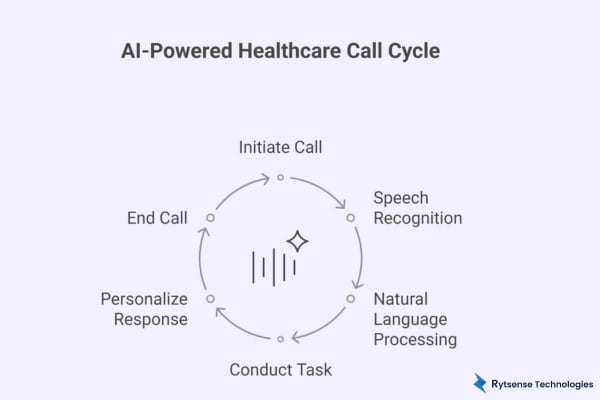
AI-based phone systems are an advanced way of using
conversational AI for healthcare
, giving patients a natural voice-based call with healthcare systems. AI voice systems use speech recognition and natural language processing to engage complex phone calls.
AI voice systems can naturally conduct appointment scheduling, prescription refills, and basic health assessments through natural voice conversations. AI can accommodate a variety of accents and speech patterns, communication styles, etc.
Incorporating electronic health records provides AI phone systems with the ability to look up patient information during a call with the goal of providing the most personalized responses and recommendations, ensuring continuity of care and improving a patient experience.
Advanced features of AI phone systems include multilingual capabilities, emotion detection, and routing the call to the appropriate healthcare professional based on content of the conversation and needs of the patient.
Benefits for Providers and Patients
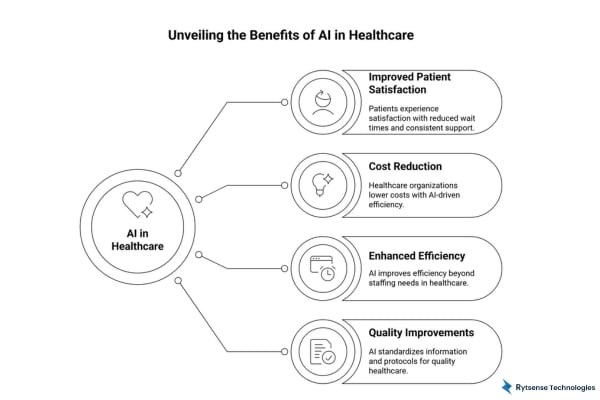
Healthcare organizations will minimize the use of call centers, leading to lower workforce costs. This is due to AI systems answering routine questions on their behalf (e.g., patient inquiries). AI systems may allow human staff to focus on more complex patient issues which may require their human touch or expertise.
Patients will realize improved satisfaction, primarily through lower wait times, access to services 24/7, and the assurance that they will receive the same support each time. AI systems do not have "bad" days or fatigue, which can impact an organization and experience they support. Therefore, patients will always have a reliable experience regardless of what is going on at the clinic.
Healthcare organizations will lower costs associated with lower staffing needs.
AI developer company
or AI systems will also improve organizational efficiency beyond staffing needs. For example, an organization will minimize costs associated with missed appointments through effective reminders. Quality improvements can include standardizing the information being supplied, adherence to protocols, and documentation of all patient encounters.
The Future of Healthcare with Conversational AI
The use of conversational AI will bring unprecedented transformation in the way healthcare will be delivered, a patient experience, and clinical outcomes. An understanding of the emerging trends and long-term benefits will prepare healthcare organizations for the next generation of AI-based medical services and innovations for patient care.
Emerging Trends
While still likely in the early stages of development, advanced predictive analytics for patient needs and health risks will form part of the future landscape of conversational AIs in healthcare. These predictive analyses will utilize genetic data, environmental variables, and lifestyle factors to provide hyper-personalized healthcare recommendations.
The available systems will use artificial intelligence and machine learning to provide clinical decision support that is significantly more sophisticated, thereby allowing healthcare professionals to make better treatment decisions based on unlimited data analysis.
Voice-first will be a larger interface option, or silo, within a patient interaction experience, where a patient chooses to use a smart speaker, mobile device, or wearable device to access their healthcare. This will allow for the delivery of health information and services to an even larger patient population.
Emotional competence will be part of the AI repertoire, allowing the healthcare conversational AI system to recognize and react to patient emotional states. This will reflect more deeply caring and supportive interactions in healthcare.
Also Read: Top AI Development Platforms
Long-Term Benefits for Healthcare Organizations
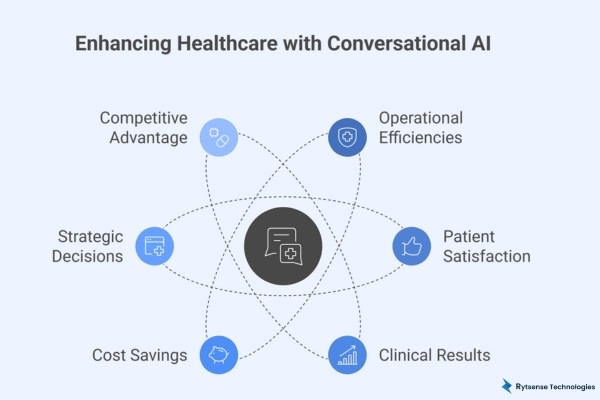
Healthcare organizations that adopt its conversational AI solutions can anticipate a range of long-term enhancements in operational efficiencies, patient satisfaction, and clinical results. The implementation of conversational AI will ultimately become a core part of patient care to support patients and providers.
The cost savings that result from
Patient communication automation
will allow healthcare organizations to focus on the best allocation of their workforce and to invest in more advanced treatments and technologies that enhance the level of care for patients.
Data that is generated and synthesized by the AI systems will support strategic decisions, enabling healthcare organizations to monitor, improve and plan for service delivery, predict utilization to optimize growth, and addresses the population's health.
Organizations that sufficiently institute and use
AI healthcare solutions
will also achieve competitive advantage as consumers will increasingly demand a digital-first experience in healthcare.
Rytsense Technologies: The Front Runners of AI in Healthcare
Rytsense is one of the leading AI development companies who specializes in conversational AI solutions for healthcare. As a custom
AI development company
, Rytsense develops robust AI healthcare technology that addresses the explicit needs of healthcare organizations and the patient populations they serve.
Rytsense's experienced team of
AI development services
includes capabilities in natural language processing, machine learning, and healthcare integration. Rytsense's AI technology represents the vanguard in AI development for healthcare, connecting technical excellence with established healthcare experience and industry knowledge.
As one of the
best AI development company in USA
, Rytsense has established itself as a trusted partner for healthcare organizations seeking to implement conversational AI systems.
The integration of
conversational AI for healthcare
shows a transformative opportunity for healthcare organizations to improve patient care, reduce costs, and enhance operational efficiency. Organizations partnering with experienced
AI software development company
may successfully implement these technologies and realize their full potential in improving healthcare outcomes.
Meet the Author

Co-Founder, Rytsense Technologies
Karthik is the Co-Founder of Rytsense Technologies, where he leads cutting-edge projects at the intersection of Data Science and Generative AI. With nearly a decade of hands-on experience in data-driven innovation, he has helped businesses unlock value from complex data through advanced analytics, machine learning, and AI-powered solutions. Currently, his focus is on building next-generation Generative AI applications that are reshaping the way enterprises operate and scale. When not architecting AI systems, Karthik explores the evolving future of technology, where creativity meets intelligence.