1. Introduction
The digital banking revolution is reshaping how people manage finances, with mobile banking apps becoming essential tools for modern consumers. Santander, a global banking leader, has set a high standard with its feature-rich, secure, and user-friendly mobile banking app. But how much does it cost to build a similar app?
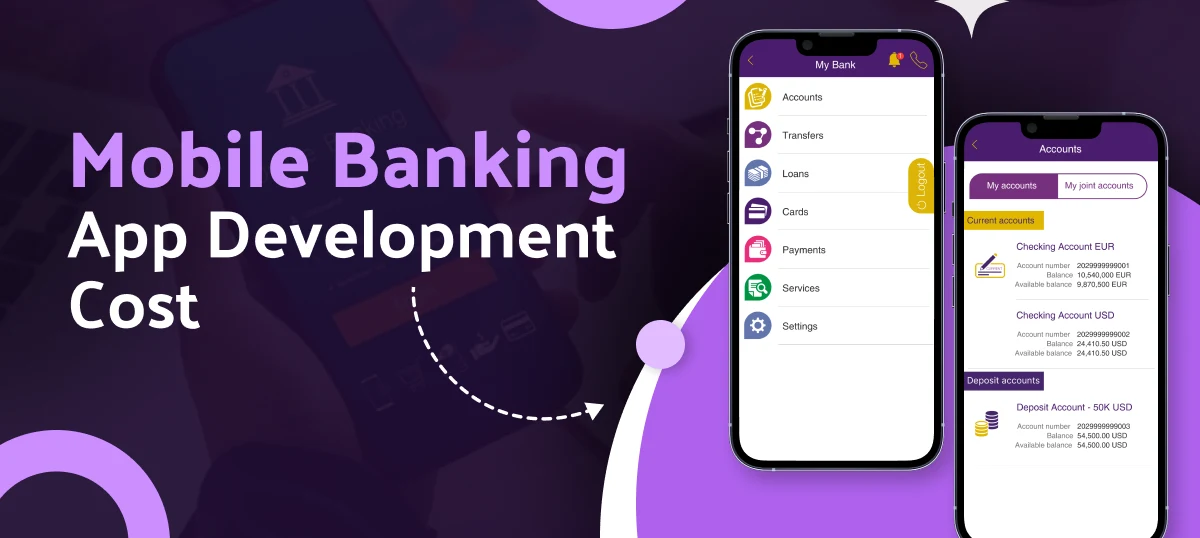
Developing a
mobile banking app like Santander
involves multiple factors—features, security, compliance, and development approach. This guide explores the cost breakdown, key features, security requirements, and development strategies to help financial institutions and startups plan their digital banking solutions effectively.
2.Growing Demand for Mobile Banking Apps
The global mobile banking market is projected to reach $1.8 trillion by 2026, growing at a 12% CAGR (Statista, 2024). With 67% of users preferring mobile banking over visiting branches, financial institutions must invest in secure, scalable, and feature-rich apps to stay competitive. Startups and banks
partnering with a reliable mobile app development dubai
can accelerate their digital transformation while ensuring regulatory compliance and security.
3.Why Santander Sets a Benchmark
Santander’s mobile banking app excels in user experience, security, and functionality. It offers seamless account management, real-time transactions, AI-driven insights, and robust fraud protection, making it a preferred choice for millions. Banks and fintech startups aiming to compete must match Santander’s intuitive UI, multi-layered security, and real-time customer support. A well-designed mobile banking app can boost customer retention by 40%, as users increasingly prefer digital over traditional banking.
4.Key Features of Santander’s Mobile Banking App

To successfully replicate Santander’s industry-leading digital banking experience, your mobile banking app development project must incorporate these essential features. Partnering with an experienced mobile app development company ensures seamless integration of these functionalities while maintaining security, compliance, and user satisfaction
4.1 Account Management
A well-designed mobile banking app must allow users to effortlessly:
● Check real-time account balances
● View detailed transaction histories
● Download monthly statements
● Access multiple accounts (checking, savings, loans) in one dashboard
According to a 2024 Deloitte report, 78% of banking app users cite easy account management as their top priority. Implementing intuitive navigation and quick-loading interfaces significantly boosts user retention.
4.2 Bill Payments and Transfers
Google's open‑source UI toolkit, Flutter, is a top pick for hybrid mobile development. It uses the Skia 2D canvas rendering engine to render visuals that reflect Material Design and Cupertino widgets, allowing a single codebase to be comfortable on both Android and iOS. Developers can instantly hot‑reload changes and try fixes without restarting the app entirely—a huge productivity win. Modern users expect instant, secure transaction capabilities:
● Peer-to-peer (P2P) transfers (via phone number/email)
● Scheduled/recurring payments (utilities, subscriptions)
● International remittances with competitive FX rates
● QR-code based payments for contactless transactions
A mobile app development company specializing in fintech can integrate payment gateways like Plaid or Stripe to enable these features while ensuring PCI-DSS compliance.
4.3 Spending Insights & Budgeting
Ionic is a go-to open-source platform that makes it easy—and free—to
build mobile apps
that work across devices. Based on the client side, it allows developers to create native-like applications using a combination of HTML, CSS (primarily CSS 3), and JavaScript. The very same web technology also makes it perfect for constructing hybrid apps. AI-driven financial tools are no longer optional:
● Automatic expense categorization
● Customizable spending limits/alerts
● Predictive cash flow analysis
● Savings goal tracking with progress visualization
Juniper Research predicts
AI-powered banking apps
will save users $12 billion annually by 2026 through better financial management.
4.4 Card Controls (Freeze/Unfreeze, Limits)
Real-time security features prevent fraud losses:
● Instant card freezing for misplaced cards
● Geographic/merchant spending limits
● Transaction notifications with one-click dispute options
Santander reported a 35% reduction in fraud cases after implementing these controls - a must-have for any competitive mobile banking app.
4.5 Customer Support and Live Chat
Hybrid support systems improve satisfaction:
● AI chatbots handling 80% of common queries
● Seamless escalation to human agents
● In-app video banking for complex issues
● AI-powered knowledge base with instant answers
4.6 Biometric and Multi-Factor Authentication
Advanced security builds trust:
● Fingerprint/Face ID login (used by 92% of top banking apps)
● Behavioral biometrics (typing patterns, swipe dynamics)
● One-time passwords via SMS/authenticator apps
● Device fingerprinting to detect suspicious logins
Gartner notes that apps with layered authentication experience 60% fewer security breaches - crucial when selecting a mobile app development dubai for your project.
5. Factors Influencing Mobile Banking App Development Cost
When planning mobile banking app development, understanding cost drivers is crucial for budgeting effectively. The final price tag for building a competitive mobile banking app like Santander can vary dramatically based on these six critical factors. A professional mobile app development company dubai can help navigate these variables to optimize your investment.
5.1 App Complexity and Feature Set
The features you choose directly impact development costs:
● Basic Banking App ($50K–$150K)
Includes essential functions:
• User authentication
• Account balance checking
• Basic money transfers
• Transaction history
Example: Simple neo-banking apps for startups
● Mid-Level App ($150K–$300K)
Adds advanced capabilities:
• Bill payments with scheduling
• Personal finance dashboards
• Basic investment tracking
• Card management tools
Example: Regional bank apps with full transaction capabilities
● Advanced Banking App ($500K+)
Incorporates cutting-edge technologies:
•
AI-powered financial assistants
• Blockchain-based transactions
• Voice banking integration
• Predictive analytics
Example: Santander, Chase, or Revolut-level applications
A reputable mobile app development dubai will help prioritize features based on your target audience and business objectives.
5.2 UI/UX Design Investment
Superior design isn't just aesthetic—it's functional:
● Custom animations and micro-interactions boost engagement by 40%
● Accessibility-compliant interfaces meet WCAG 2.1 standards
● User journey optimization reduces drop-off rates
● Brand-aligned visual systems build trust
Top mobile banking apps allocate 15-20% of their budget to design. Skimping here often leads to costly redesigns post-launch.
5.3 Backend Infrastructure Requirements
The invisible engine powering your app:
● Cloud hosting (AWS, Azure, Google Cloud)
● API integrations for:
• Payment processing (Stripe, Plaid)
• Identity verification (Jumio, Onfido)
• Core banking systems (Mambu, Temenos)
● Database architecture for:
• Real-time transaction processing
• Secure data encryption
Enterprise-grade mobile banking app development often spends 25-35% of budget here.
5.4 Platform Selection Strategy
Native vs. cross-platform decisions affect cost and performance:
ApproachCost RangePros & ConsNative iOS$100K+Best performance, but doubles cost for AndroidNative Android$100K+Play Store dominance, but separate codebaseCross-Platform$70K–$150KSingle codebase, but potential performance trade-offs
Leading
mobile app development dubai often recommend React Native or Flutter
for cost-conscious projects targeting both platforms.
5.5 Development Team Economics
Location dramatically impacts hourly rates:
RegionHourly RateAdvantagesNorth America$100–$150Timezone alignment, minimal communication barriersWestern Europe$80–$120Strong fintech expertise, GDPR knowledgeEastern Europe$40–$80High technical skills, cultural proximityIndia$25–$50Cost efficiency, large talent pool
Many successful
mobile banking apps use blended teams—UX designers
from Europe, developers from Asia, and QA specialists globally.
5.6 Compliance and Security
Non-negotiable investments for financial apps:
● PCI-DSS certification for payment processing
● GDPR/CCPA compliance for data protection
● PSD2 requirements for European markets
● SOC 2 Type II audits for enterprise clients
A specialist mobile app development company with fintech experience can navigate these requirements efficiently, avoiding costly compliance mistakes.
6. Strategic Cost Optimization Tips
1. Start with an MVP to validate demand before full-scale development
2. Leverage banking-as-a-service (BaaS) platforms to reduce backend costs
3. Phase feature rollout based on user feedback and adoption metrics
4. Consider hybrid teams—onshore project management with offshore development
The mobile banking app market rewards those who balance innovation with fiscal responsibility. By understanding these cost drivers and partnering with the right mobile
app development company in Dubai
, you can build a competitive digital banking solution without unnecessary expenditure.
7. Breakdown of Development Stages and Cost
StageCost EstimateTimelineDiscovery & Planning$10K–$20K2–4 weeksUI/UX Design$15K–$40K4–8 weeksFrontend & Backend Dev$80K–$250K6–12 monthsQA Testing$20K–$50K4–8 weeksDeployment & Launch$5K–$15K2–4 weeks
8. Estimated Cost to Build a Santander-like App
● Basic Version (MVP): $50K–$150K (core features only).
● Advanced Version: $300K–$600K (AI, multi-currency, biometrics).
● Enterprise-Grade: $800K+ (
custom security, blockchain integration
).
9. Regional Cost Variations
RegionCost RangeUSA/UK$300K–$800KIndia$100K–$300KEastern Europe$150K–$400K
10. Must-Have Security and Compliance Features
● End-to-end encryption (AES-256).
● PCI-DSS & GDPR compliance (mandatory for financial apps).
● AI-based fraud detection (reduces fraud by 30%).
11. Tips to Optimize Budget Without Compromising Quality
✔ Start with an MVP and scale later.
✔ Use cross-platform frameworks (Flutter, React Native).
✔ To save money,
work with an offshore mobile app development company.
12. Conclusion
A mobile banking app like Santander can cost anywhere from $100,000 to $800K, but with the growing popularity of digital banking, the return on investment is substantial.
Working with a skilled mobile app development business
guarantees you the scalability, security, and compliance that a group of knowledgeable experts can offer. Will your app assist pave the road for digital banking, which is the way of the future? Create a scalable and secure mobile banking app that meets your demands by collaborating with a reputable mobile app development dubai. Professional mobile banking app development will keep you ahead of the fintech competition, whether you're creating a Santander-style app or offering your users innovations like personalized features for their user experience.
Meet the Author

Co-Founder, Rytsense Technologies
Karthik is the Co-Founder of Rytsense Technologies, where he leads cutting-edge projects at the intersection of Data Science and Generative AI. With nearly a decade of hands-on experience in data-driven innovation, he has helped businesses unlock value from complex data through advanced analytics, machine learning, and AI-powered solutions. Currently, his focus is on building next-generation Generative AI applications that are reshaping the way enterprises operate and scale. When not architecting AI systems, Karthik explores the evolving future of technology, where creativity meets intelligence.