1. Introduction
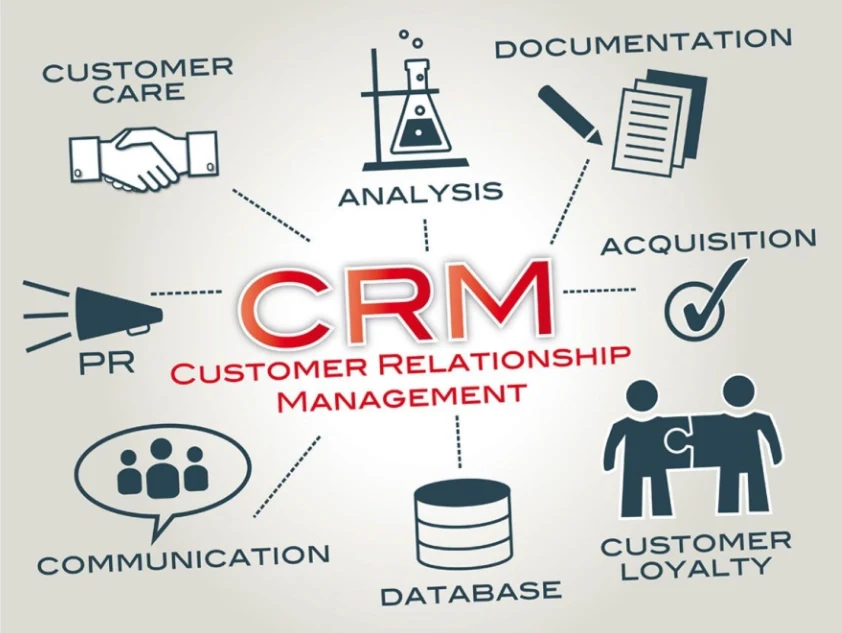
Selecting the right Customer Relationship Management (CRM) system is one of the most crucial decisions for any organization. A well-implemented CRM can boost sales, improve customer satisfaction, streamline relationship management processes, and drive business growth. However, with a wide range of options available — from off-the-shelf solutions to fully
customized CRM systems
— finding the perfect fit can be challenging.
Statista's forecast that the global demand for CRM software would reach $96.39 billion by 2027 demonstrates the growing importance of CRM software in business operations. This companion, which covers important features, budget considerations, integration conditions, and more, will help you in choosing a CRM, regardless of your company's size.
2. Why Is CRM Essential for Your Business?
More than just a computerized contact book, a CRM (Client Relationship Management) system is a potent instrument that streamlines client interactions, automates processes, and gives useful data. The influence of CRM software on revenue growth is seen by the average 29% increase in sales experienced by businesses that use it (Rytsense Technologies).
A well-chosen CRM helps
● Boost sales tracking and lead management.
● Boost customer interaction and marketing automation.
● Using a single client database will improve teamwork.
● Use analytics to support data-driven decision-making.
Whether you conclude for a
pre-built CRM or custom software development
, the right result should align with your business plans.
3.Key Factors to Consider When Choosing a CRM
3.1. Defining Your business goals
Before exploring the wide range of CRM options, it’s important to clearly define your specific objectives. Are you looking to streamline sales processes, enhance your customer support efficiency, or implement more effective marketing strategies? It is important to recognize that CRM solutions vary significantly in their features and capabilities. Some are engineered for nurturing leads, and others are pros at managing support tickets.
If improving your
customer relationship management process
is your main focus, you’ll want to look for features such as
● Contact and lead segmentation
● Sales pipeline tracking
● Automated follow-ups
3.2. Determine Your Budget
CRM pricing varies widely, from free plans to enterprise solutions costing thousands per month. 74% of businesses say CRM improves customer relationships (Capterra), but overspending on unnecessary features can affect ROI.
Consider:
● Subscription Costs: Monthly or annual pricing.
● Implementation Fees: Onboarding, training, and data migration.
● Custom CRM Development: If off-the-shelf solutions don’t fit, partnering with a custom software development company in India can be cost-effective.
3.3.Involve Key Teams in the Decision
Your sales, marketing, and customer service teams will use the CRM daily. Gather their input on:
● Ease of Use: A complex system leads to low adoption rates.
● Necessary Features: Do they need email tracking, chatbots, or AI-driven analytics?
3.4. Must-Have CRM Features
The best CRM platforms offer:
● Contact & Lead Management—Centralized customer profiles.
● Sales Forecasting—Predictive analytics for revenue trends.
● Marketing Automation—Email campaigns, lead scoring.
● Custom Dashboards—Real-time performance tracking.
● Mobile Accessibility—On-the-go access for remote teams.
3.5.Integration capabilities
Your CRM should sync with existing tools (email, ERP, accounting software). 53% of businesses say poor integration is a major CRM challenge (SuperOffice). If integrations are limited, a
custom software development approach
may be necessary.
3.6.Cloud vs On-Premise CRM
● Cloud-Based: Accessible anywhere, automatic updates.
● On-Premise: Full data control, higher upfront costs (ideal for regulated industries).
3.7.Read Reviews & Test with Free Trials
Before committing:
● Check G2 or Capterra for unbiased user reviews.
● Use free trials (14–30 days) to test usability.
3.8.Evaluate Customer Support
A CRM is useless if your team struggles with it. Ensure the vendor offers:
● 24/7 live chat or phone support.
● Training resources (videos, documentation).
3.9.Security and Compliance
With rising cyber threats, verify:
● Data encryption & GDPR compliance.
● Two-factor authentication (2FA).
4. Custom CRM vs. Off-the-Shelf Solutions
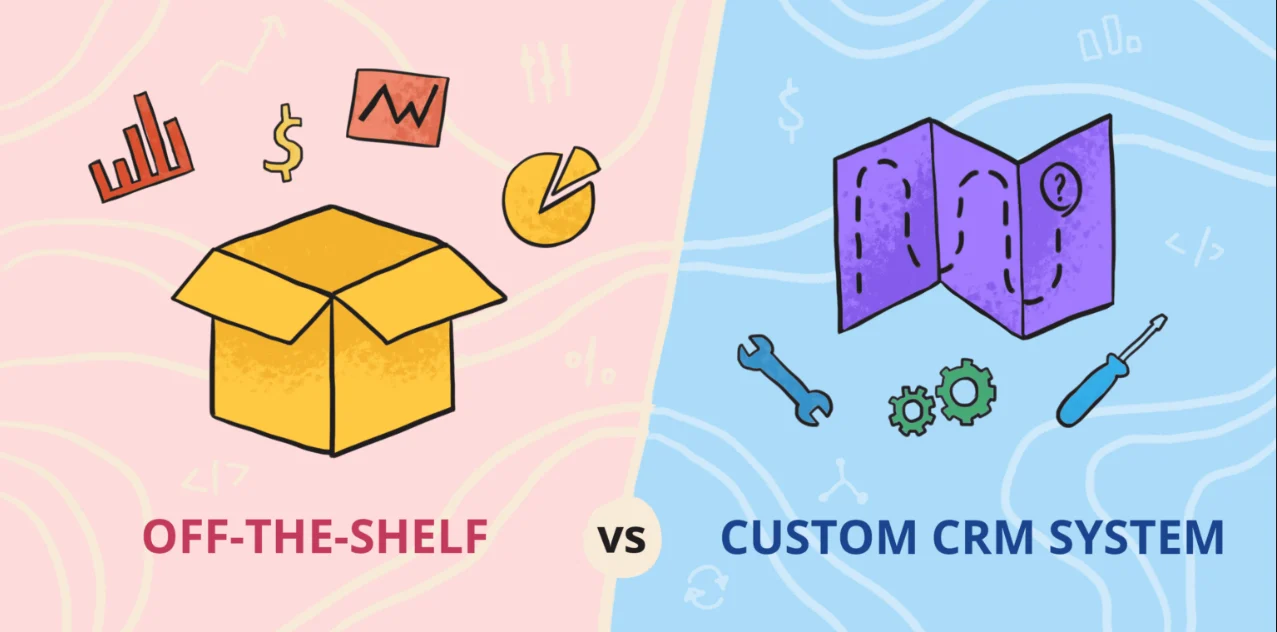
While platforms like Rytsense Technologies work for many, some businesses need custom CRM development to meet unique workflows.
When to Choose Custom CRM Development?
● Your business has unique processes not supported by standard CRMs.
● You need deep integration with proprietary software.
● You require scalability beyond what pre-built solutions offer.
A
custom software development company
can tailor a CRM to your exact needs, ensuring seamless operations.
5.Top CRM Platforms in 2025
CRMBest ForKey FeaturesRytsense TechnologiesBusinesses with unique workflows & long-term scalability100% custom CRM solutions, seamless legacy integrations, full data ownershipSalesforceEnterprises & scalabilityAI-driven analytics, extensive integrationsHubSpotSmall businesses & marketingFree plan, marketing automationZoho CRMBudget-friendly growthSales automation, multilingual supportMicrosoft Dynamics 365Large enterprisesDeep Microsoft ecosystem integrationPipedriveSales-focused teamsIntuitive pipeline management
6.Custom CRM by Rytsense vs. Off-the-Shelf CRM: Which One is Right for You?
6.1.Cost & Investment
Custom CRM :
● Higher upfront cost (development, testing, deployment).
● Long-term savings—no recurring license fees; only maintenance costs.
● Ideal for businesses with unique processes willing to invest in a perfect-fit solution.
Off-the-Shelf CRM
● Lower initial cost (monthly/annual subscriptions).
● Scaling costs—Premium features and user licenses add up over time.
● Ideal for startups or SMEs needing quick, budget-friendly solutions.
6.2Flexibility & Customization
Custom CRM:
● Especially made to work with the way your support, sales, and marketing teams operate.
● No bloat—only the features you need.
● Scalable—adapts as your business grows.
Off-the-Shelf CRM:
● Minimal customization—you don't change the software; it changes you.
● Generic features—may include unnecessary tools.
● Workarounds are often needed for unique processes.
6.3.Implementation Time
Custom CRM:
● Slower deployment (weeks to months)—Requires planning, development, and testing.
● Rytsense Advantage—Agile development reduces time-to-market.
Off-the-Shelf CRM:
● Ready in days—sign up, configure, and start using.
● Quick fixes—vendor handles updates and bugs.
6.4.Maintenance & Support
Custom CRM:
● Your responsibility requires an in-house IT team or Rytsense’s ongoing support.
● Full control—no forced updates disrupting workflows.
6.5.Security & Compliance
Custom CRM:
● Enterprise-grade security—built to your industry’s compliance needs (HIPAA, GDPR, etc.).
● Data ownership—no third-party risks.
Off-the-Shelf CRM:
● Standard security—may not meet strict regulatory needs.
● Shared servers—potential data privacy concerns.
6.6.Which Should You Choose?
ScenarioRecommended Solution
Startups/SMBs needing speedOff-the-ShelfLarge enterprises with unique needsCustom CRMHigh-compliance industries (finance, healthcare)Custom CRMLimited IT resourcesOff-the-Shelf
7.Cost Breakdown: Custom CRM Development
Here’s what to budget if you opt for custom CRM development (typical ranges):
PhaseCost EstimateTimelineDiscovery & Planning$2,000–$10,0002–4 weeksUI/UX Design$5,000–$20,0004–8 weeksDevelopment$20,000–$80,000+3–6 monthsIntegrations$5,000–$30,0001–3 monthsTesting & Deployment$3,000–$15,0001–2 monthsAnnual Maintenance$5,000–$20,000/yearOngoing
Total Estimated Cost: $15,000–$100,000+ (one-time)
7.1.Why Custom CRM Can Be Cost-Effective?
● No per-user fees: Save $30,000+/year for 50 users
● Avoid feature deprecations and forced upgrades to avoid vendor lock-in.
● Competitive dev rates: Partnering with a custom software development company in India can reduce costs by 40–60%.
7.2.When to Choose Custom CRM?
Pick Custom CRM If You
Have unique processes
Need full data ownership and security control.
Plan to scale aggressively without vendor limitations.
7.1.Final Advice
● For SMBs:
Rytsense Technologies provides affordable, scalable custom CRM solutions designed to grow with small and medium businesses without unnecessary features or fees.
● For Enterprises:
Rytsense Technologies builds enterprise-grade custom CRMs offering deep integration, enhanced security, and full control tailored to complex organizational needs.
● For Niche Industries:
Rytsense Technologies delivers specialized custom CRM platforms built to meet unique workflows and strict compliance requirements in niche and regulated industries.
8 Conclusion
Choosing the appropriate CRM (Customer Relationship Management) solution is crucial for the expansion of your company. Whether you choose an off-the-shelf result or custom CRM development, prioritize features that align with your pretensions, budget, and company requirements.
Still,
partnering with a custom software development company in India
can give an acclimatized result at a competitive cost if your conditions are largely technical. Remember, the best CRM is one that your company will actually use — so concentrate on usability, integration, and scalability.
By following these ways, you’ll
find a CRM that drives effectiveness
, enhances client connections, and energizes business growth.
Meet the Author

Co-Founder, Rytsense Technologies
Karthik is the Co-Founder of Rytsense Technologies, where he leads cutting-edge projects at the intersection of Data Science and Generative AI. With nearly a decade of hands-on experience in data-driven innovation, he has helped businesses unlock value from complex data through advanced analytics, machine learning, and AI-powered solutions. Currently, his focus is on building next-generation Generative AI applications that are reshaping the way enterprises operate and scale. When not architecting AI systems, Karthik explores the evolving future of technology, where creativity meets intelligence.