Ensuring AI Development Prioritizes Human Well-Being: Best Practices
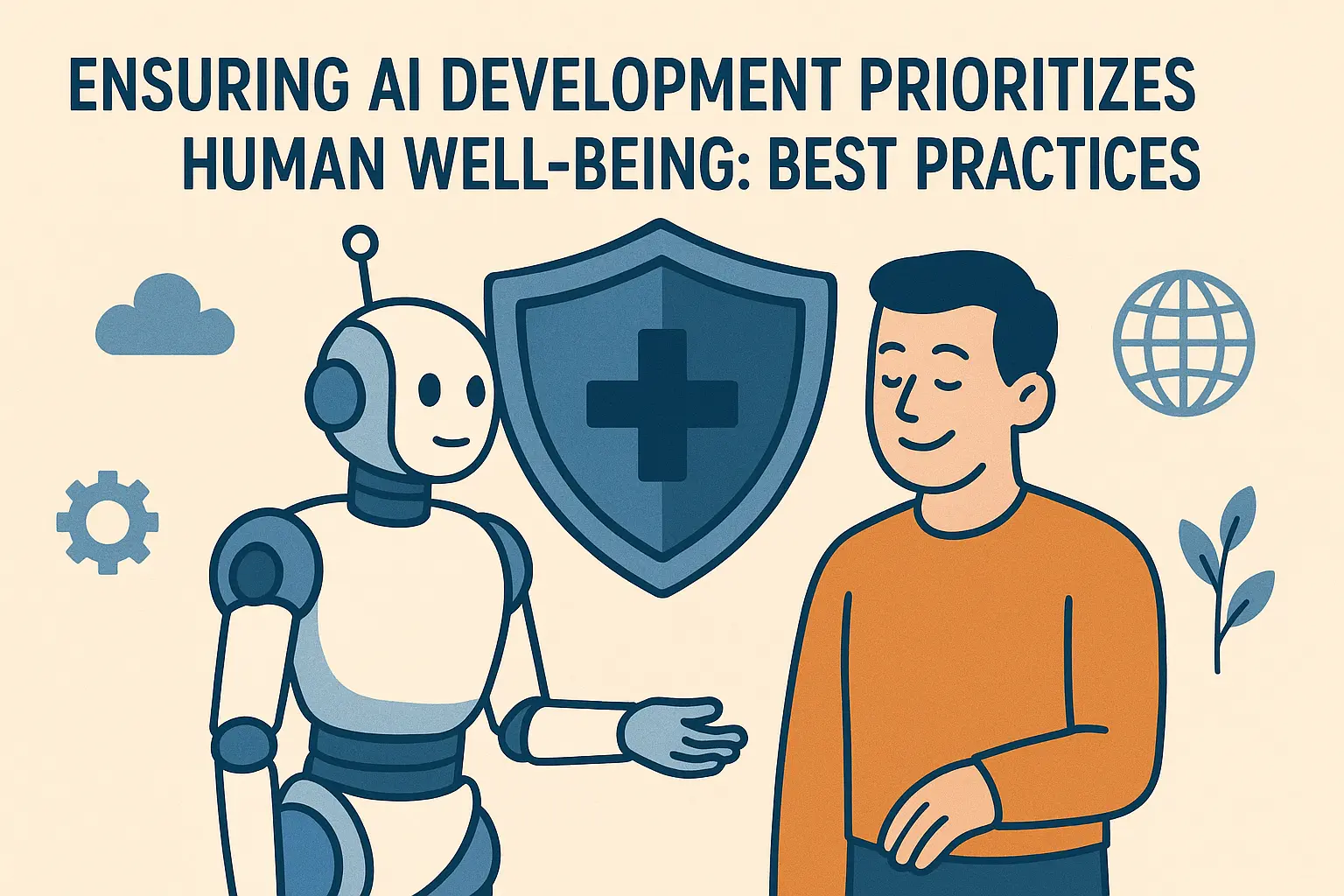
Prioritizing human well-being in AI development is more important than ever as AI continues to transform various fields, including healthcare, finance, education, and transportation. In addition to offering enormous potential for efficiency and creativity, artificial intelligence (AI) systems can pose difficult moral dilemmas, ranging from algorithmic bias and loss of agency to runaway failure and success modes. How can we ensure that AI development prioritizes human well-being becomes a key question in addressing these challenges?
To ensure AI can be developed, implemented, and used for the good of humanity, creators and organizations should embed guiding principles, values, and practices as an integral part of their commitment to ethical AI, and there needs to be an organizational structure that balances technical and industry-specific expertise with social science and public policy expertise. How can we ensure that AI development prioritizes human well-being is central to creating such a balanced structure.
An organizational structure that strikes a balance between technical and industry-specific expertise and social science and public policy expertise is necessary to ensure that AI can be developed, implemented, and used for the benefit of humanity. Creators and organizations should incorporate guiding principles, values, and practices as an essential part of their commitment to ethical AI. How can we ensure that
AI development in USA
prioritizes human well-being depends on making these principles part of everyday development and governance?
The problem of how to create AI that reflects human values in a consistent and logical way becomes more pressing as AI continues to change the real world. The solution to the problem of how to slant AI development in favor of human welfare lies in building inclusive, transparent, and ethical systems. How can we ensure that AI development prioritizes human well-being, must guide every stage of AI development, from conception to implementation, taking into consideration the implications for people, communities, and society at large.
As per Research
, 2026 reported, over 50% of Americans express low trust in AI systems and their regulation. While 75% of AI experts feel optimistic about AI improving work, only 25% of the public agrees. Most people want greater control over AI in their lives, highlighting the need for transparent, ethical AI development that prioritizes human well-being.
Also Read: The Latest AI Developments You Should Know About in 2026
What will Human-Centered AI do?
AI that is Human-Centered (HCAI) An AI strategy: Human-computer interaction (HCAI) is a method of thinking and working where technologies are built and used in ways that make sense to humans and support human experiences and skills. HCAI advocates for human-machine collaboration rather than replacement, ensuring that technology is applied to improve human potential, safeguard liberties and rights, and create a more human-centered society. How can we ensure that AI development prioritizes human well-being? By adopting HCAI principles, focusing on collaboration, ethical design, and human rights protection throughout AI development processes.
The Essentials of Human-Centered AI
1. Human Autonomy
AI systems should supplement, not shape, our destiny. There should always be a court of last resort in important decisions: the user.
2. Transparency and Interpretability
It should be possible for the general public to understand why and how an AI system made a decision, particularly in domains like health care, finance, or hiring.
3. Fairness and Inclusion
AI should treat everyone fairly, not bolster and reciprocate discrimination and bias in historical datasets.
4. Privacy and Consent
There needs to be an ethical way to collect personal data, and users need to be in control of what happens to their data.
5. Well-Being and Safety
Any system should be for the benefit of society, for the mental and physical well-being of society, and not to harm.
6. Joining Forces, Not Competition
AI should be used to empower humans, not make them irrelevant.”
Human-centric AI In Practice
● Healthcare: The AI that aids doctors with diagnoses, not replaces them.
● Education: Personalized learning platforms that meet students where they are, with teachers kept in the loop.
● Office Tools: Smart aides who facilitate tasks and are still human-supervised.
Also Read: Choosing the Top Enterprise AI Development Firm for Your Company
Why Human Well-Being Must Drive AI Development
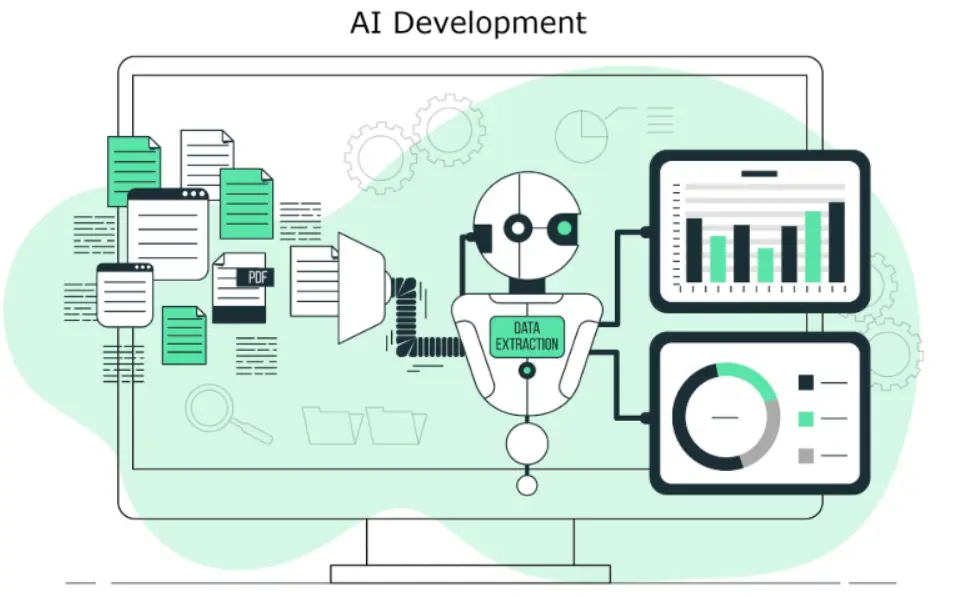
AI development shouldn't be just about advancing machine capabilities; it should be about enhancing mortal life. When AI applications form opinions regarding hiring, medical diagnosis, credit ratings, or law enforcement, there are actual, human lives on the line. Prioritizing well-being involves reducing harm, enhancing equity, assuring sequestration, and building systems individuals can rely on.
Without this focus, AI operations threat to aggravate inequality, buttressing systemic demarcation, or creating unintended damages at scale.
Principles of Ethical AI and Responsible AI Systems
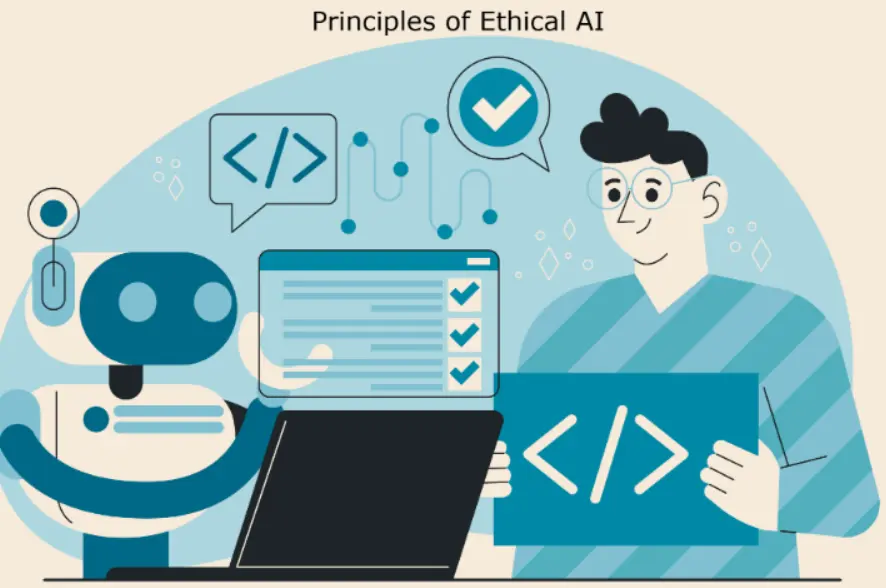
● Fairness and Equity
Do not allow algorithmic bias from non-representative data , biased data sets, and non-inclusivity. Schedule regular audits to discover and correct discriminatory patterns in AI and ML systems.
● Transparency and Explainability
Do not allow AI reasoning to be a ‘black box’ – ensure
generative AI development service
, users, and regulators can interpret AI resulting behavior and outcomes. Employ Explainable AI, or XAI, allows one to explain to the business how a specific behavioral data point causes that customer chatbot interaction.
● Accountability and Oversight
Establish responsibility and liability for failure or unplanned response. Have an audit keeping and enforceable AI management.
● Human Autonomy
Limit automation autonomy, ensure human-in-the-loop or human-on-the-loop when failure could be occur tragic, and offer user opt-in and informed consent.
Also Read: What Are Generative AI Development Services and Who Needs Them?
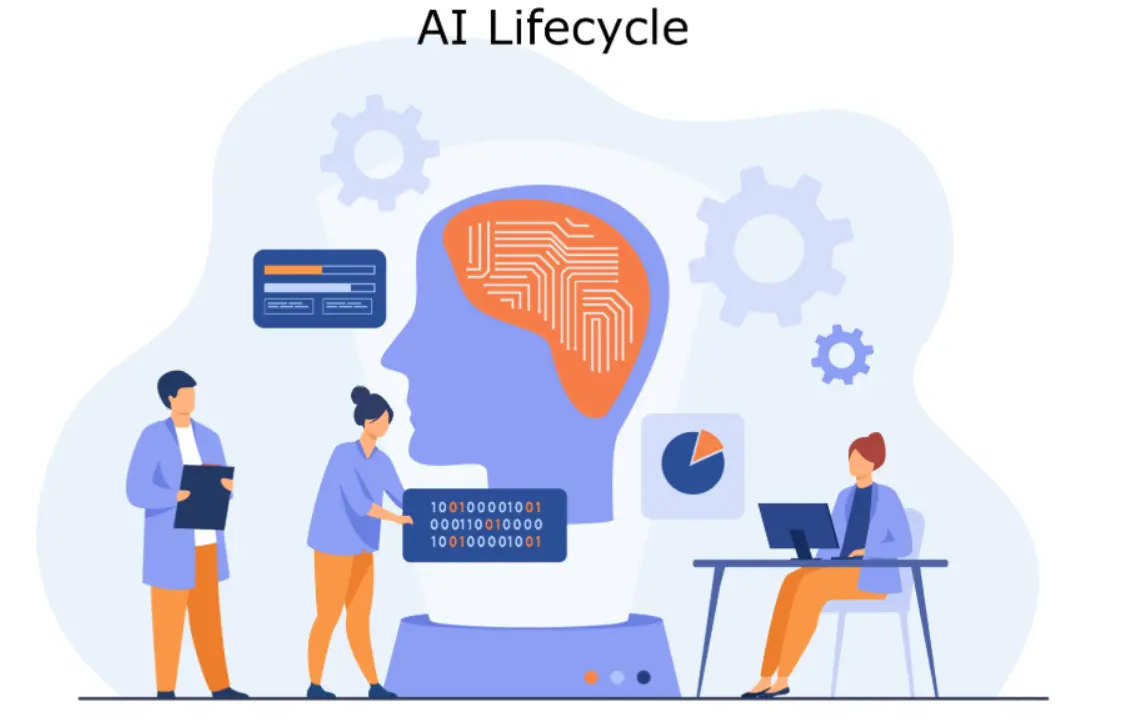
Infusing Ethics into Every Stage of the AI Lifecycle
1. Ideation and Planning
● Start with a definition in terms of social and ethical ends as well as technical means.
● Dialogue with ethicists, sociologists, and domain experts.
2. Data Retrieval and Preprocessing
● Do not propagate existing social biases through balanced datasets.
● Use algorithms for the processing of fairness-aware data.
3. Model Development
● Choose interpretable or add explainability layers to complex models.
● Test it adversarially for weaknesses.
4. Validation and Testing
● Test at the corners, at the edges , and at the extremes.
● Include general user feedback to assess usability and fairness.
5. Deployment and Monitoring
● Continuous monitoring of
AI application development services
in real time to identify undesirable outcomes.
● Use dashboards for performance, fairness, and risk metrics.
6. Continuous Improvement
● Build in loops for iterative feedback and updates.
● Keep people informed with regular reports and updates.
Also Read: How to Adapt AI to Software Development: Top Techniques & Resources
AI’s Benefits and Assets
Artificial Intelligence (AI) is delivering the power we need to make decisions, augment our capability, and solve those “what was that?” problems. Here are some of the pillars and benefits of AI that are driving today’s digital era:
1. Speed and Efficiency
AI systems can process and analyze gigantic amounts of data in seconds, much more than a human could ever keep up with. This allows quicker decision-making in finance, logistics , and health.
Example: live fraud detection in banking or instant search suggestions on e-commerce sites.
2. Increased Level of Accuracy
AI reduces human error in complex tasks. AI models are able to perform tasks at high levels of consistency and accuracy, provided they can learn from the right data and be trained.
Example: AI-based diagnostic devices in radiology could be better able to identify early signs of disease than those analysed manually.
3. Improve and Automate Repetitive Work
These are repetitive manual tasks such as data entry, creating reports, and managing stock, which free up human staff to focus on creative and strategic tasks instead.
Use case: Customer service.
4. Smart Decision Making
AI programs can analyze patterns, trends and provide insights.
Example: Analyzing trends in marketing by using predictive analytics to reach the correct audience with tailored campaigns.
5. 24/7 Availability
AI doesn’t have to take breaks, sleep, or go on holiday like a human. They can be run 24 hours 7 days a week, leading to increased response rates and higher efficiency in industries with shift work.
Example: AI-based virtual assistants, or surveillance systems that constantly monitor networks.
6. Scalability
Scale operations across the globe without having to scale resources in the same manner. AI can be used to Scale operations across the globe without scaling resources proportionally. Once trained, an AI system can serve millions of users at almost no marginal cost.
Example: Services translate languages, or recommendation engines that you see on platforms.
7. Pattern recognition and prediction
AI is good at identifying trends and forecasting the future (based on historical data), especially where large quantities of data are involved.
Example: AI in predicting weather or optimizing the supply chain.
8. Understands the language you use
AI can now comprehend and generate human language thanks to the progress of
Natural Language Processing
(NLP), which allows interactions between people and machines to be more intuitive.
Example: Voice assistants, or artificial intelligence-generated content summaries and translations.
9. Learning and Adaptability
Using machine learning allows an AI system to learn from new data and get better, learning from its environment over time, adapting and changing as it goes.
For example, personalized recommendation engines that improve as they get to know you.
Also Read: AI Developers for Hire: A Guide for Startups and Enterprises
Why We Need Human-Centered AI: Purpose and Philosophy

Human-Centered AI (HCAI) isn’t just a technical framework—it’s a moral philosophy where people are placed at the center of technological advancement. With AI systems playing an ever greater role in our daily lives, this process ensures that technology works for people and is respectful of human rights and values. How can we ensure that AI development prioritizes human well-being? By adopting HCAI principles that emphasize human rights, ethical standards, and people-first design throughout AI development.
●To Augment, Not to Replace Human Potential
HCAI aims to augment human intelligence, not replace humans. It develops tools that empower people to solve problems, make decisions, and get work done more efficiently.
● For the Development of Trustworthy AI Applications
If AI is transparent, understandable, and predictable, people are more likely to adopt and depend on it. Human-Centric AI inspired trust by making systems explainable and serving human needs.
● For the preservation and advancement of human rights and dignity
AI decisions can have profound personal implications — in health care, the law, employment, and finance. HCAI protects privacy, fairness, and accountability so technology works for you rather than for its agenda.
● To Promote Ethical Innovation
HCAI is not about “doing no harm” — it’s about doing good. It motivates developers and companies to create the kinds of innovations that build communities and help achieve global goals, from sustainability to equity to education.
Also Read: What Is AI Product Development? Process, Tools & Examples
Ethical questions around AI development

Even with the best efforts, AI still has many ethical issues to overcome:
A. Algorithmic Bias
● Even a well-designed system can produce discriminatory outcomes if the data is biased or the assumptions are flawed. Solutions include:
● Tools for detecting biases (such as IBM’s Fairness 360 or Google’s What-If Tool)
● Varied data sampling and labeling teams
B. Generative AI and Disinformation
● AI (for example, with giant language models) can be weaponized to generate fake news and spam content.
Software Developer Entry Level
must:
● Incorporate watermarking or detection functionality
● Content use policies and standards enforcement
C. Data Privacy Violations
● Artificial intelligence systems often draw on huge amounts of user data. Privacy is a fundamental requirement as:
● Applying federated learning and differential privacy techniques
● Retention and access rights are limited
D. Absence of global AI governance
● As it stands, every country has its own AI regulation, something that makes for bewilderment. We need:
● Universal benchmarks (such as the EU AI Act)
● International collaboration and ethics agreements
Also Read: How to Develop AI: Step-by-Step Guide for Beginners
AI Design approaches that focus on human values
● Participatory Design
Enroll a wide range of stakeholders (users, communities, and experts) at the design level.
● Value Sensitive Design (VSD)
Include values such as morals, ethics, etc., when designing technology.
● Design for Access
Drive inclusivity in low-access regions and for people with disabilities. This is how we can be assured that, within the realm of design problems at least, the solutions we arrive at are not exclusively applicable to the perspective of the AI itself or other engineers or executives, but to that of non-engineer humans.
Part of AI Tools in Ethical AI Development
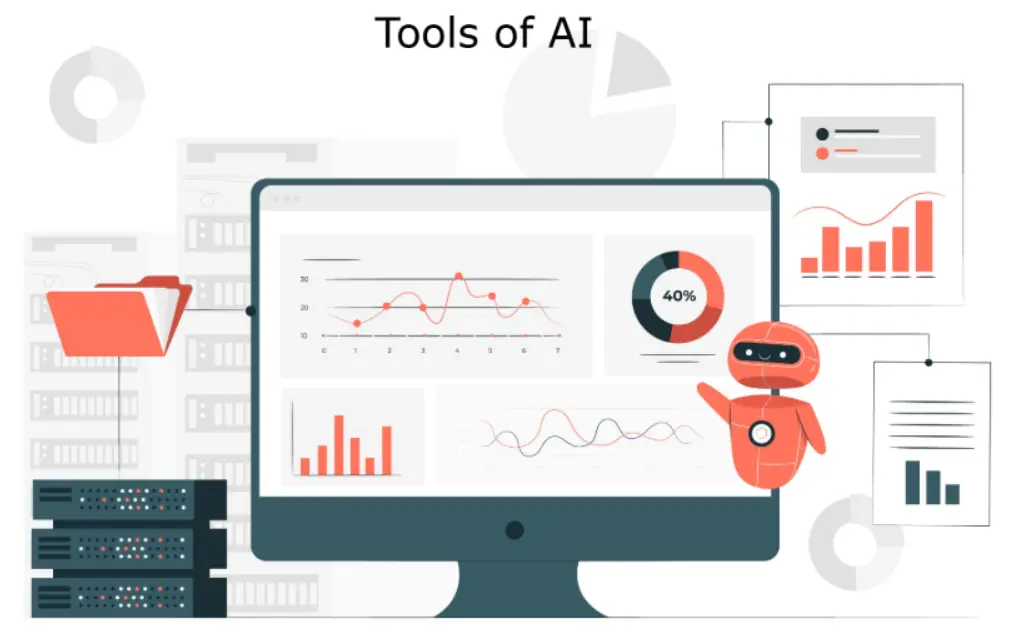
Includes important tools that can support ethical development
● Model: Shap, LIME
● Fairness Auditing AI Fairness 360, Fairlearn sequestration
● Tools: TensorFlow,
PySyft
.
● Monitoring.
These tools help brigades stay aligned with responsible AI principles throughout the design lifecycle.
AI Governance Regulations, fabrics, and Organizational Responsibility
Organizations must adopt internal and external governance programs to ensure the responsible deployment of AI. These include
● Regulatory Compliance GDPR, AI Act( EU), Data Protection Bill( India)
● Internal Review Boards establish ethical review panels for high-impact systems.
● Public translucency reports how AI systems are used, what data is collected, and how opinions are made.
Artificial Intelligence and Well-Being
As AI gets broadly more proficient, especially with advancements in generative AI and autonomous AI, we will continue to increasingly rely on human-centric design, ethical foresight, and policy and system alignment.
Succeeding in AI cannot solely be measured in terms of innovation, but must also consider its integration with human values. AI must be a force for good in education, health care, climate action, accessibility, and global equity.
Also Read: How AI Decision-Making Is Transforming Industries Across the Globe
Conclusion
AI
isn’t simply a technical field — it’s a responsibility to society. With a focus on human flourishing, ethical AI, privacy, and fairness, we can design AI that helps people, companies, and humanity. How can we ensure that AI development prioritizes human well-being? By fostering collaboration among givers, designers, temps, and policymakers to lay the cornerstones for responsible, inclusive, and beneficial AI.
Meet the Author

Co-Founder, Rytsense Technologies
Karthik is the Co-Founder of Rytsense Technologies, where he leads cutting-edge projects at the intersection of Data Science and Generative AI. With nearly a decade of hands-on experience in data-driven innovation, he has helped businesses unlock value from complex data through advanced analytics, machine learning, and AI-powered solutions. Currently, his focus is on building next-generation Generative AI applications that are reshaping the way enterprises operate and scale. When not architecting AI systems, Karthik explores the evolving future of technology, where creativity meets intelligence.