Key Takeaways
AI Agents in Construction reduce project delays by 15-20% and costs by 10-15% through intelligent automation and predictive analytics.
Successful implementation requires focused pilots, quality data, stakeholder buy-in, and partnerships with experts like Rytsense Technologies.
AI agents deliver measurable ROI in scheduling, safety monitoring, quality control, and resource management with 12-month payback periods.
Seamless integration with BIM, ERP, project management tools, and IoT sensors maximizes AI agent value and team adoption.
The AI in construction market will reach $4.5 billion by 2028 with trends toward autonomous coordination and human-AI collaboration.
AI Agents in Construction: Transforming Workflows, Safety, and Efficiency
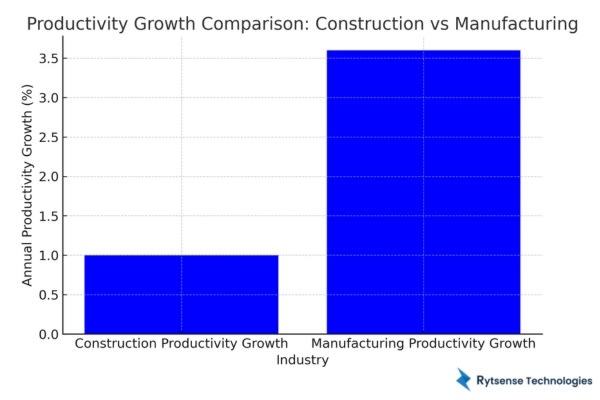
AI agents in construction are changing project management, delivery, and optimization across the global building industry. According to McKinsey, construction productivity has only improved by 1% annually over the last two decades, while manufacturing productivity has improved by 3.6%. The construction industry experiences $1.6 trillion in losses per year due to inefficiency, and in fact, 98% of mega-projects experience cost delays. These types of statistics demonstrate an industry that has never been so ripe for technology disruption. AI agents for construction give a path for companies to meet challenges with intelligent automation, predictive analytics, and real-time decision support.
Why AI Agents Matter in Construction?
The construction industry operates on razor-thin margins, tangled workflows, and high-stakes safety concerns. Historically, projects depend on human coordination with architects, engineers, contractors, and suppliers which creates communications issues, scheduling overlaps, and extremely expensive mistakes.
The construction industry is experiencing more technology than ever before. Building Information Modeling (BIM), drones, and IoT sensors are producing significant amounts of data. There is simply no way for a human being to process that information quickly enough to make a good enough decision. This is where AI can perform and contribute to construction solutions.
AI Agents in Construction act as virtual coordinators. They continuously monitor project data to spot problems before they arise, and they can automate more standard jobs. Unlike existing software that will strictly adhere to a set of rules, AI Agents in Construction will learn from existing patterns and change their behavior depending on environmental changes.
Those AI Agents in Construction companies will have a competitive advantage by producing faster, less expensive projects, and better safety records. Existing early adopters tracked project delays reducing by 15-20% and costs reduced on projects by 10-15% in the first year of deployment.
What Are AI Agents?
An AI agent is a software that detects its environment, makes decisions, and performs actions in pursuance of goals. Regarding the construction space, these agents oversee project data, identify problems, and deploy solutions with little human intervention.
Types of AI Agents in Construction:
| Agent Type | Description | Construction Example |
|---|---|---|
| Autonomous Agents | Operate independently without human input | Automated safety monitoring systems that detect hazards and alert teams |
| Semi-Autonomous Agents | Require human approval for critical decisions | Budget variance detection that flags issues for manager review |
| Predictive Agents | Forecast outcomes based on historical data | Schedule conflict prediction using past project patterns |
Core capabilities:
AI Agents in Construction manage tedious tasks, such as classifying documents, routing approvals, and entering data. For example, an AI physical contract consensus agent can analyze the terms of a contract, highlight any unusual language, and automatically route it to the right people.
Decision Making
AI Agents in Construction gather and analyze information from multiple sources to suggest next steps. Suppose the project was delivered behind schedule, due to material delays. The agent recommends alternative suppliers, or ways to adjust the timeline to assist the project manager.
Predictive Analytics
AI agents analyze prior project information to predict risks on future projects. It recognizes the frameworks that can result in cost overruns, schedule delays, or safety incidents, before they happen.
Difference between AI agents and traditional software tools
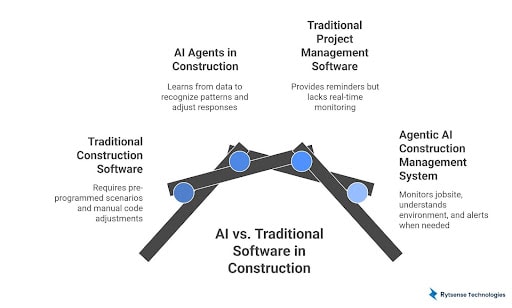
Traditional construction software requires developers to program every potential scenario and response in advance. In the event that something changes in the field, developers will change the code accordingly. Conversely, AI Agents in Construction utilize machine learning to learn from historical projects to recognize patterns and adjust responses. They become more adept as they process a greater amount of project information.
Traditional project management software might suggest reminders, while an agentic AI construction management system monitors the work on the jobsite, understands the environment, and only sends an alert when intervention may be needed.
Ready to build intelligent predictive models for diagnosis, treatment, and patient monitoring?
Our AI experts help you design secure, accurate, and scalable healthcare analytics solutions.
The Construction Landscape & Challenge Areas
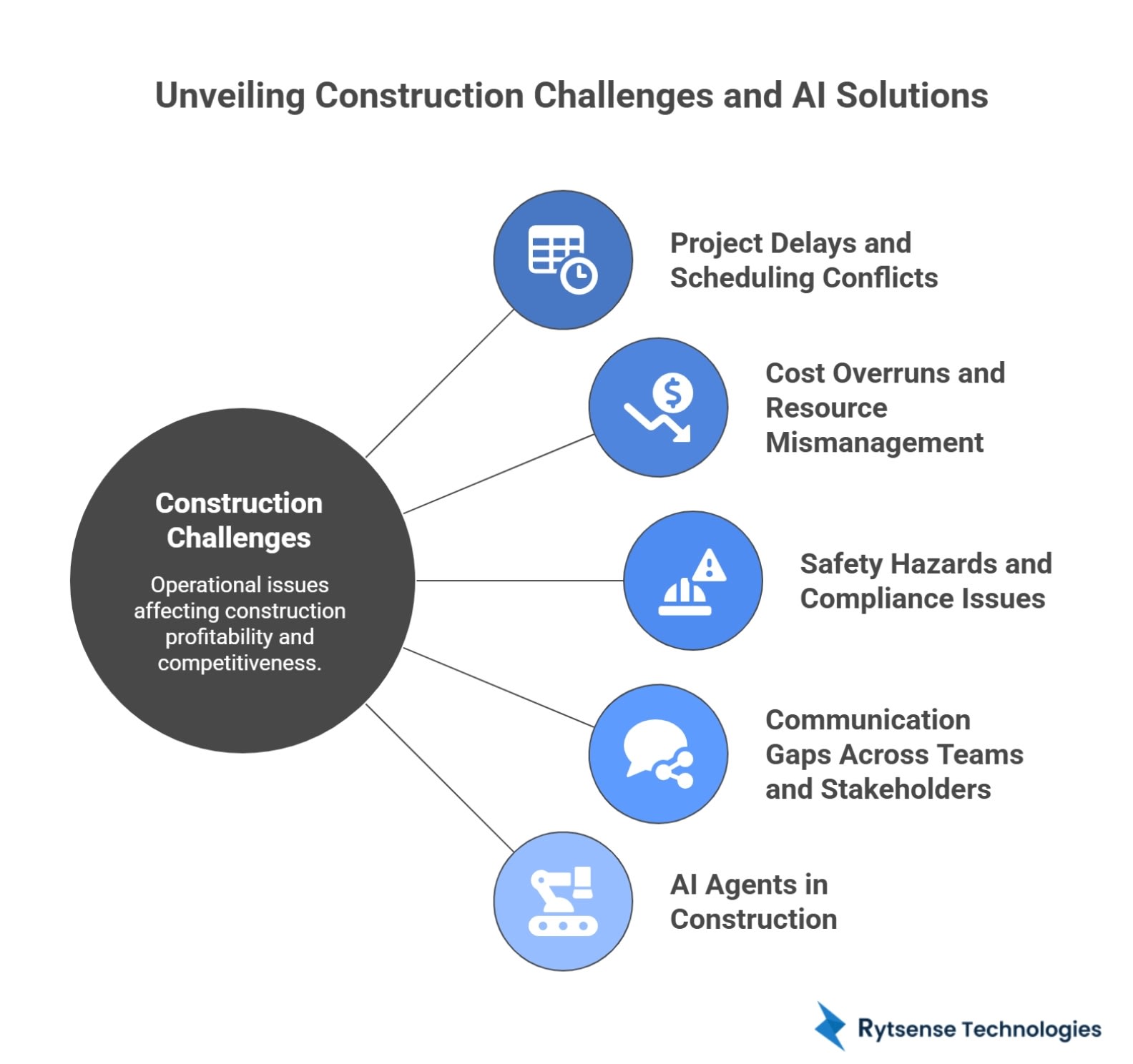
Construction projects consistently encounter delays, budget overruns, safety issues, and communication breakdowns. These chronic problems are driven by reliance on people to coordinate work across separated teams and systems. AI Agents in Construction are designed to address these challenges by providing intelligent automation, real-time monitoring, and predictive decision support beyond what is possible with current methods.
Common pain points in construction:
Construction is consistently challenged by operational issues that affect profitability and competitiveness:
Why these challenges make AI Agents in Construction essential
These challenges highlight the need for AI Agents in Construction. The practice of construction cannot keep up with the complexity, speed, and amount of data generated in current construction environments. AI agents provide the intelligent layer necessary to connect people, systems, and processes.
Whether you're a hospital, clinic, research lab, or pharma company—our team builds secure, compliant, and scalable AI solutions.
Use Cases: Where AI Agents Shine in Construction
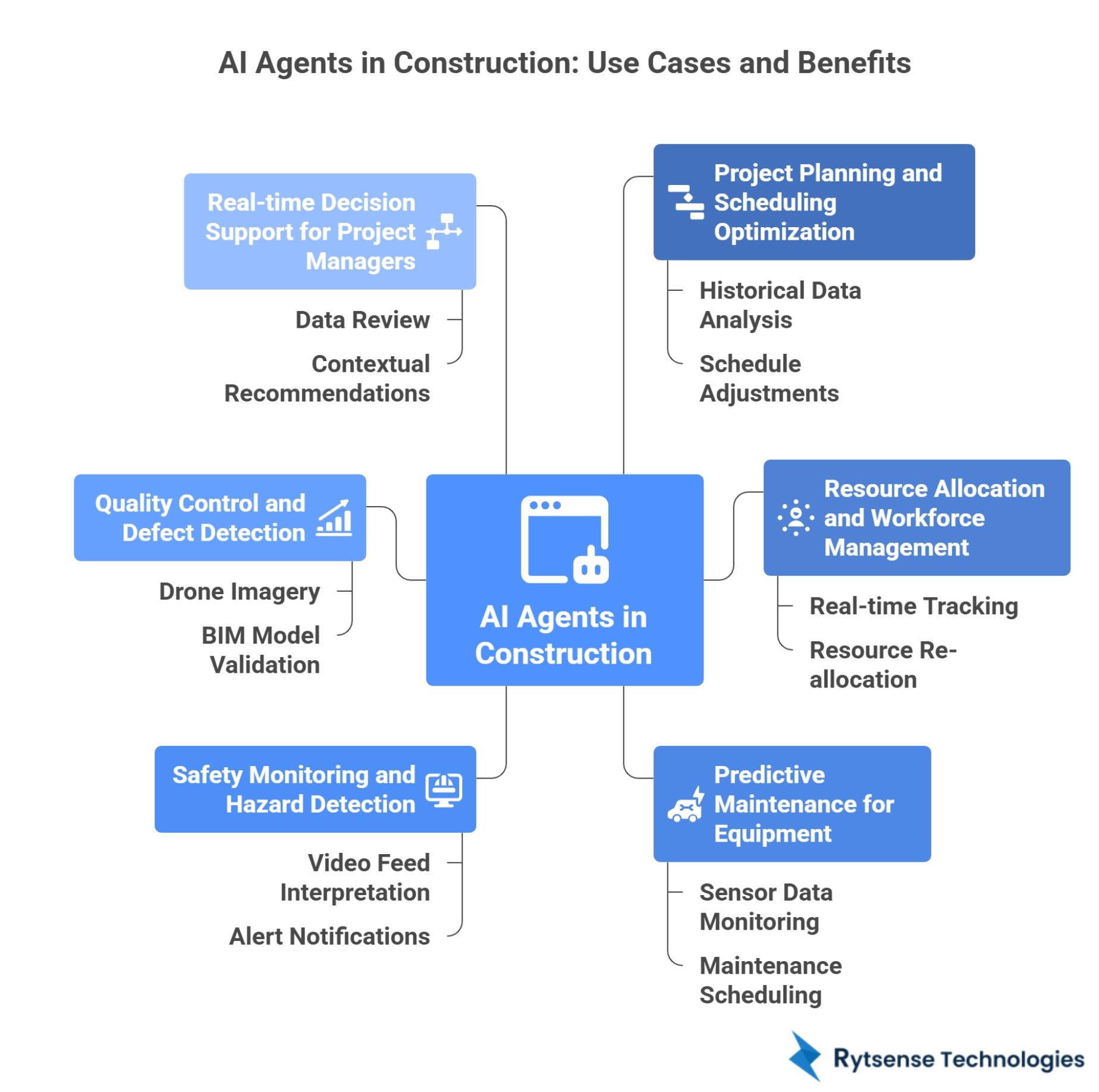
AI use cases in construction span the entire lifecycle of a project, from pre-planning through quality control. AI Agents in Construction can improve schedules, optimize resource allocation, predict equipment failures, monitor safety requirements, detect construction defects, and give project managers real-time information to make decisions - all resulting in measurable improvements across all operational areas.
AI use cases in construction illustrate tangible value across all stages of the project lifecycle.
Project planning and scheduling optimization
AI Agents in Construction examine historical project data in order to develop feasible schedules. They include task dependencies, resource constraints, and risk factors. If changes are made, agents will automatically make adjustments to downstream activities and notifications to impacted teams. This reduces schedule conflicts by 40%.
Resource allocation and workforce management
A business construction assistant using AI agents tracks labor hours, equipment usage, and material consumption in real time. It predicts shortages of labor and resources and recommends re-allocation of resources across job sites. Companies report a 25% better resource utilization rate.
Predictive maintenance for equipment
AI agents monitor equipment sensor data to evaluate equipment for performance anomalies. AI Agents in Construction predict failure before breaking down, and schedule maintenance during less active times. This contributes to a 35% reduction of equipment downtime, while extending asset lifetimes.
Safety monitoring and hazard detection
Computer vision agents interpret video feed data from the job site to identify safety violations, such as missing PPE, unsafe scaffolding, and potential hazards due to proximity. Agents can send alerts to supervisors and workers instantly. Job sites using AI safety monitoring report a 50% decrease in incident rates.
Quality control and defect detection
AI Agents in Construction utilize drone imagery and laser scans to validate as-built conditions against BIM models. These agents check for deviations, missing parts, and errors in installation. When used in the early defect identification phases, they can reduce the direct costs of rework by 30%.
Real-time decision support for project managers
Daily project managers navigate dozens of decisions. An AI agent is able to review schedules, budgets, weather forecasts, and supplier status to provide a contextual recommendation. This can improve the quality of decisions made and reduce time spent gathering information by 60%.
How to Build or Deploy an AI Agent
Organizations essentially have two paths: developing their own AI agents from scratch or adopting a customization from existing AI agent vendors.
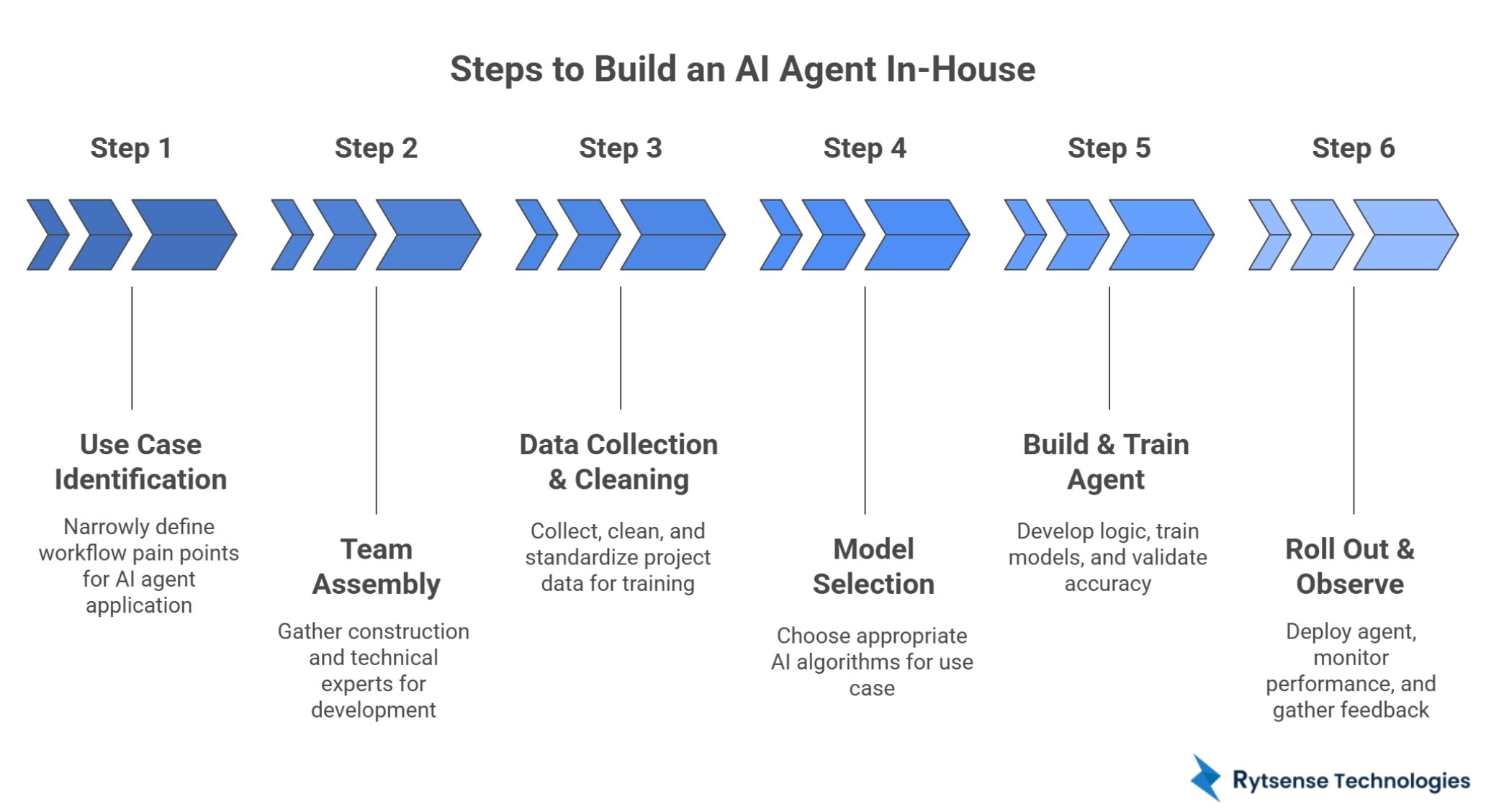
Steps to develop an AI agent in-house vs. adopting existing solutions
Build from Scratch:
Step 1: Determine Use Case
Narrowly identify exact pain points in workflows that could benefit from AI agents. Start simple and small and work up to the complexity level. Start with one workflow issue (invoice approvals, safety inspection process, heightened routing of incidents).
Step 2: Put Your Team Together
You will need construction industry professionals (domain knowledge) with corresponding technical capability to build the AI agents (data scientists, software engineers etc.) For example, construction industry knowledge is needed to validate that you are solving real problems for agents, not just out of theory.
Step 3: Collect and Clean Your Data
AI agents need quality training data. Start collecting (historical) project documents, schedules, budgets, project incidents etc. Clean the dataset by removing duplicates, error checking, standardization of your format, and validation of accuracies. As a general rule of thumb, devote 40% of your total period to data preparation.
Step 4: Select Models
Select algorithms depending on use case case (i.e. NLP for document analysis, computer vision for photography based inspection, reinforcement for optimizations etc.) Construction use cases will tend to be consolidated within ensemble methods which apply multiple methods used collectively.
Step 5: Build and Train
After data collection is complete, you will build out the agent logic, training your algorithms on historical data as well, then testing and validating your models against test scenarios. You will repeat this process until you reach the rate of accuracy you have determined is acceptable for the business objective (degree of effort) for each use case. Development cycles would generally run 3 to 6 months for more narrow use cases.
Step 6: Roll Out and Observe Performance
Put agents into production environments alongside monitoring dashboards. Review performance metrics, error rates, and account for antagonistic feedback. Include human validation for important decisions.
Rytsense Technologies as a trusted AI partner for deployment
Work with an established AI solution provider, such as Rytsense Technologies, who has previously developed AI Agents in Construction. Pre-built agents are a quicker, lesser, risk way to realize value.
Advantages of using pre-existing solutions:
- Demonstrated reliability and previous testing across several projects
- Quicker to deploy (weeks, not months)
- Less capital outlay at the start
- Ongoing support and updates on the pre-existing product
- Integration or familiarity with construction software
Not sure where to start?
Get a step-by-step strategy tailored to your organization's needs.
Data requirements and sources for AI training
| Data Type | Purpose | Sources |
|---|---|---|
| Historical Projects | Train predictive models | ERP systems, project archives |
| Real-Time Operations | Enable live monitoring | IoT sensors, mobile apps, drones |
| Documentation | Support NLP applications | Contract databases, RFI logs, specifications |
| Safety Records | Improve hazard detection | Incident reports, inspection logs |
Rytsense Technologies offers its customers a full scope of AI implementation from assessing workflow, to deployment and ongoing optimization. Their construction built AI agents deploy easily with existing project management, ERP and BIM applications ensuring tight integration.
Selecting AI models and algorithms suitable for construction
Selecting the right AI models and algorithms is critical for achieving high accuracy, operational efficiency, and reliable automation in construction environments. Because construction projects generate diverse data—ranging from schedules and BIM files to safety logs and equipment telemetry—the AI models must be chosen based on the problem they solve, the data type available, and the required performance level.
1. Predictive Analytics Models for Project Forecasting
Construction teams rely on predictive insights to prevent delays, cost overruns, and equipment failures.
Time-Series Forecasting Models
Used for predicting project timelines, material demand, equipment utilization, and cost fluctuations.
Regression Models
Ideal for estimating budgets, labor needs, and productivity rates.
2. Machine Learning Models for Risk & Safety Analysis
Classification Algorithms
Used for identifying risk patterns, classifying safety incidents, and anticipating hazards.
Computer Vision Models
Analyze site images/video to detect PPE violations, unsafe behavior, equipment proximity, and structural issues.
3. NLP Models for Document Understanding
Transformer-Based Models (BERT, GPT, LLaMA, T5)
Extract insights, summarize documents, classify contracts, and automate RFI responses.
Named Entity Recognition (NER)
Identifies materials, tasks, timelines, risks, and compliance requirements in documents.
4. Optimization Models for Scheduling & Resource Allocation
Constraint Optimization Models
Used for schedule optimization, resource leveling, and planning site logistics.
Reinforcement Learning
Helps dynamically optimize crane routing, workforce allocation, and equipment paths based on real-time feedback.
5. Generative AI Models for Design & Simulation
Diffusion and Generative Models
Used for automatic design iterations, construction sequence simulations, and cost-planning scenarios.
Simulation Models
Help predict site performance, structural shifts, or material behavior under different conditions.
Testing, validation, and deployment strategies
To confirm that the agents function correctly, prototype pilots can be constructed and run using the completed projects. During this phase, we compare the AI-generated predictions with the actual end-state of the construction project. We also analyze false positive predictions, missed alerts, conflicting alerts, and the quality of decision-making. This analysis will assist us in updating the development of the agent for deployment across other projects.
Continuous learning and improvement
AI Agents in Construction improve based on information acquired through the learning process. It is vital to create a feedback loop that allows human experts to view agent recommendations and correct the AI, helping to train and prepare the agents for edge cases and disciplinary specifics.
Integration into the Construction Tech Stack
AI Agents in Construction will provide the greatest value when integrated seamlessly with existing technology platforms, such as BIM, ERP, project management tools, and IoT sensors. When properly integrated, AI agents can have access to all project data from all platforms. This means AI Agents in Construction can automate workflows between platforms, and push valuable information to teams where they are needed most, while leading to higher adoption and more measurable impact.
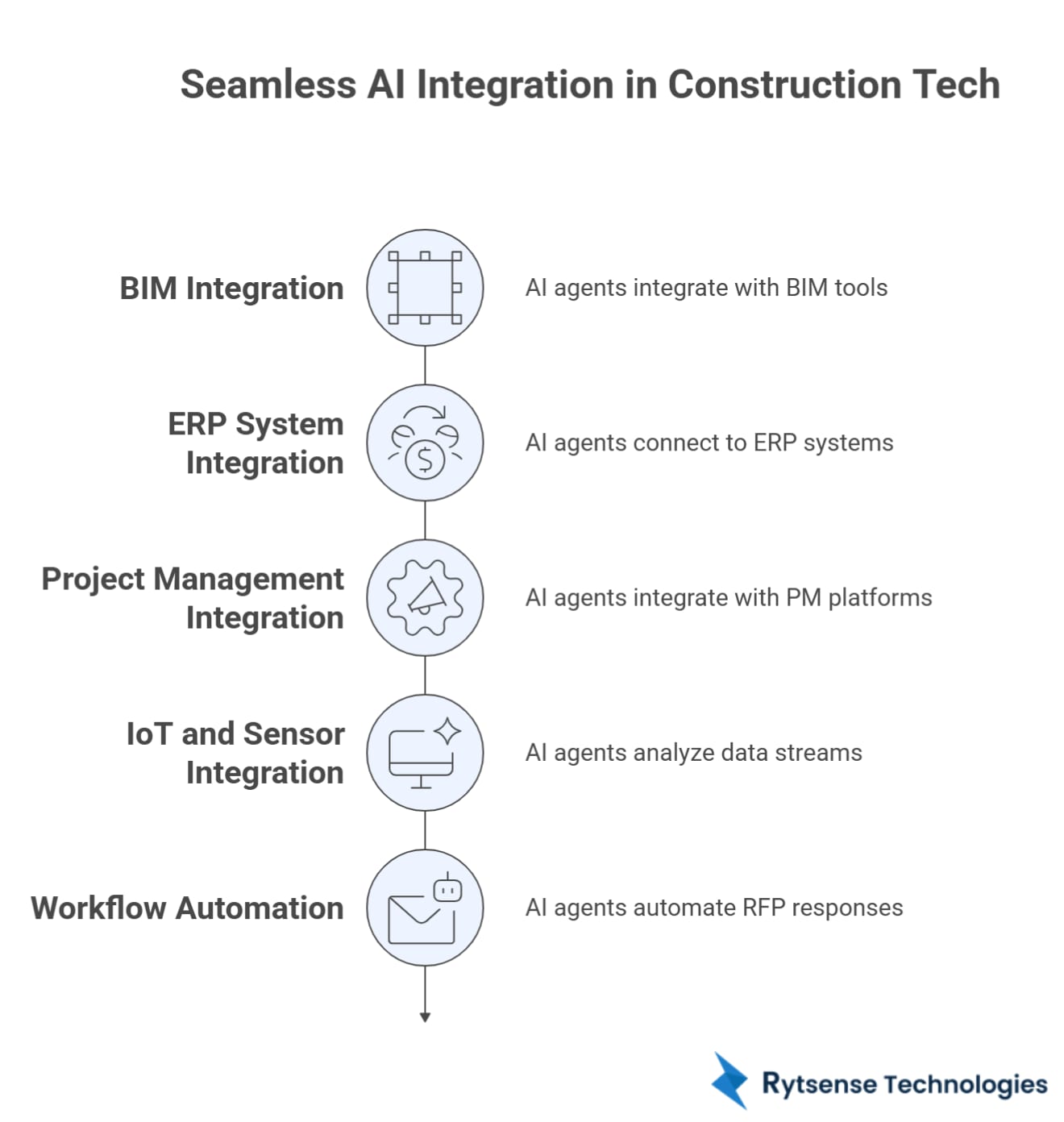
Key construction software tools AI agents can integrate with (BIM, ERP, project management tools)
In order to provide maximum value, AI Agents in Construction have been designed to integrate with the technology stack you are already using:
Building Information Modeling (BIM) Integration:
The AI Agents in Construction automatically integrate with already existing tools such as Autodesk Revit, Navisworks, and other similar tools. Whenever a revision occurs to the BIM model, the Construction AI agents automatically check the project documentation for the construction assumptions made and identify if there are any changes in clash detection or constructability.
ERP System Integration:
The AI Agents in Construction can connect to SAP, Oracle, and Procore and other ERP systems to obtain necessary information regarding financial data, procurement documentation, and resources available for the task. This can be used to track costs of the project in real-time and analyze budget variances.
Project Management Integration:
The AI Agents in Construction can also be connected to Microsoft Project, Primavera P6, and other cloud-based PM platforms. The integration of AI with existing tools astutely allows the agent to monitor tasks, notify project teams of possible schedule risks, and help plan resources using fewer resources within the project management tab.
Cloud platforms vs. on-premises AI solutions
| Approach | Advantages | Considerations |
|---|---|---|
| Cloud | Scalability, lower upfront cost, automatic updates | Data security, internet dependency |
| On-Premises | Data control, customization, compliance | Higher capital costs, maintenance burden |
Many construction firms have adopted hybrid approaches, keeping sensitive data on-premises and using the cloud for AI workloads that require greater processing power.
IoT and sensor integration for real-time monitoring
Artificial intelligence (AI) agents analyze data streams from equipment telematics, environmental sensors, and wearables, and identify trends across both to recognize potential safety hazards and inefficiencies in operations.
Workflow automation and seamless team adoption
When it comes to estimating, artificial intelligence (AI) in construction management systems provides an example of what value integration might provide. An AI agent monitors RFPs as they are released, uses natural language processing to extract the relevant criteria from the RFP, extracts historical cost data from an ERP system, generates a preliminary estimate, routes the estimate to pre-qualified bidders for review, and finalizes a response to the RFP, all in hours instead of days.
How Rytsense helps integrate AI agents into existing tech stacks
Rytsense Technologies builds the integration architecture to have their AI agents interface with existing tools so the workflow of the technology remains intact. Their approach includes developing APIs, protocols for data synchronization, and user interface customization.
Business Benefits & ROI of AI Agents in Construction
Construction firms utilizing AI for construction industry solutions are seeing measurable returns such as 15% to 20% reduction in costs, quicker delivery cycles, improved safety records, and improved competitive positioning. Early adopters are seeing typical payback periods of 12 months with five-year ROI exceeding 400% through operational efficiency and quality improvements.
Financial Impacts:
Construction industry stakeholders that adopt artificial intelligence (AI) in their solutions have yielded predictable returns, including:
Cost Savings
- Reduce change order costs by 15-20% - due to early detection of issues and subsequent change orders needed to correct.
- Reduce material waste by 10-15% - the result of improved and agile procurement.
- Reduce administrative overhead by 25-30% by automating workflows and production times.
- Reduce rework costs by 30-35% through monitoring of QA standards throughout projects.
Revenue Growth
- Increase wins by 20% - by optimistic estimating through AI.
- Increase project margins by 12-15% in the project margin through better resource utilization.
- Manage 20-25% more concurrent projects with the same management team.
Time Saving
- Projects finish 10-15% earlier than anticipated.
- Managers save 15-20 hours of experimental coordination per week.
- The reporting cycle goes from days to hours.
Improved Safety
40-50% fewer reportable incidents on sites that incorporated AI in construction monitoring. Lower insurance premiums, with less downtime and reputable towards the community.
Compliance and Quality
Assurance of audit-ready documentation with instant collection. Consistency in quality is an important focus of inspection and review standards that apply uniformly by AI Agents in Construction.
Competitive Edge
Early adopters of AI differentiation are the fastest construction, at lower bids, and deliver a better overall quality of project work. Clients will request contractors that utilize tech-savvy processes over non-adopters more frequently.
ROI Calculation Example
For example, a mid-sized general contractor achieved an ROI for AI agent investment of $500,000 with the following costs and savings:
- $200,000 caused by reduced delays annually
- $150,000 due to rework costs
- $100,000 by improved administrative efficiency
- $50,000 reduction in safety-related claims
Thus, the total annual benefit equals $500,000, implying a payback period of 12 months. The total 5-year ROI is 400%.
Challenges, Risks & Mitigations
AI adoption meets resistance due to concerns around data privacy, reluctance to commonly held ways of working, changing from low to higher levels of initial investment, complexity to integrate into existing models, and accuracy of the models post-training. A successful organization would secure solutions to those real concerns posing a threat to AI adoption with bullet-proof data security, encompassing change management processes, carefully planned deployment strategies and phases, and human-in-the-loop checks and balances.
Data privacy and security concerns
Construction projects inherently have sensitive information regarding financials, proprietary design work, or client records. AI Agents in Construction need access to these assets which may raise concerns regarding security.
Risk mitigation strategies: pilot projects, phased deployment, employee training
Encrypting data in transit and at rest. Implementing role-based access controls. Regular audits of security practices. Vendors will abide by the security procedures contained in their SOC 2 report. Keeping sensitive data available in proprietary servers on-site when necessary.
Workforce adaptation and change management
Employees may resist the adoption of AI due to concerns about their jobs and skepticism about technological immigration. Change management is vital for adoption and success.
Workforce Management Approaches
Communicate that the AI is an enhancement as opposed to replacement. Engage frontline workers regarding the selection process and pilot designs. Implementing robust training programs. Celebrate early success stories to develop momentum. Acknowledge concerns with transparency.
Cost of Technology
AI implementation includes capital expenses to initiate with the software, existing technology infrastructure or hardware, and personnel expertise. Smaller firms may struggle with the required capital investments.
Cost Mitigation Plans
Begin with a specific pilot focusing on quick ROI. Utilize commercially available cloud services to mitigate the requirements of existing technology and its associated costs. Employ vendors with flexibility to establish pricing or resource plans, and/or vendors who will assist with grants for technology use. Phase the onboarding and implementation to distribute the costs effectively for both technology and workforce changes.
Integration Complexity
The challenge AI's integration faces is based on the existence of legacy systems, custom workflows, and data silos.
Consider:
- Complete technology audits prior to technology selection,
- Select AI solutions with strong APIs,
- Collaborate with integration experts (e.g., Rytsense Technologies),
- Budget for consolidating and standardizing data, and
- Recognize the need for an iterative approach rather than a big-bang approach.
Model Accuracy
AI Agents in Construction are capable of erring frequently, especially when they encounter content outside the training inputs. Working to reduce risk:
- Incorporate human oversight for key decisions,
- Defining confidence thresholds for autonomous action,
- Create validation workflows,
- Sustain updated models with fresh input, and
- Document the logic of any decision-making so it can be explained.
Best Practices & Tips for Adoption
A successful AI adoption includes starting with targeted pilots, obtaining early buy-in from stakeholders, prioritizing data quality, developing a clearly defined success metric, implementing phased rollout scenarios, comprehensive training methods, governance frameworks, and working with experienced providers. Together, this information will mitigate potential risks and support value creation and increase organizational adoption rates.
Start small with pilot programs
Initially pick a single affluent-use case for the pilot project. For example, a document classification agent or safety monitoring agent can be useful since they are comparatively simple, but also widely impactful. If the approach is successful there will be confidence to scope an extended project down the road.
Involve stakeholders early and get buy-in
If support of project managers, field supervisors, and technology teams can be achieved early in the project, the likelihood that AI Agents in Construction will address a real problem is enhanced. Getting these advocates will help normalize process changes throughout the organization.
Ensure high-quality data collection and management
AI agent effectiveness is directly determined by the quality of training data. Prior to deployment, time and resources should be allocated to clean up, standardize and govern the data you are going to use. Implement ongoing data hygiene thereafter to ensure accuracy lasts over time.
Continuously monitor performance and refine AI models
Develop measurable key performance indicators (KPIs) based upon outcomes tied to company objectives. Continue to monitor measures such as schedule variance reduction, individual cost savings, reduced safety incidents, and user adoption. Measuring regularly will inform adjustments to optimize performance, as well as illustrate ROI to long term stakeholders.
Use Incremental Rollout
Release AI agents with small project teams first. Build and establish iterative feedback loops to evaluate functionality before releasing it to the whole enterprise. This not only reduces risk, but it will help you offer a higher quality solution.
Require Comprehensive Training on Use
Users will need technical training on how to use AI tools, but also conceptual training related to how AI Agents in Construction make decisions. This training will ensure that users are prepared for regular use cases, errors or abnormal situations, and escalation processes. Ongoing education ensures all teams utilize the complete capabilities of the new tools.
Set Governance Framework
Establish policies for AI agent usage that articulate levels of decision-making authority, override processes, and auditing requirements. Governance will build accountability for responsible AI use with a clear alignment of company values and regulatory adequacy.
Partner with experienced AI solution providers
Going with experts such as Rytsense Technologies will assist in accelerated deployment and lower risk. Their expertise in the construction industry will ensure that your solutions meet the requirements of the construction domain. Even better, continued support will allow organizations to be best positioned for understanding AI investments.
Real-World Examples / Case Studies
Case Study 1: Scheduling Optimization for a Commercial Developer
A regional commercial developer was facing project delays of an average of 45 days over their entire portfolio, and so they decided to implement an AI agent to perform construction scheduling monitoring.
Implementation Process:
The AI agent interfaced with Microsoft Project and embedded field management software. It scanned three years of historical schedule data and identified delay trends related to progenitors of delay. It continually monitored live project data and monitored construction status to forecast potential conflicts between 2-3 weeks in advance.
Results:
- Delays reduced from 45 days to an average of 18 (a 60% improvement)
- Project managers saved an average of 12 hours per week on schedule coordination
- Resource utilization improved by 22%
- Client satisfaction scores improved by 35%
Case Study 2: Safety Monitoring for an Infrastructure Contractor
A heavy civil contractor was struggling with a high safety incident rate on their highway and bridge projects. They chose to implement computer vision AI Agents in Construction to monitor job site hazards in real-time.
Solution:
AI agents monitored live video feeds from job site cameras to identify PPE violations as well as fall hazards and proximity to hazards. The system sent instant mobile alerts to field supervisors and workers in real-time.
Results:
- Reportable incidents reduced 52% in the first year
- Insurance premiums reduced by 18%
- Inspection efficiency improved by 40%
- Workers reported improved awareness of safety hazards
Case Study 3: Cost Control with a Residential Builder
In Case Study 3, a high-volume residential builder regularly reported budget overruns of 12% for each project. To address this challenge, the builder partnered with Rytsense Technologies to implement AI-enabled cost monitoring.
Approach:
The AI agent was connected into the builder's existing ERP, procurement system, and accounting software. It monitored actual costs versus budgets in real-time, identified actual costs that exceeded budget thresholds, and tracked spending patterns in order to assess value and locate root causes.
Impacts:
- Budget variance reduced from 12% to 4%
- Annual savings of $2.8M across the project portfolio
- CFO reporting time decreased 75%
- Improved procurement office efficiencies through automated vendor analysis
Lessons learned and insights for other companies
- Readiness of data is a key to success – having companies with clean and easily accessible historical data achieved a faster time to value.
- User adoption drives results – projects with strong change management resulted in 3x the outcomes.
- Start targeted and scale – initial deployment success was dependent on having a focused implementation compared to a wide deployment.
- Expertise of partner matters - organizations that worked with vendor experts (Rytsense) deployed 40% faster.
Integration with Construction Technology: A Technical Perspective
Implementing AI in construction industry requires a proper integration architecture that facilitates the interactions between AI agents and every other existing enterprise system:
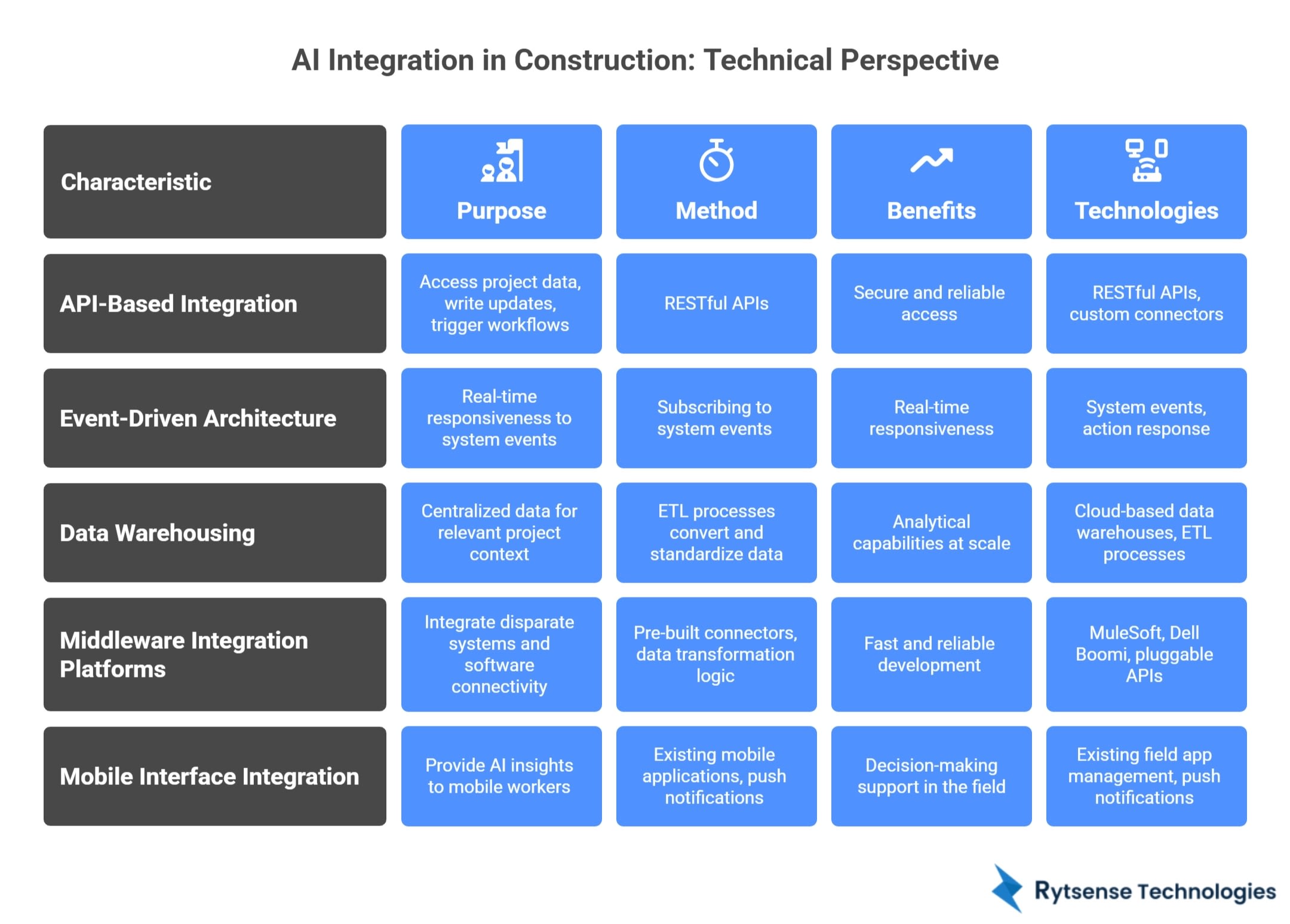
API-Based Integration
Mainstream construction-based software now exposes RESTful APIs for programmatic access to their data. AI Agents in Construction will use RESTful APIs to read the project data, write data updates back to the software, and trigger workflows. Rytsense Technologies develops custom connectors to ensure secure and reliable access to and from operational software systems.
Event-Driven Architecture
AI Agents in Construction will subscribe to system events, such as schedule updates, changes to the project budget, and document uploads. Upon the occurrence of an event, the AI agents take the appropriate action of processing the information and executing the required action response. An event-driven architecture offers real-time responsiveness without the resource demand of continuous polling.
Data Warehousing
Centralized data repositories aggregate data across multiple sources into a data warehouse, giving AI Agents in Construction relevant context about the project. Above the data repositories, ETL processes convert and standardize the data format and the workflow of transformation logic. Although query executions take time, cloud-based data warehouses, such as Snowflake or Azure Synapse, will provide analytical capabilities at scale.
Middleware Integration Platforms
Integration platforms, such as MuleSoft, Dell Boomi, and pluggable APIs, attempt to help construction engineers integrate disparate systems and software connectivity. Integration platforms provide pre-built connectors, data transformation logic, and orchestration functions for developing AI agents fast and reliably.
Mobile Interface Integration
Mobile workers will see the insights of AI agents from their mobile devices via existing mobile applications. Integration with the construction corporation's existing field app management (i.e., Inspections App) provides the necessary front-end connectivity for mobile workers to see the insights when the decision-making occurs. For times when alerts are needed, push notifications can alert workers who are mobile.
The AI in construction market is anticipated to reach an estimated $4.5 billion by 2028, with a CAGR of 25%. Some of the future trends include:
Fully Autonomous Project Coordination
AI Agents in Construction will perform all aspects of the project workflow with little to no human interference. Agents will negotiate contracts, work through disputes, and dynamically change plans based on real-time conditions.
Predictive Construction
With predictive construction, advanced analytics will enable the ability to predict project outcomes before it breaks ground. Once building begins, AI agents will analyze and optimize designs for constructability, cost, and schedule at the same time.
Digital Twin Integration
AI Agents in Construction will track their respective digital twins, or digital representations of physical assets that extend over the lifecycle. The AI agents will predict needed maintenance, optimize renovations, and support facility management.
Generative Design
AI Agents in Construction will provide multiple design alternatives that are optimized specifically for cost, sustainability, or speed of construction. Humans will serve as a guide to the creativity of AI, leaving engineers out of the process of drawing.
Collaborative Intelligence
Human-AI partnerships will be the standard method of practice in the next few decades. AI agents will perform data analysis and routine decisions, while humans will focus on complex judgment, stakeholder relationships, and other high-value tasks.
Also Read:
Top 10 Agentic AI Use Cases in BankingMove Forward with Rytsense Technologies
The construction industry is at a technological inflection point. AI Agents in Construction are no longer an experiment, they are validated tools providing quantifiable business value. Construction companies that embrace AI today will create a competitive advantage and grow that advantage over time.
Assess Your Readiness:
Examine your company's AI readiness across four dimensions:
- Data maturity - Are you able to access viable historical project data?
- Technology infrastructure - Do your systems support integration?
- Organizational capability - Does your team have the capacity to implement?
- Use case clarity - Have you created high-value pilot candidate opportunities?
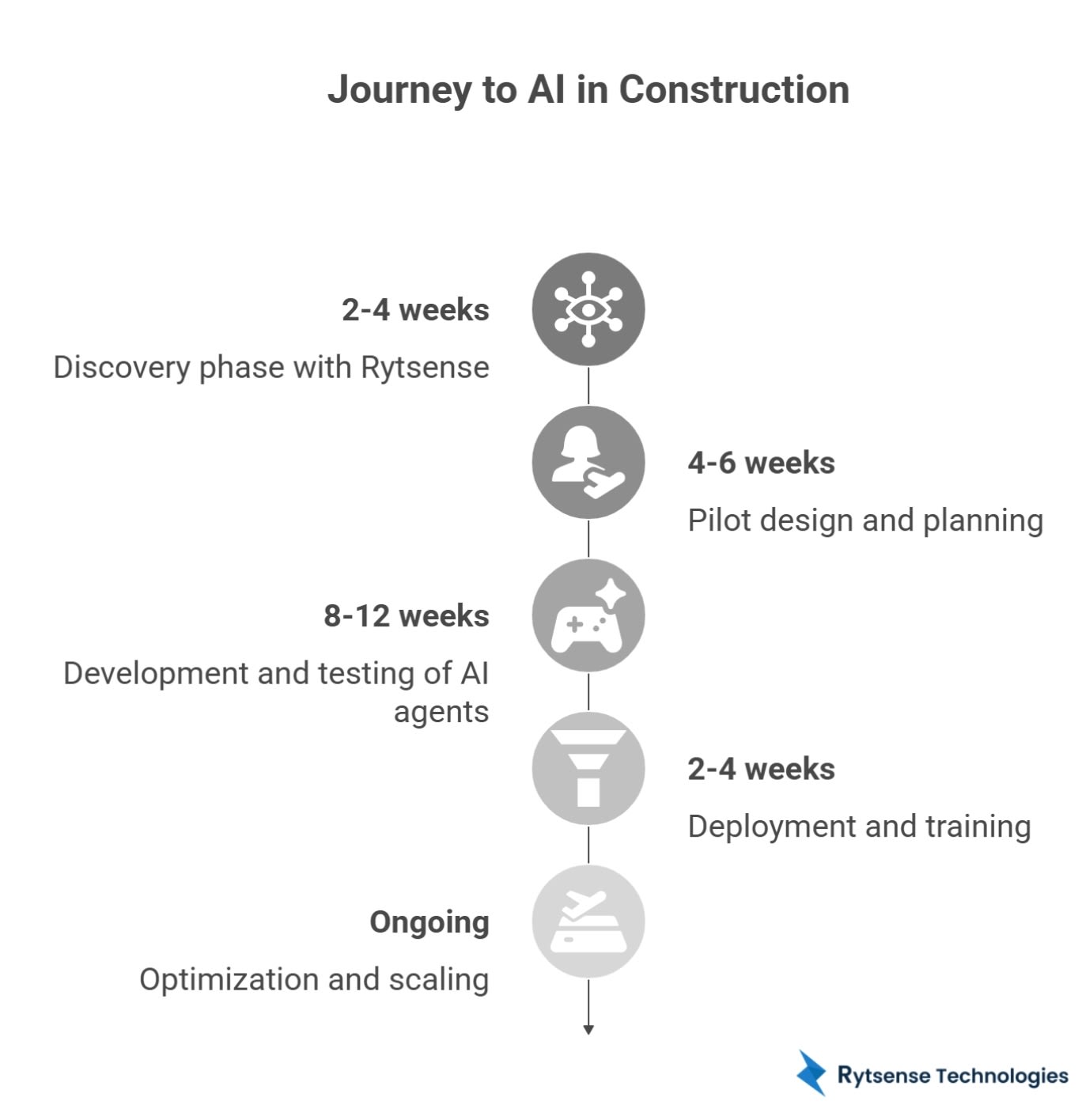
Begin Your Path to AI:
Collaborate with Rytsense Technologies to conduct a thorough workflow review. Identify pain points, estimated opportunity, and prioritize use cases based on importance and feasibility.
Phase 2 - Pilot Design (4-6 weeks)
Develop a pilot scope, select an approach, and develop metrics for success. Rytsense will provide technical architecture guidance and implementation road mapping.
Phase 3 - Development & Testing (8-12 weeks)
Build and train your AI Agents in Construction, integrate with existing systems, and validate performance. Rytsense will focus on the technical implementation while your team focuses on business.
Phase 4 - Deployment (2-4 weeks)
Deploy the solution to your pilot project team, provide training and set-up monitoring. Rytsense will support through the go-live process and any early behavioural adoption challenges.
Phase 5: Optimize & Scale (Ongoing)
To optimize agents for real world use, you should refine their performance based on feedback after your initial deployment. Additionally, plan to scale to additional levels of use cases and projects. Rytsense provides ongoing support and improvement.
Contact Rytsense Technologies:
Contact us to book a discovery session to discuss the different ways AI Agents in Construction can help your construction operations. Rytsense Technologies provides:
- Free workflow assessments that identify your best potential for high impact and expectations
- Proof-of-concept projects that align with a specific date and budget
- End-to-end implementation services from strategy through deployment
- Optimization with ongoing support to help you build sustainable success
Get started with your AI transformation at www.rytsensetech.com or info@rytsensetech.com
Final Thoughts
AI Agents in Construction present one of the industry's best opportunities to address chronic productivity lapses and derive sustainable competitive advantage. The future of ai in construction, as a very intelligent automated and predictive system, that are able to support you through always automating the routine work, predicting problems before they escalate, and presenting information to support a decision when it matters most. The future will belong to construction companies that can attract and retain people with AI Agents in Construction in a way that develops a work culture that accelerates project delivery with leading safety and productivity.
Meet the Author

Karthikeyan
Connect on LinkedInCo-Founder, Rytsense Technologies
Karthik is the Co-Founder of Rytsense Technologies, where he leads cutting-edge projects at the intersection of Data Science and Generative AI. With nearly a decade of hands-on experience in data-driven innovation, he has helped businesses unlock value from complex data through advanced analytics, machine learning, and AI-powered solutions. Currently, his focus is on building next-generation Generative AI applications that are reshaping the way enterprises operate and scale. When not architecting AI systems, Karthik explores the evolving future of technology, where creativity meets intelligence.