
1.Introduction
Let’s be honest: maintaining a vehicle can sometimes feel like a never-ending chore. From remembering service schedules to tracking fuel expenses and finding trustworthy mechanics, it’s easy to lose track or miss crucial details. But what if there were a smarter way to stay on top of it all?
Enter the digital pit crew every vehicle owner and fleet manager needs — car maintenance apps. These powerful applications go beyond simple reminders. They help users monitor vehicle health, log fuel consumption, manage service history, and even connect with reliable service providers. For fleet operators, they provide real-time data on multiple vehicles, making maintenance management more efficient and cost-effective.
The demand for such apps is soaring. According to Anyline, 70% of drivers now rely more on digital tools to maintain their vehicles. With the automotive tech market projected to hit $50 billion by 2027, there’s never been a better time for entrepreneurs and fleet companies to build innovative auto maintenance solutions. If you’re a business owner or fleet manager looking to create a custom vehicle maintenance app , this guide is for you. By the end, you’ll have a clear roadmap, technical insights, and practical tips to develop an app that drivers and fleet managers can rely on — just like their vehicles.
Ready to change the way we maintain cars? Let’s get started.
The demand for such apps is soaring. According to Anyline, 70% of drivers now rely more on digital tools to maintain their vehicles. With the automotive tech market projected to hit $50 billion by 2027, there’s never been a better time for entrepreneurs and fleet companies to build innovative auto maintenance solutions. If you’re a business owner or fleet manager looking to create a custom vehicle maintenance app , this guide is for you. By the end, you’ll have a clear roadmap, technical insights, and practical tips to develop an app that drivers and fleet managers can rely on — just like their vehicles.
Ready to change the way we maintain cars? Let’s get started.
2. What Is a Vehicle Maintenance App?
A vehicle maintenance app is a mobile result that helps users track automobile servicing, energy charges, and condition history. It sends automated reminders for oil replacement changes, brake checks, and other routine services, ensuring vehicles stay in top condition.
These apps serve different audiences:
● Individual drivers (tracking personal cars).
● Fleet managers (monitoring multiple vehicles).
● Auto workshops (managing customer appointments).
With features like OBD-II diagnostics, AI-powered alerts, and in-app service bookings, a fleet vehicle maintenance app can save users time, money, and stress.
These apps serve different audiences:
● Individual drivers (tracking personal cars).
● Fleet managers (monitoring multiple vehicles).
● Auto workshops (managing customer appointments).
With features like OBD-II diagnostics, AI-powered alerts, and in-app service bookings, a fleet vehicle maintenance app can save users time, money, and stress.
3. Key Features of a Vehicle Maintenance App
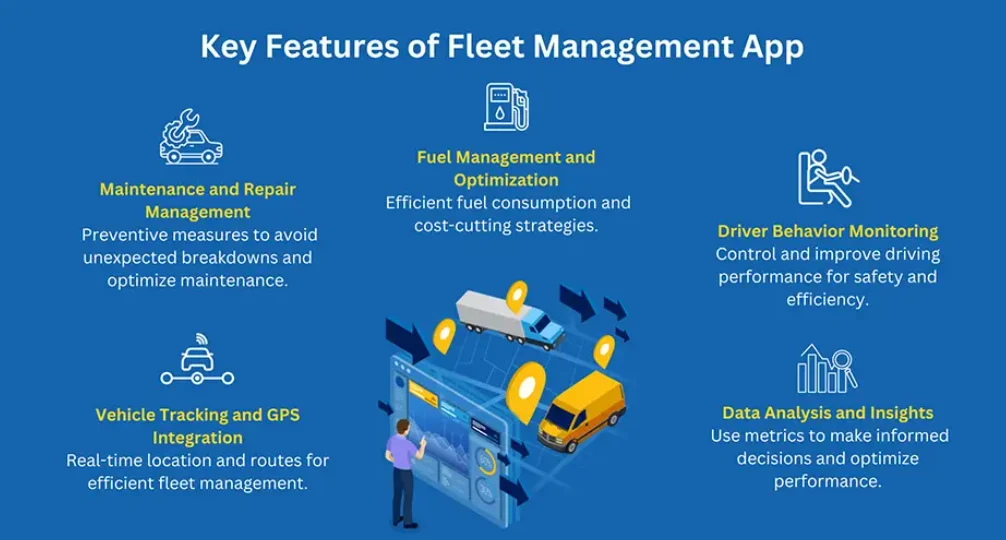
3.1 Core Features
Every vehicle maintenance app should include:
● Vehicle Profile Management: Users add car details (make, model, VIN, mileage).
● Maintenance Reminders: Notifications about tire air density, oil replacement, and inspections.
● Service History Logs: Digital records of past repairs, costs, and receipts.
● Fuel & Expense Tracking: Mileage logs, fuel efficiency analytics, and spending trends.
● Document Storage: Secure uploads for insurance, registration, and warranty files.
● Garage Locator: GPS-based search for nearby mechanics with reviews
● Vehicle Profile Management: Users add car details (make, model, VIN, mileage).
● Maintenance Reminders: Notifications about tire air density, oil replacement, and inspections.
● Service History Logs: Digital records of past repairs, costs, and receipts.
● Fuel & Expense Tracking: Mileage logs, fuel efficiency analytics, and spending trends.
● Document Storage: Secure uploads for insurance, registration, and warranty files.
● Garage Locator: GPS-based search for nearby mechanics with reviews
3.2.Advanced Features
To stand out as the best vehicle maintenance app, consider:
● AI-Predictive Maintenance: Analyzes driving patterns to warn of potential issues.
● OBD-II Integration: Real-time engine diagnostics (e.g., tire pressure, battery health).
● In-App Service Booking: Direct appointments with partnered garages.
● Voice Commands: Hands-free logging (e.g., "Log oil change at 5,000 miles").
● Multi-Language Support: Expands reach to non-English speakers.
● AI-Predictive Maintenance: Analyzes driving patterns to warn of potential issues.
● OBD-II Integration: Real-time engine diagnostics (e.g., tire pressure, battery health).
● In-App Service Booking: Direct appointments with partnered garages.
● Voice Commands: Hands-free logging (e.g., "Log oil change at 5,000 miles").
● Multi-Language Support: Expands reach to non-English speakers.
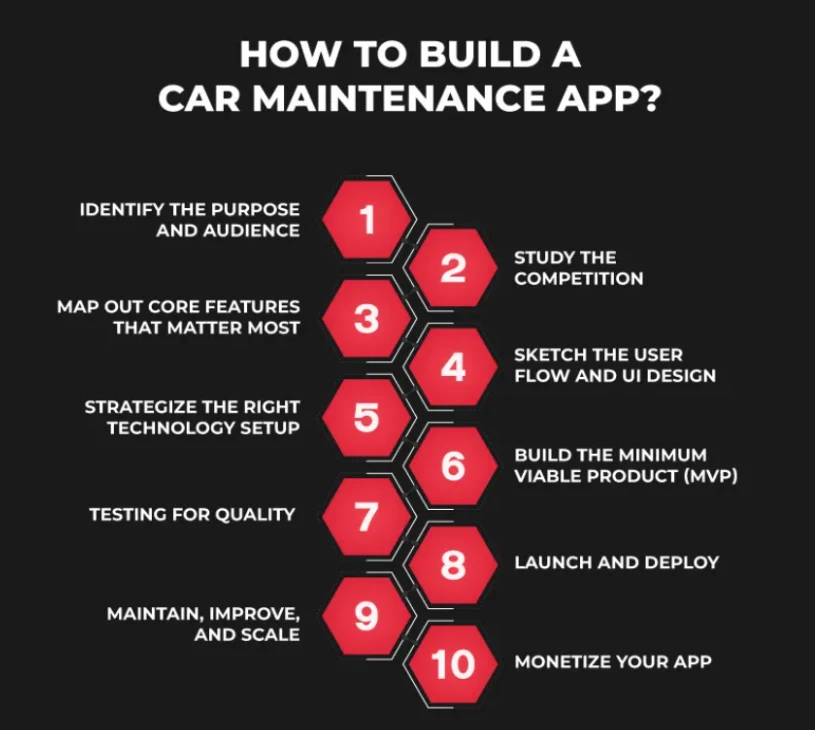
4. Step-by-Step Development Process
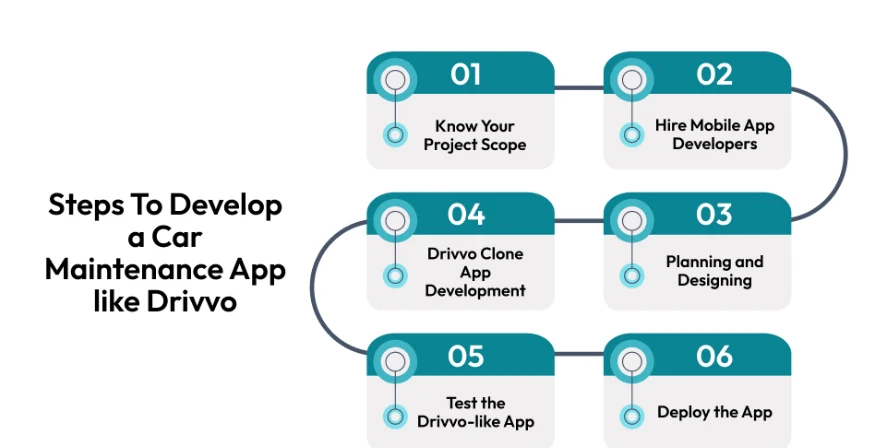
4.1.Market research and competitor analysis
Identify your target audience (individuals vs. fleets) and examine rivals such as AUTOsist and myCARFAX. Study their strengths, weaknesses, and user reviews to refine your app’s USP.
4.2.UI/UX design best practices
An easy-to-use interface that is clear of clutter is essential. Create wireframes using Adobe XD or Figma to guarantee dynamic user flows such as:
Login → Add Vehicle → Set Reminders → Book Services.
Login → Add Vehicle → Set Reminders → Book Services.
4.3.Choosing the right tech stack
● Frontend: using Kotlin/Swift (native) and Flutter or React Native (cross-platform).
● Backend: Node.js or Django (scalability).
● Database: PostgreSQL or Firebase (real-time sync).
● APIs: OBD-II (diagnostics), Stripe (payments), and Google Maps (garage locator)
● Backend: Node.js or Django (scalability).
● Database: PostgreSQL or Firebase (real-time sync).
● APIs: OBD-II (diagnostics), Stripe (payments), and Google Maps (garage locator)
4.4.MVP development approach
Start with core features to validate demand. A basic vehicle maintenance app Android/iOS version can be built in 2-4 months.
4.5.Comprehensive testing strategies
Conduct:
● Unit testing (individual functions).
● Integration testing (API/database checks).
● Beta testing (50+ real users for feedback).
● Unit testing (individual functions).
● Integration testing (API/database checks).
● Beta testing (50+ real users for feedback).
4.6.Launch and marketing tactics
Deploy on AWS/Google Cloud, publish on app stores, and use ASO (App Store Optimization) with keywords like "best vehicle maintenance app".
4.7.Post-launch maintenance
Monitor crashes, update features, and incorporate user feedback.
5. Cost Breakdown for Development
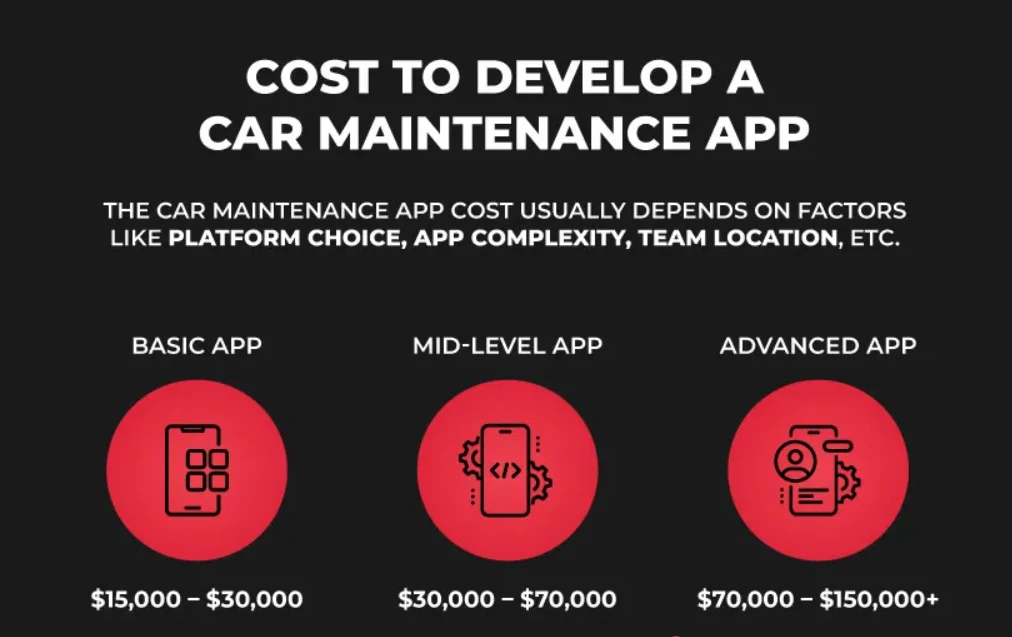
| App Type | Estimated Cost | Features Included |
|---|---|---|
| Basic App | $15,000–$30,000 | Profiles, reminders, fuel logs. |
| Mid-Level App | $30,000–$70,000 | Multi-vehicle support, AI alerts, bookings. |
| Advanced App | $70,000–$150,000+ | OBD-II, fleet dashboards, voice commands. |
Factors affecting cost:
● Platform (iOS, Android, or both).
● Development team location (e.g., a custom software development company in India offers cost savings).
● Third-party integrations (e.g., payment gateways, diagnostics).
6. Why Partner with a Custom Software Development Company?
Building a fleet vehicle maintenance app requires expertise in IoT, AI, and secure data handling. A custom software development company like Rytsense Technologies can:
● Ensure scalable architecture.
● Integrate OBD-II and AI diagnostics.
● Provide post-launch maintenance.
Outsourcing custom software development in India can save startups between 30 and 50 percent on costs without sacrificing quality.
● Ensure scalable architecture.
● Integrate OBD-II and AI diagnostics.
● Provide post-launch maintenance.
Outsourcing custom software development in India can save startups between 30 and 50 percent on costs without sacrificing quality.
7. Conclusion
For modern businesses and automobilists, car maintenance software is becoming a need rather than a luxury. By integrating AI, real-time diagnostics, and automated monuments, your app can save users time and cost while tapping into a $50 billion market.
To realize your idea, start with an MVP, give user experience first priority, and work with a trustworthy bespoke software development company .
Meet the Author

Co-Founder, Rytsense Technologies
Karthik is the Co-Founder of Rytsense Technologies, where he leads cutting-edge projects at the intersection of Data Science and Generative AI. With nearly a decade of hands-on experience in data-driven innovation, he has helped businesses unlock value from complex data through advanced analytics, machine learning, and AI-powered solutions. Currently, his focus is on building next-generation Generative AI applications that are reshaping the way enterprises operate and scale. When not architecting AI systems, Karthik explores the evolving future of technology, where creativity meets intelligence.