1.Introduction
Finding the right Indian web developer involves more than just checking technical skills. It’s crucial to select someone who truly understands your project’s goals and can provide solutions tailored to your business needs. India is well-recognized for its extensive talent pool of proficient developers who utilize the latest technologies while providing affordable services. Whether your project requires a simple website or a complex web application, Indian developers can accommodate different business sizes, budgets, and timelines. To increase the chances of success, ensure open communication, review portfolios carefully, and consider starting with a small assignment to test compatibility.
India stands out as one of the leading countries to
hire web developers
due to its vast talent pool, strong technical abilities, and competitive pricing. Many global businesses partner with Indian developers because they deliver quality results, maintain clear communication, and keep up with the latest industry trends. With a well-established IT industry, India continues to be a reliable and popular choice for web development projects worldwide.
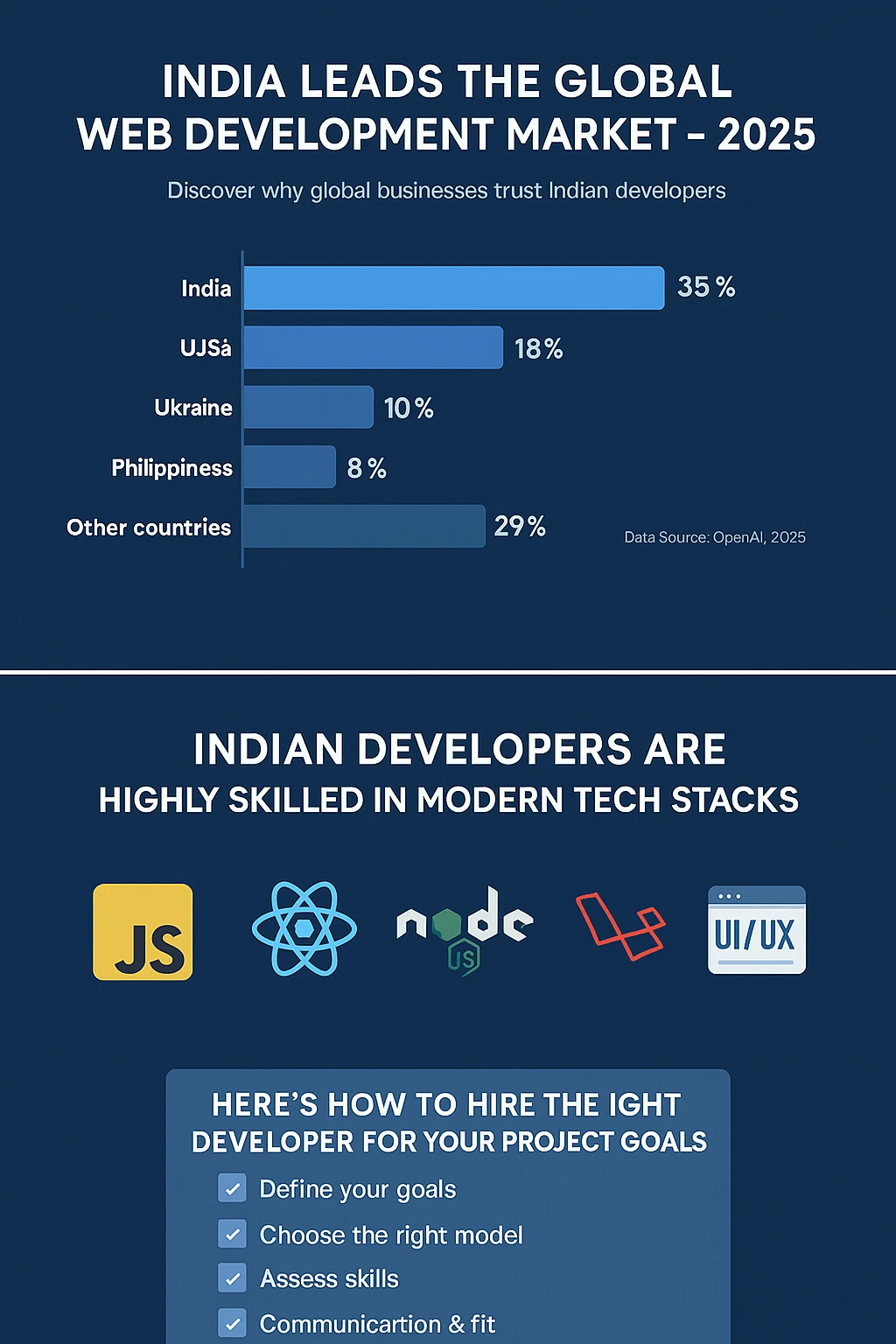
Bar chart illustrates India's strong position in the global web developer outsourcing market in 2026. Holding a substantial 35% share, India clearly leads the pack, outpacing countries like the USA (18%) and Ukraine (10%). This highlights India's appeal as a top destination for businesses seeking scalable, cost-effective, and high-quality web development solutions
2. What is a Web Developer?

A developer who maintains and creates web applications. Developers are responsible for design concepts , technical specifications then transform the requirement into fully-functional interactive online platforms that can be viewed through any web browser accessed by users.
To better understand the most important areas of work for a Web Developer
2.1 Front-End Development
Front-end development is highly visual, that part of the website . It includes layout buttons and navigation with HTML, CSS and JavaScript.
2.2.Back-End Development
Back-end development handles the servers, databases, and APIs which power that website using languages like PHP, Python, Nodejs.
2.3.Full-Stack Development
Full-stack development
is the combination of front-end and back-end development so that developers can create full web applications .
3. Web developer Skills
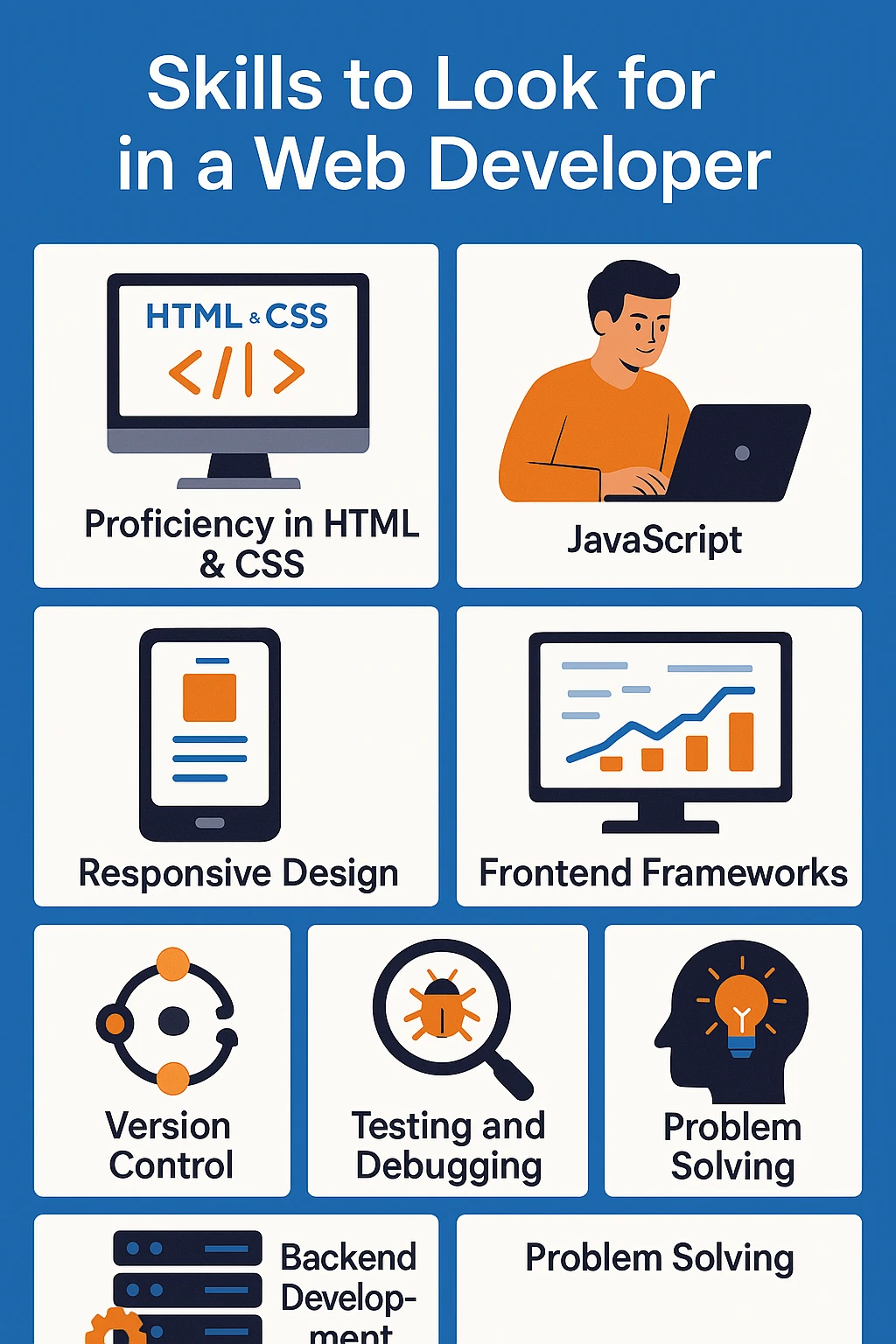
Technical Skills
1 Frontend Developmen
● HTML / CSS: Good knowledge of semantic html and some good with modern CSS(Flexbox, Grid etc.responsive design)
● JavaScript: Foundation level in JavaScript and good with these frameworks:
● React
● Vue
● Angular
● Frontend Build tools(Webpack or Vite aka similar)
32. Back-End Development
● Required languages: Blurg at least one of those backend langs
● Node.js
● Python(Django, Flask)
● PHP(Laravel)
● Rails 2.0
● API Development: Working with building / RESTful or GIF - y APIs.
33. Database Knowledge
● Relational Databases: MySQL, PostgreSQL
● NoSQL Databases: MongoDB, Firebase
4. Version Control
●Git: Git and Git based tools(i.e., GitHub) or GitLab
5.RWD & Cross-Browser compatibility
●This includes websites that are good on all sizes and browsers
3.6.Deployment & Hosting
● Familiarity with platforms like:
● Vercel (front end), Netlify
● Heroku, DigitalOcean, AWS (backend)
● CI/CD pipelines are a plus
Soft Skills
1. Problem-Solving
● Debug, optimize, and augment solutions quickly
2. Communication
● Break down technical data for everyone who does not know stuff to terms.
● Open to advice and hearing.
3. Team Collaboration
● With some of the teamwork experience using tools like Slack/Jira/ Trello /Asana.
4. Time Management
● Activities: Management of tasks/meeting deadlines/prioritizing wisely.
4. What are the main tasks and functions of a web developer?
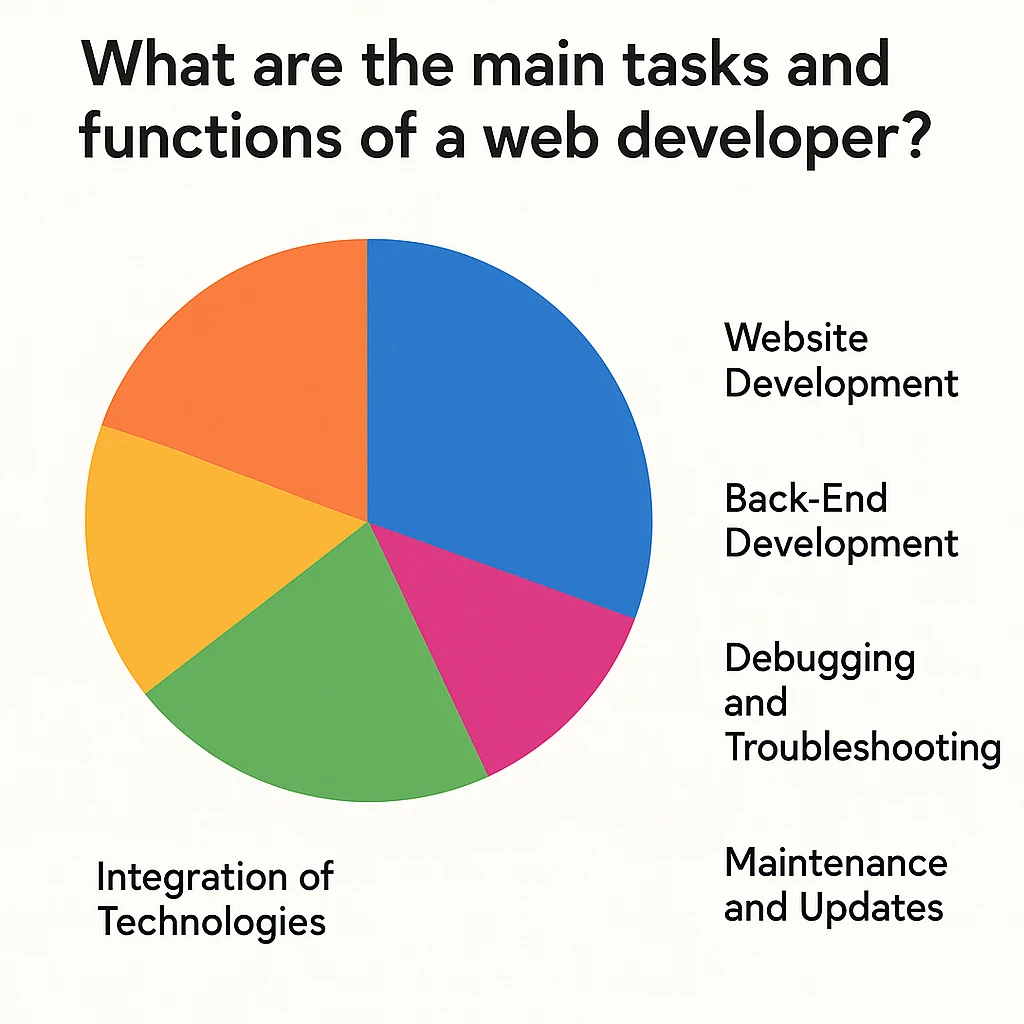
4.1 Website Development
Converting design mockups to functional web pages with HTML, CSS, and JavaScript.Making websites easy to use, nice colors, and responsive on any device
4.2. Back-End Development
Developing server-side logic (databases, API, and so on with PHP, Python, Ruby,
Java
or Node.js)Store data efficiently & securely, retrieve the data. Multi-Language Support: Expands reach to non-English speakers.
4.3. Melding of Technologies
Integrating frontend/backend systems.Integrating third-party services like payment gateways, email services or analysis platforms.
4.4. Troubleshooting and Debugging
Finding bugs and fixing errors in the code.Code validity and performance on multiple browsers, devices.
4.5. Updates and maintenance
Continuous code refinement, proactive security updates, and performance optimization are essential for maintaining a robust and secure web presence. As requirements evolve, the platform should be strategically enhanced with new features to support long-term scalability and functionality.
4.6. Partnership and Planning
Collaborating with designers and project managers to turn vision into working websites for clients.Participating in Agile development sprints and using Git, Jira or Trello
5. Hire an outsourced web developer
1. Define Your Project Scope: Start With a Clear Vision
Before hiring, outline the fundamentals:
● Your project objectives and end goals
● Key features and the technology stack you plan to use
● Estimated timeline and budget
● Required team size (single developer vs. a full team)
2. Choose the Right Engagement Model
Select the engagement type based on your project’s complexity and duration:
● Freelancer – Best for quick tasks or basic website projects
● Dedicated Developer – Ideal for full-time, long-term involvement without geographic limitations
● Web Development Agency – Best for full-scale projects requiring project management, QA, and specialized expertise
3. Explore Reliable Hiring Platforms
Look for talent on reputable platforms:
● Freelance Marketplaces: Upwork, Freelancer, Guru
● Agency Directories: Clutch, GoodFirms, DesignRush
4. Assess Portfolios and Client Feedback
Evaluate the developer or agency by:
● Reviewing their live project links, GitHub repositories, or code samples
● Verifying industry-specific experience (e.g., SaaS, eCommerce)
● Reading testimonials or third-party client reviews
5. Test Technical Proficiency and Communication
Ensure the candidate has the right skill set by:
● Conducting technical interviews or assigning a small paid test project
● Checking for clear communication, English proficiency, and time zone compatibility
● Asking about the tools they use (e.g., Git, Jira, Slack, Figma)
6. Finalize Terms and Sign Contracts
Before starting, align on all terms:
● Decide on a pricing model (hourly, fixed rate, or milestone-based)
● Set clear expectations for timelines, deliverables, and feedback loops
● Sign a contract and NDA to protect your intellectual property and sensitive data
7. Start With a Trial Period
Begin with a short-term engagement to evaluate:
● Work quality
● Communication and collaboration
● Responsiveness and reliability
6. Why you should hire web developers in India
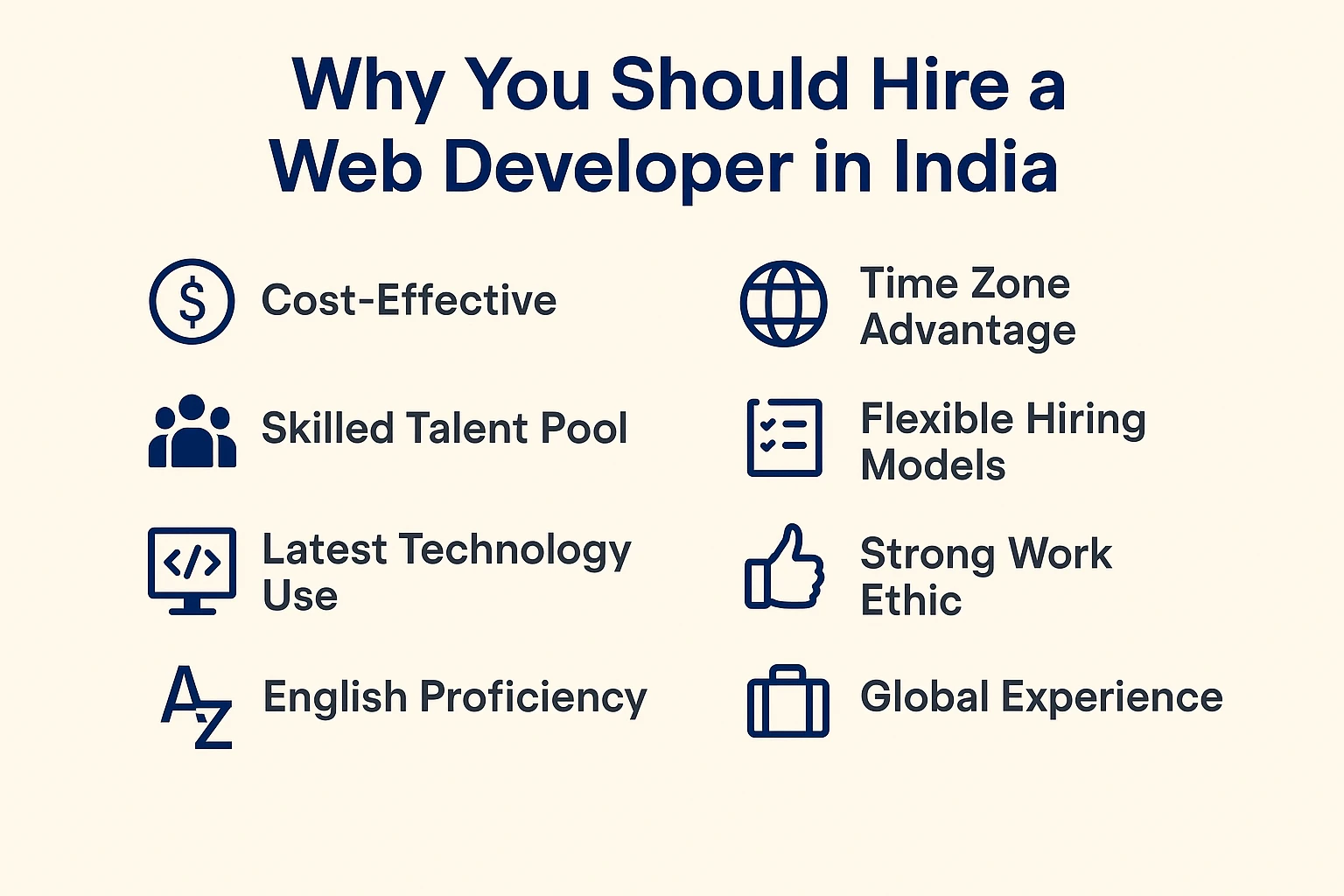
Professional Expertise
Hire a website developer who has great expertise in coding, frameworks, and also best practices.
Custom Solutions
Custom websites or applications are built to align with specific business goals, reinforce brand identity, and provide a personalized experience for your target audience.
Time and Cost Optimization
Investing in skilled web developers proves more economical over time than relying on DIY methods, which can result in costly mistakes, inefficiencies, and accumulated technical debt.
Responsive Design
Optimization will ensure seamless performance across all device types—desktop, laptop, smartphone, and any future gadgets.
Scalability and Growth
Consider hiring a website developer to create scalable sites that can be expanded to incorporate new features and enhance the user experience for your business.
SEO and Optimization of Performance
Best practices such as site speed optimization, search engine optimization, and overall performance enhancement are implemented to ensure online success.
Regular Maintenance and Support
Web developers provide maintenance for updates, bug fixes, security patches, and new functionalities.
Technology Integration
Third-party tools, APIs, and databases so developers can implement the system like payment gateways, chatbots, and analytics.
7. Hire Web Developers: Top Challenges
1. Competition for Skilled Web Developers
Problem: Skilled developers receive numerous job offers, making them a highly sought-after and scarce resource.
Solution:
● Providing competitive pay and benefits (hiring in-house web developers) and remote-friendly jobs are also far more attractive.
● Include in your job post: company culture alerts, growth opportunities (the ones you offer too), and tech stack
● Attract the employer and do all this through blogging, by participating in tech events, or open-source coding
2. Myth—Role/Job Description is not clear
Problem: Not clear or overly broad job postings mislead people into applying.
Solution:
● Do: Write clear, focused job descriptions including what is necessary, the tech stack, and the responsibilities required.
● Indicate if it is frontend, backend, or full-stack jobs you’re hiring for.
3. Skill Mismatch
Problem: Candidates may not have specific technical competencies/work experience
Solution:
● Evaluate technical skills in real-world scenarios through coding assessments based on practical problem-solving tasks.
● Consider developers who consistently update their core skills and demonstrate strong problem-solving abilities.
4. Lengthy Hiring Process
Problem: Prolonged hiring timelines may cause top candidates to accept offers elsewhere.
Solution:
Simplify the recruitment process by limiting interviews to 2–3 rounds. Clearly communicate timelines and next steps to keep candidates engaged.
5. Lack of Cultural and Team Fit
Problem: Even technically skilled developers can disrupt team dynamics or clash with your company culture.
Solution:
Incorporate cultural fit assessments as part of the interview process to ensure alignment with your team’s values and working style.
8.Comparison between Freelancer, Dedicated Developer, and Development Agency
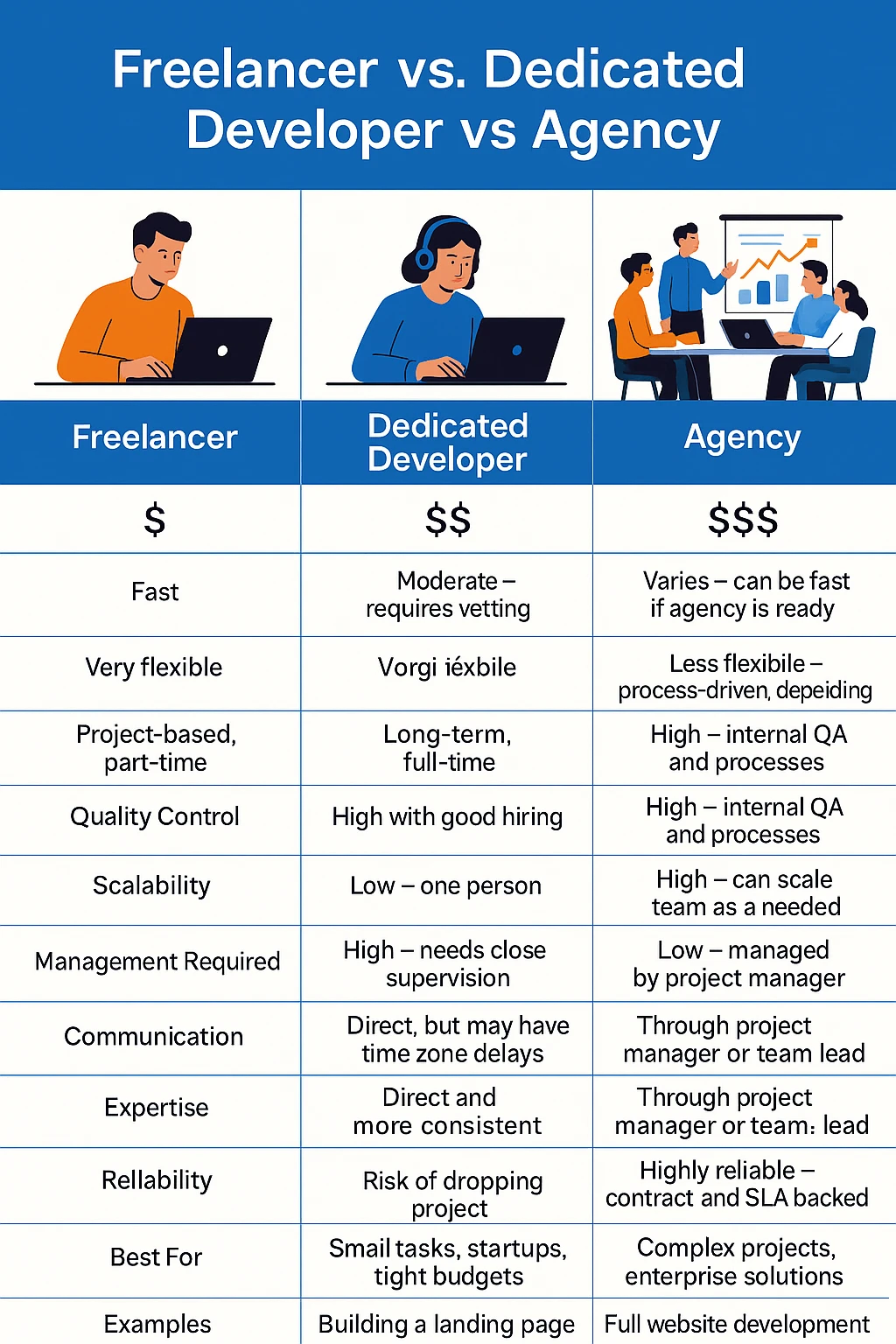
When hiring a web developer, choosing between a freelancer, a dedicated developer, or a development agency depends on your project requirements. Freelancers are ideal for simple or short-term tasks and typically come at a lower cost. Dedicated developers work full-time on your project, offering greater focus and flexibility, making them well-suited for long-term or ongoing needs. Development agencies provide a full team—including developers, designers, testers, and project managers—making them the best choice for complex projects that demand professional management and high-quality results. Each option offers distinct benefits and caters to different business needs and budgets.
9. Legal & IP Safeguards of Web Developers Working for International Firms
Accepting a position with an International Company when hiring web developers — Legal and intellectual property considerations are especially crucial in this context. When joining an international company, it’s vital to understand the complexities of jurisdictional laws, remote work travel regulations, and cross-border agreements. Staying informed about your rights and responsibilities ensures a smooth and secure working relationship. Be sure to thoroughly review these key factors:
1. Employment contract
● Contract must specify your role, responsibilities, compensation, and benefits.
● Take notice that the clause on Governing Law (which country's laws apply)
● Check your status as an employee, contractor or freelance worker
2. IP Ownership of your Work
● Ensure the employment contract includes an IP assignment clause covering all work created during your employment (code, designs, systems, etc.), which will belong to the employer.
● Clarify the ownership of any reusable tools, libraries, or personal projects developed independently before or during your employment.
3. Non-Disclosure Agreements (NDAs) and Confidentiality
● Businesses shouldn't discuss sensitive information, client data, codebases and internal systems in NDAs.
● Check how long your secret life obligations run from, especially post-termination (discharge)
4. Remote Work & Legal Compliance
● Confirm whether you are employed directly or through an Employer of Record (EOR).
● Ensure your employment arrangement complies with local labor laws in your country.
● Understand data privacy regulations, especially if handling user data, such as GDPR requirements.
5. Exit Terms, Non-Compete and Termination
● Be aware of any non-compete clauses or restrictions on free speech that could impact your future work opportunities.
● Make sure the contract clearly outlines the handling of intellectual property rights after employment ends.
6. Payment Terms
● Clarify payment methods (e.g., Wise, Payoneer), currency, and payment schedule (monthly, milestone-based).
● Specify who is responsible for transaction fees and currency conversion costs.
10. Conclusion
Hiring a
web developer in India
is a smart choice for businesses looking for quality, cost-effectiveness, and expertise. To ensure the developer aligns with your project goals, it’s essential to clearly define your requirements, choose the right hiring model, evaluate skills and experience, and establish expectations upfront. With India’s vast talent pool and proven track record in global web development, you can find the right professional who understands your vision and helps bring it to life—on time and within budget.
Meet the Author

Co-Founder, Rytsense Technologies
Karthik is the Co-Founder of Rytsense Technologies, where he leads cutting-edge projects at the intersection of Data Science and Generative AI. With nearly a decade of hands-on experience in data-driven innovation, he has helped businesses unlock value from complex data through advanced analytics, machine learning, and AI-powered solutions. Currently, his focus is on building next-generation Generative AI applications that are reshaping the way enterprises operate and scale. When not architecting AI systems, Karthik explores the evolving future of technology, where creativity meets intelligence.