Key Takeaways
- Intelligent integration helps mobile apps adapt to user behavior in real time.
- AI-powered features enhance personalization, recommendation, and overall app performance.
- Smarter applications minimize operational friction and facilitate automated decision-making.
- Data-driven insights enable companies to determine and address user needs proactively.
- Integration challenges are manageable through strategic planning and phased adoption.
- The future of competitive mobile apps lies in responsible, scalable AI implementation.
What Does Intelligent Integration Mean?
Intelligent integration is the process of embedding artificial intelligence (AI) and machine learning (ML) directly into the core functionality of a mobile application. Rather than treating AI as a separate add-on, it becomes a foundational layer that allows the app to learn, adapt, and respond to users in real time.
By connecting datasets with intelligent algorithms, mobile apps transition from static tools into dynamic assistants that understand context and intent.
How Mobile Apps Become Smarter
The journey from a traditional app to an intelligent one involves moving beyond simple rule-based logic. An intelligent app uses historical and real-time data to improve its performance without needing explicit manual updates for every new scenario.
This is achieved through:
- Continuous learning from user interactions.
- Predictive modeling to anticipate future needs.
- Context-aware processing of environmental data (location, time, device state).
Why Intelligent Integration Is Becoming Essential
Mobile ecosystems are getting competitive. Those apps that cannot be updated may be forgotten. In intelligent systems, apps will not be able to match user expectations, security needs, and data complexity.
Intelligent integration is no longer an optional enhancement but a foundational requirement for modern mobile solutions. It ensures that apps remain relevant in an era where users expect proactive assistance rather than just reactive tools.
Striking a Balance between Technology and Human-Centered Design
Although AI is superior in recognizing patterns and automation, the human brain is still necessary in creativity, ethics, and strategic decision-making.
Effective mobile applications strike a balance between intelligent systems and considerate design, so that automation helps users and not burdens them. AI is not supposed to displace human judgment but help the user reach their goals faster and with less effort.
Major Strengths of AI in Mobile Applications
1. Personalization at Scale
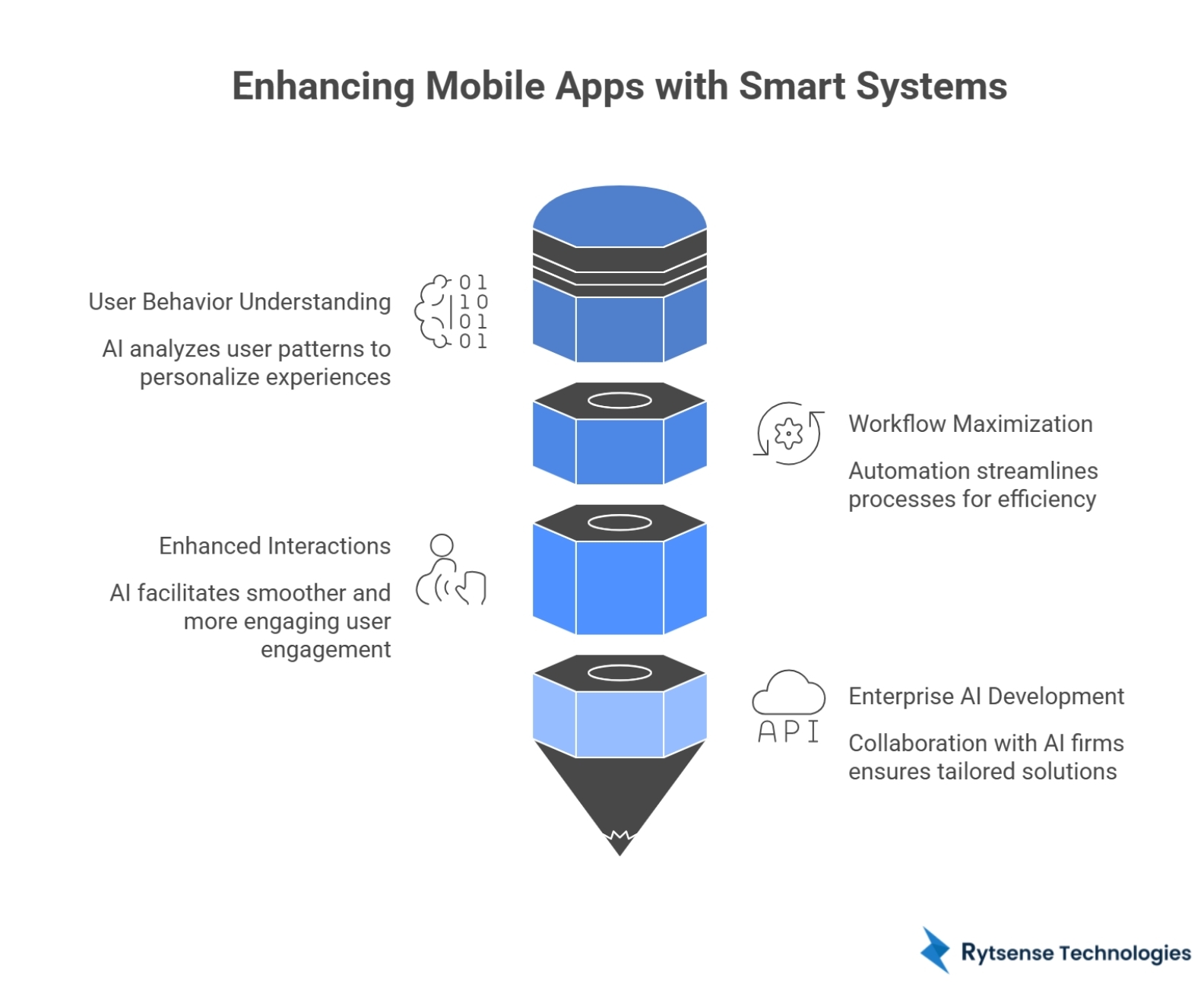
AI analyzes user behavior to deliver highly tailored experiences, from content recommendations to interface adjustments that match individual preferences.
2. Automated Efficiency
By handling repetitive tasks like data entry, scheduling, and basic customer queries, AI frees up users to focus on higher-value activities.
3. Predictive Insights
Apps can now predict what a user might need next—whether it's a product suggestion, a route update, or a proactive notification based on past habits.
Building Trust Through Responsible AI and Data Transparency
Intelligent integration must be implemented responsibly. Careful adoption of AI fosters confidence and sustained reliability among users.
This includes:
- Keeping user information and privacy safe through encryption and local processing.
- Making AI-based decisions transparent so users understand why a specific recommendation was made.
- Prohibiting biased or misleading outputs through rigorous testing.
- Adherence to industry and regional requirements (GDPR, CCPA, etc.).
Industry-Specific Intelligent Mobile App Integration Results
These examples show how intelligent integration translates into practical results across various sectors.
| Industry | Intelligent Feature | Outcome |
|---|---|---|
| Retail | Personalized product suggestions | Increased conversion rates |
| Healthcare | Predictive appointment reminders | Reduced no-shows |
| Finance | Fraud detection alerts | Improved security |
| Education | Adaptive learning paths | Better learning outcomes |
How Different Businesses Can Apply Intelligent Integration
1. Startups
Begin with dedicated AI capabilities that address a single fundamental issue. Focus on lean implementation and avoid over-integration in early stages.
2. SMBs
Employ scalable modular AI integrations with data availability and growth. Prioritize efficiency gains in customer service or internal operations.
3. Enterprises
Install end-to-end AI ecosystems, governance, and cross-platform integration to unify data and intelligence across the entire organization.
Challenges and Limitations to Consider
Despite its benefits, intelligent integration comes with challenges that must be managed through careful planning, testing, and gradual implementation:
- Data Quality: Ensuring the availability of clean, relevant data for training and inference.
- Infrastructure Complexity: Integrating AI models with legacy third-party systems.
- Skill Gaps: The need for specialized AI and analytics expertise within development teams.
- Maintenance: Ongoing model fine-tuning and maintenance to prevent performance drift.
The Future of Intelligent Mobile Apps
The future of the mobile app is in more contextual awareness, on-device smarts, and ethical AI systems.
Future improvements in edge computing, multimodal AI, and real-time analytics will also improve the way apps learn to understand and provide value to users and lessen reliance on centralized systems. This shift will lead to faster, more private, and more incredibly responsive user experiences.
Conclusion
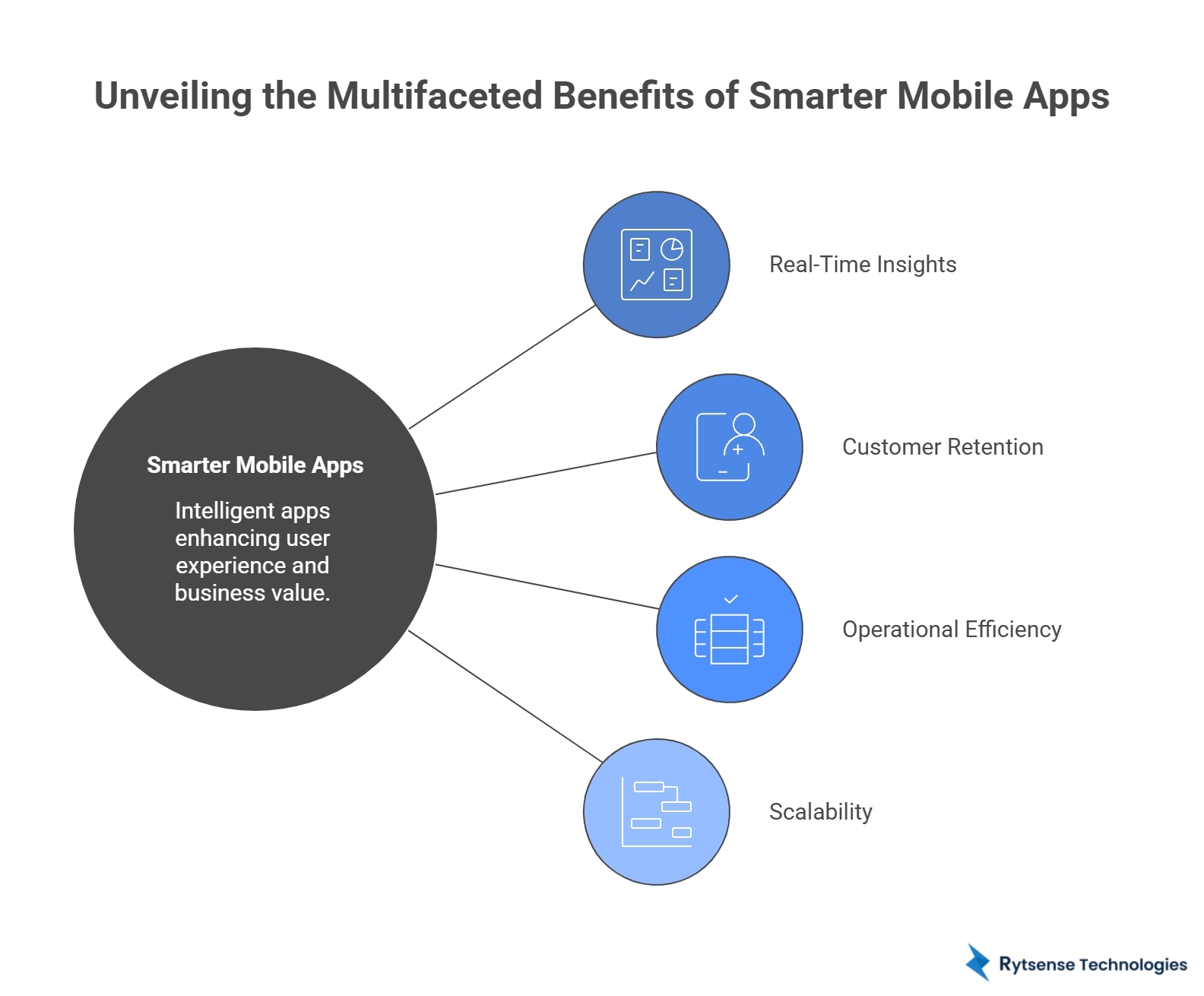
Creating through intelligent integration is about building systems that learn, adapt, and improve continuously. When applied strategically, AI-driven features can improve user experience, performance, and business results without introducing needless complexity.
Organizations that consider intelligent mobile solutions usually enjoy structured integration strategies related to industry experience. Rytsense Technologies continues to highlight how responsible and practical AI integration can support long-term digital growth while keeping users at the center of innovation.
Meet the Author

Co-Founder, Rytsense Technologies
Karthik is the Co-Founder of Rytsense Technologies, where he leads cutting-edge projects at the intersection of Data Science and Generative AI. With nearly a decade of hands-on experience in data-driven innovation, he has helped businesses unlock value from complex data through advanced analytics, machine learning, and AI-powered solutions. Currently, his focus is on building next-generation Generative AI applications that are reshaping the way enterprises operate and scale. When not architecting AI systems, Karthik explores the evolving future of technology, where creativity meets intelligence.