Key Takeaways
Voice systems have moved from simple call routing to real task completion
Better speech recognition and language understanding made the voice more reliable
Modern voice agents can connect with business systems through APIs and triggers
Voice-first workflows are growing in support, field work, and internal operations
The next wave is multimodal voice, where speech, text, and UI work together
From Call Handling to Task Execution: The Evolution of Voice Systems
Voice systems used to have one job: pick up calls and direct people to the right place. Over time, businesses added menus, prompts, and basic automation, but most voice tools still worked like a phone directory. Today, voice is doing more than guiding callers. It can help complete tasks, update systems, and move work forward in real time. Rytsense Technologies works with businesses building AI-driven workflows, including voice systems that can support daily operations instead of only handling calls.
This change is happening because speech recognition has improved, language understanding has gotten stronger, and modern AI models can hold context better. In many cases, teams also bring in generative AI consulting services to map voice requests to real business actions, so the system can do more than just respond. As a result, voice tools are no longer limited to answering questions. They are starting to act like digital workers who can take action.
How Did Voice Systems Start in Business?
For many years, business voice automation meant IVR. Customers called, listened to menu options, pressed buttons, and waited to reach the right department. Later, businesses added early voice bots that could recognize a few phrases, but these tools were limited.
Early voice systems mostly focused on:
- Routing calls to the right team
- Providing basic recorded information
- Collecting simple details like account numbers
- Reducing call load for common questions
They helped, but they rarely solved the bigger problem. The customer still had to wait, and employees still had to handle the actual work.
What Changed So Voice Could Move Beyond Call Handling?
Three technical improvements changed what voice could do at scale.
1. Better speech recognition in real conditions
Voice systems became better at handling different accents, speaking styles, and background noise. This made voice more usable in real business environments, not just quiet test settings.
2. Stronger natural language understanding
Instead of matching keywords only, systems improved at figuring out intent. That made it easier to handle natural speech without forcing users to repeat exact phrases.
3. Faster real-time processing
Modern systems can process speech quickly enough to respond naturally, which makes conversations feel smoother and reduces user frustration.
Together, these improvements helped voice technology become reliable enough for enterprise use.
What Is the Difference Between a Voice Bot and a Voice Agent?
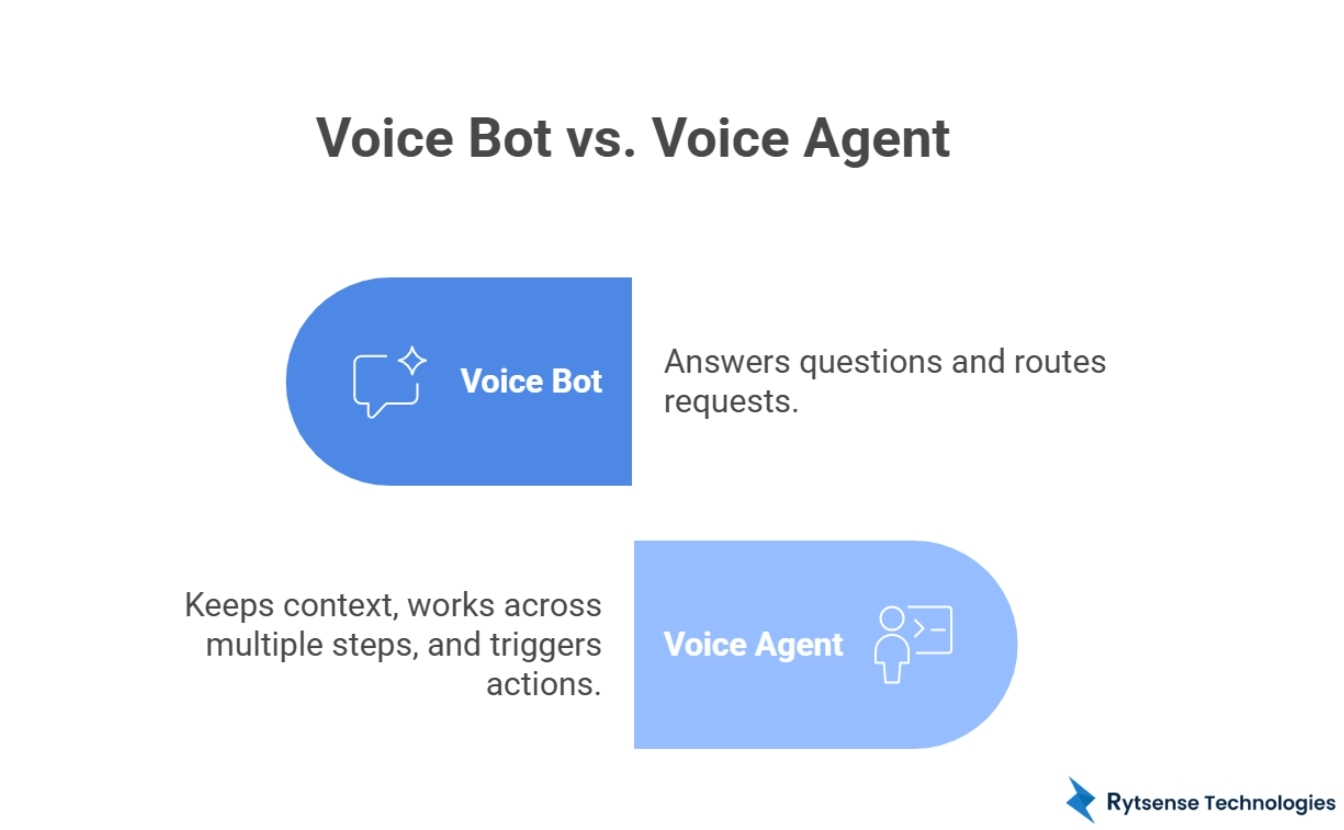
A basic voice bot answers questions and routes requests. A voice agent goes further. It can keep context, work across multiple steps, and trigger actions in connected systems.
Here is a simple way to see the shift:
- Voice bots respond to questions
- Voice agents complete tasks
That task capability depends on integration. Once a voice system can connect to scheduling tools, databases, ticketing platforms, or CRMs, it can do real work instead of stopping at conversation.
How Do Voice Systems Execute Tasks Inside Business Workflows?
Modern voice systems can act on requests when they are connected to business tools through APIs and automation triggers. This is where voice becomes part of operations, not just support.
Examples of tasks voice agents can handle include:
- Booking appointments and confirming time slots
- Creating or updating support tickets
- Pulling order status or account details
- Updating CRM records after a call
- Triggering backend processes like approvals or follow-ups
- Supporting employees who need fast answers while moving
Many teams now rely on generative AI consulting services to create voice workflows that align with actual business operations. The goal is to reduce steps, reduce wait time, and reduce handoffs between systems.
Voice Agents vs Traditional IVR
Voice technology has changed so much that older call systems and modern voice agents now behave very differently.
| Area | Traditional IVR | Modern Voice Agents |
|---|---|---|
| Interaction style | Menu-based options | Natural conversation |
| Flexibility | Fixed paths | Adapts to user intent |
| Context handling | Very limited | Can track multi-step requests |
| Task completion | Rare | Common through integrations |
| Business value | Reduces call load | Reduces workload and speeds tasks |
IVR helped direct calls. Voice agents help complete the reason for the call.
Why Are Voice-First and Multimodal Interfaces Growing?
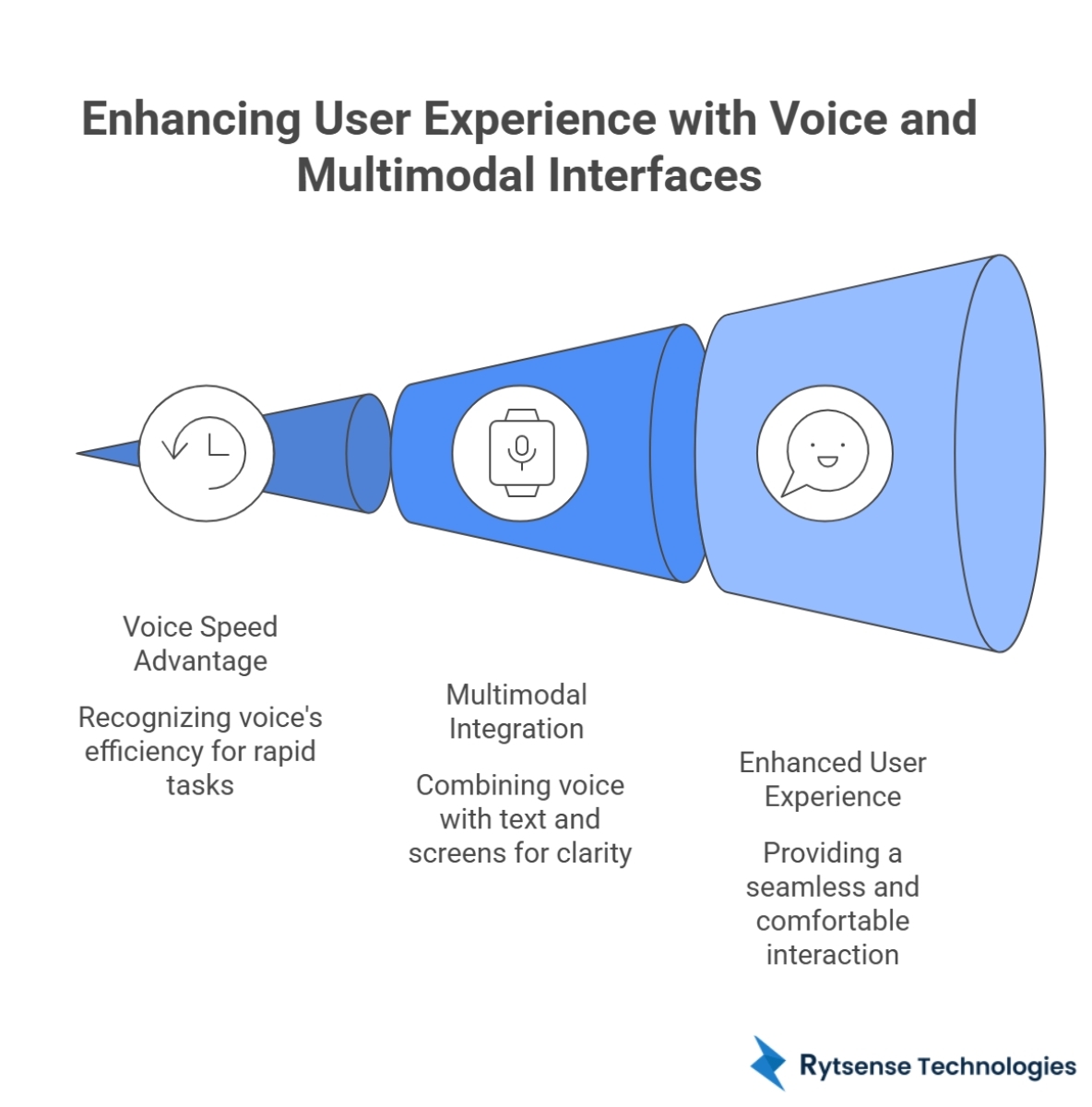
More businesses are starting to treat voice as the first option, not the backup. The reason is simple: for quick actions, speaking is often faster than typing, especially when people are busy or doing repeat tasks.
At the same time, voice works best when it is not forced to do everything on its own. That is why many teams pair voice with text and screens. It makes the experience clearer when users need to confirm details, check information, or choose from options.
Examples include:
- Voice plus a screen for confirmations
- Voice plus text for summaries and records
- Voice plus UI buttons for quick choices
This is where custom generative AI development services are used to build voice systems that work smoothly with screens and text, so users can speak when it is fastest and tap or read when it is more comfortable.
What Business Areas Are Seeing the Biggest Impact?
Voice systems are spreading because they can improve speed and reduce manual work in multiple areas at once.
Common areas include:
- Customer support and call centers
- Field services and on-site teams
- Internal IT and HR help desks
- Scheduling and service coordination
- Operations teams managing routine updates
When voice reduces repeat tasks, employees spend less time on basic requests and more time on work that needs judgment. Customers also benefit because they get faster answers and fewer handoffs.
Why Are Businesses Treating Voice as Core Infrastructure Now?
Businesses are investing in voice because it helps with:
- Faster service, with fewer steps and fewer delays
- Better workforce efficiency, by reducing repeat work
- Higher customer satisfaction, through quicker resolution
- Operational scalability, especially during peak demand
Voice is becoming part of a long-term automation stack, not a short-term experiment. The more it connects to systems and workflows, the more useful it becomes.
Conclusion
Voice systems have grown from simple call routing tools into action-based assistants that can complete tasks across business systems. Improvements in speech recognition, language understanding, and real-time AI processing have made voice reliable enough for enterprise use. As voice agents connect with APIs and automation tools, they can book services, update records, trigger workflows, and support employees in motion.
This shift is also pushing businesses toward voice-first and multimodal experiences that blend voice, text, and UI. Organizations working with Rytsense Technologies are increasingly viewing voice as a strategic layer in their automation stack because it improves speed, efficiency, and scalability across daily operations.
Meet the Author

Co-Founder, Rytsense Technologies
Karthik is the Co-Founder of Rytsense Technologies, where he leads cutting-edge projects at the intersection of Data Science and Generative AI. With nearly a decade of hands-on experience in data-driven innovation, he has helped businesses unlock value from complex data through advanced analytics, machine learning, and AI-powered solutions. Currently, his focus is on building next-generation Generative AI applications that are reshaping the way enterprises operate and scale. When not architecting AI systems, Karthik explores the evolving future of technology, where creativity meets intelligence.