Key Takeaways
Mobile apps are shifting from fixed experiences to adaptive ones that adjust over time
Behavioral data helps apps improve onboarding, content flow, and feature timing
On-device AI and real-time analytics support personalization without slowing performance
Privacy, consent, and ethical data use must be built in from the start
Behavior-aware apps often see stronger engagement, retention, and conversions
Building Mobile Apps That Learn From User Behavior
Most mobile apps still work the same way for everyone. You download the app, see the same screens as other users, and follow the same flow no matter how you actually use it. But user expectations have changed. People now expect apps to feel personal, fast, and relevant from the first few minutes. Rytsense Technologies works with teams building modern AI-enabled products, including mobile experiences that can improve over time by learning from user behavior.
This shift is happening because analytics is faster, personalization models are more accessible, and on-device AI can run without sending everything to the cloud. Instead of treating an app as a static product, more companies treat it like a system that gets smarter based on real usage.
What Does It Mean for an App to "Learn" From Behavior?
A learning-driven app does not "watch" users in a creepy way. It looks at patterns that already exist in app usage and uses them to improve the experience.
Examples of behavior signals include:
- Which screens users visit the most
- Where they drop off during onboarding
- Which features they use repeatedly
- How often they return, and at what times
- What content they ignore or engage with
When apps use these signals responsibly, they can adjust flows and suggestions to match how different users actually behave.
Why Are Adaptive Apps Becoming the New Standard?
The primary reason is simple: the mobile market is crowded. If users do not receive value quickly, they will uninstall the app. Apps that adapt to user behavior can minimize friction and enhance usability.
Adaptive apps often provide benefits by:
- Guiding users to "aha moments" more quickly
- Reducing unnecessary steps for returning users
- Highlighting features based on user intent instead of making guesses
- Assisting users in finding what they need without the need for searching
This is why many product teams now consider personalization a fundamental aspect of product infrastructure rather than just a "nice extra."
How Do Apps Collect and Use Behavioral Data Responsibly?
Behavior data does not have to include personal identity. Many learning-driven features work with anonymized signals and aggregated trends. The key is being clear with users and giving them control.
Good behavior-aware apps usually do the following:
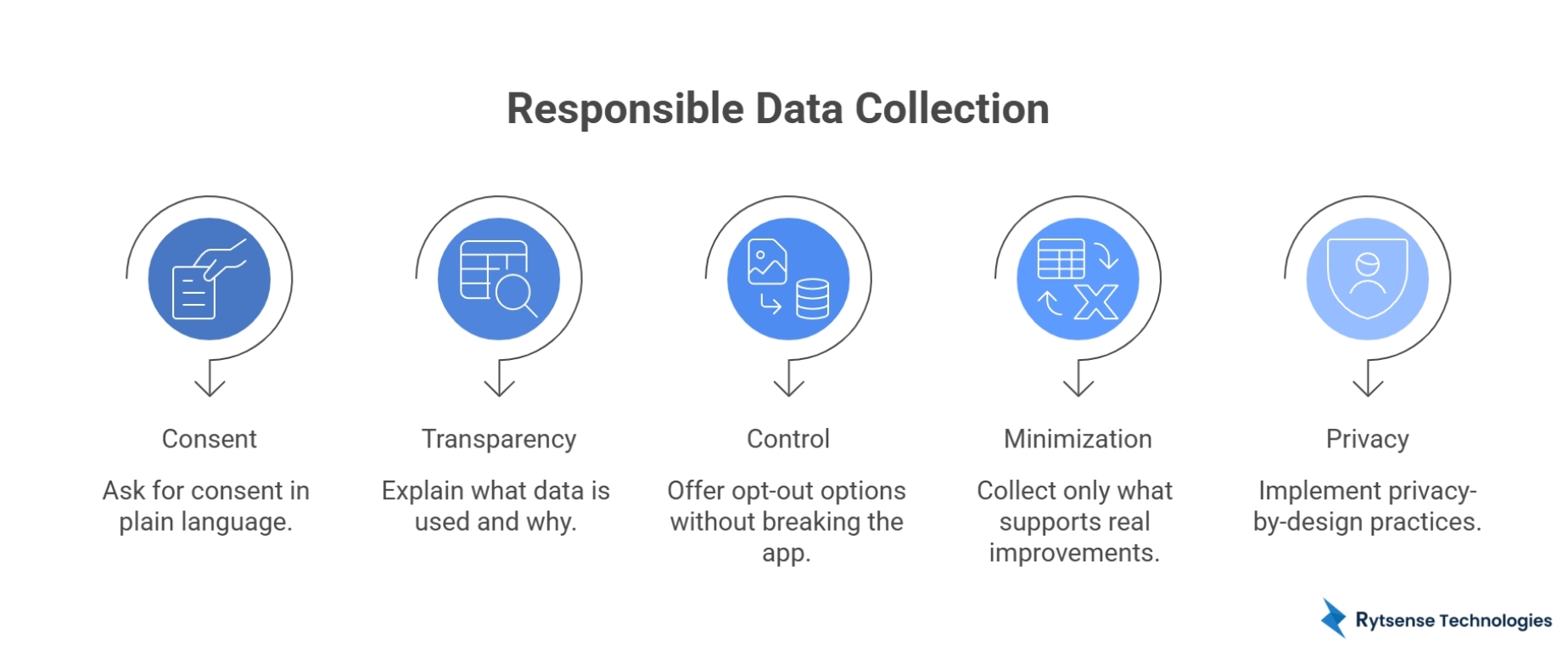
- Ask for consent in plain language
- Explain what data is used and why
- Offer opt-out options without breaking the app
- Collect only what supports real improvements
Apps also need strong privacy-by-design practices, such as data minimization, secure storage, and clear retention timelines.
What Features Can Learning-Driven Apps Improve?
Once an app can detect patterns, it can adjust how it guides users and what it shows them. Below are common strategies teams use.
1. Adaptive onboarding
Not every user needs the same tutorial. Some want a quick setup. Others need guidance. Adaptive onboarding changes based on what the user does.
2. Personalized content flows
Apps can reorder content, highlight categories, or change recommendations based on what a user engages with.
3. Dynamic UI adjustments
Apps can surface shortcuts, rearrange menus, or simplify screens based on repeated actions.
4. Predictive features
Apps can predict a user's next actions, such as suggesting a refill order, displaying a saved route, or preparing a frequently used form.
5. Context-aware recommendations
Applications can customize recommendations based on time, location, device status, and user behavior.
During this process, teams often utilize AI integration consulting services to connect analytics, personalization models, and mobile front ends, enabling features to react in real time without compromising performance.
On-Device AI vs Cloud AI: What's the Difference?
Not every learning feature needs cloud processing. Many apps now use on-device AI for speed and privacy. Cloud-based models still matter for heavy computation and cross-user insights.
| Need | On-Device AI | Cloud AI |
|---|---|---|
| Speed | Very fast | Depends on network |
| Privacy | Stronger control | Needs secure handling |
| Personalization | Local, user-specific | Broader model training |
| Cost | Lower per action | Higher at scale |
| Use case | Real-time suggestions | Complex predictions |
A balanced setup often uses both, depending on the feature and the privacy requirements.
What About Ethics, Consent, and User Trust?
Learning from behavior only works long-term if users trust the product. That means being careful with how data is collected and how decisions are made.
Key safeguards include:
- Avoiding sensitive data unless truly needed
- Not using dark patterns to push behavior
- Offering clear controls and preference settings
- Testing for bias in recommendations and predictions
- Keeping personalization helpful, not intrusive
This is where product teams must treat ethics as a design requirement, not a legal checkbox.
How Do Businesses Measure the Value of Behavior-Aware Apps?
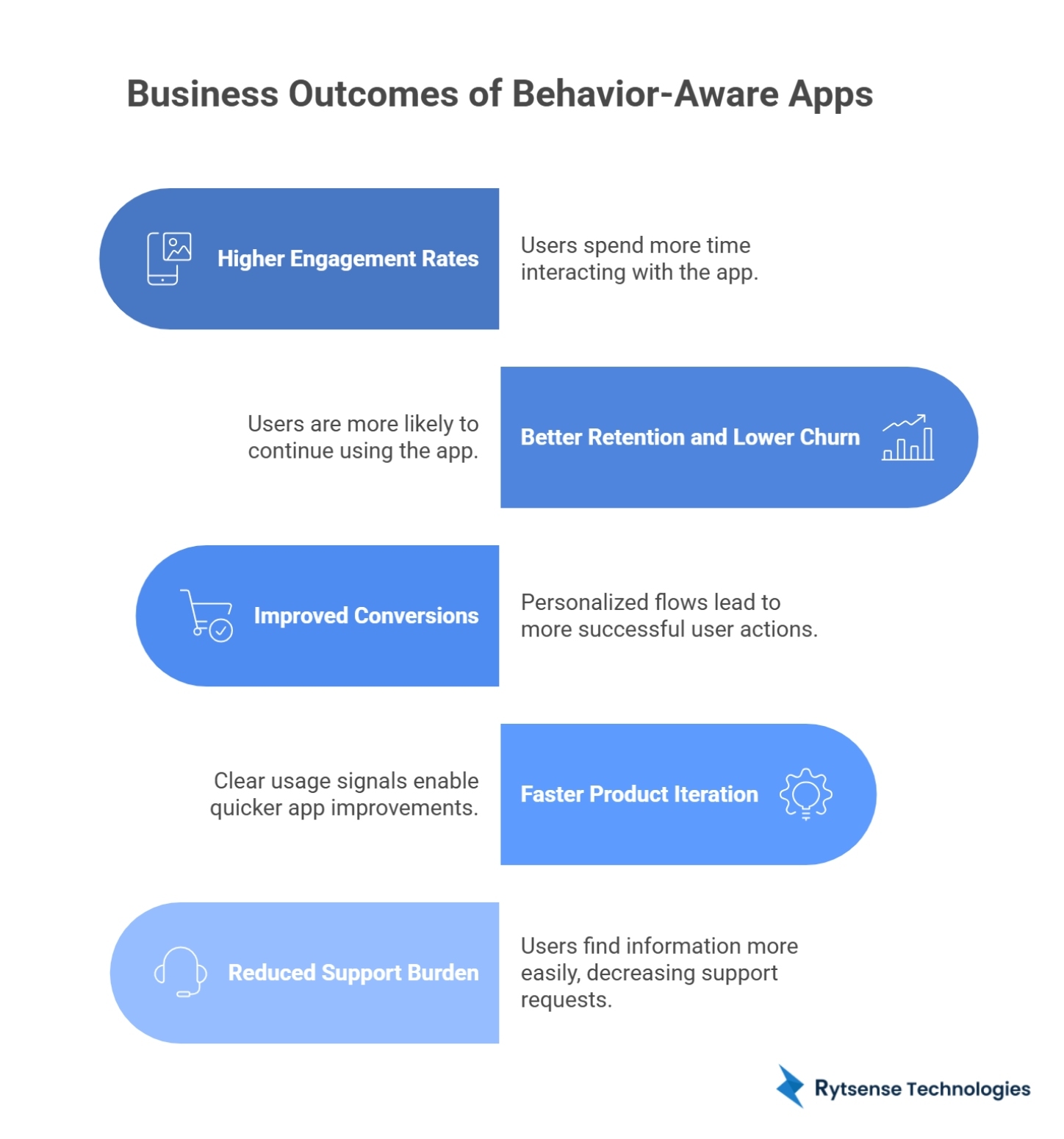
Behavior-aware apps often show improvements that are easy to track. When experiences feel more relevant, users stick around longer and complete more actions.
Common business outcomes include:
- Higher engagement rates
- Better retention and lower churn
- Improved conversions from personalized flows
- Faster product iteration due to clearer usage signals
- Reduced support burden because users find what they need faster
Many teams also explore agentic AI development services when they want apps to go beyond personalization and start taking guided actions, like automatically preparing tasks, drafting responses, or assisting users through multi-step workflows.
Conclusion
Mobile apps are no longer judged only by how many features they offer. Users judge them by how quickly they feel useful and how well they fit into daily routines. Apps that learn from user behavior can improve onboarding, personalize experiences, adjust interfaces, and offer smarter recommendations while also supporting measurable results like stronger engagement, retention, and conversions.
The key is doing it responsibly through clear consent, privacy-by-design, and performance-aware implementation. Organizations working with Rytsense Technologies are increasingly building behavior-aware mobile products because adaptive experiences are becoming a real competitive necessity in a mobile-first market.
Meet the Author

Co-Founder, Rytsense Technologies
Karthik is the Co-Founder of Rytsense Technologies, where he leads cutting-edge projects at the intersection of Data Science and Generative AI. With nearly a decade of hands-on experience in data-driven innovation, he has helped businesses unlock value from complex data through advanced analytics, machine learning, and AI-powered solutions. Currently, his focus is on building next-generation Generative AI applications that are reshaping the way enterprises operate and scale. When not architecting AI systems, Karthik explores the evolving future of technology, where creativity meets intelligence.