How Artificial Intelligence Is Driving Smarter Business Decisions
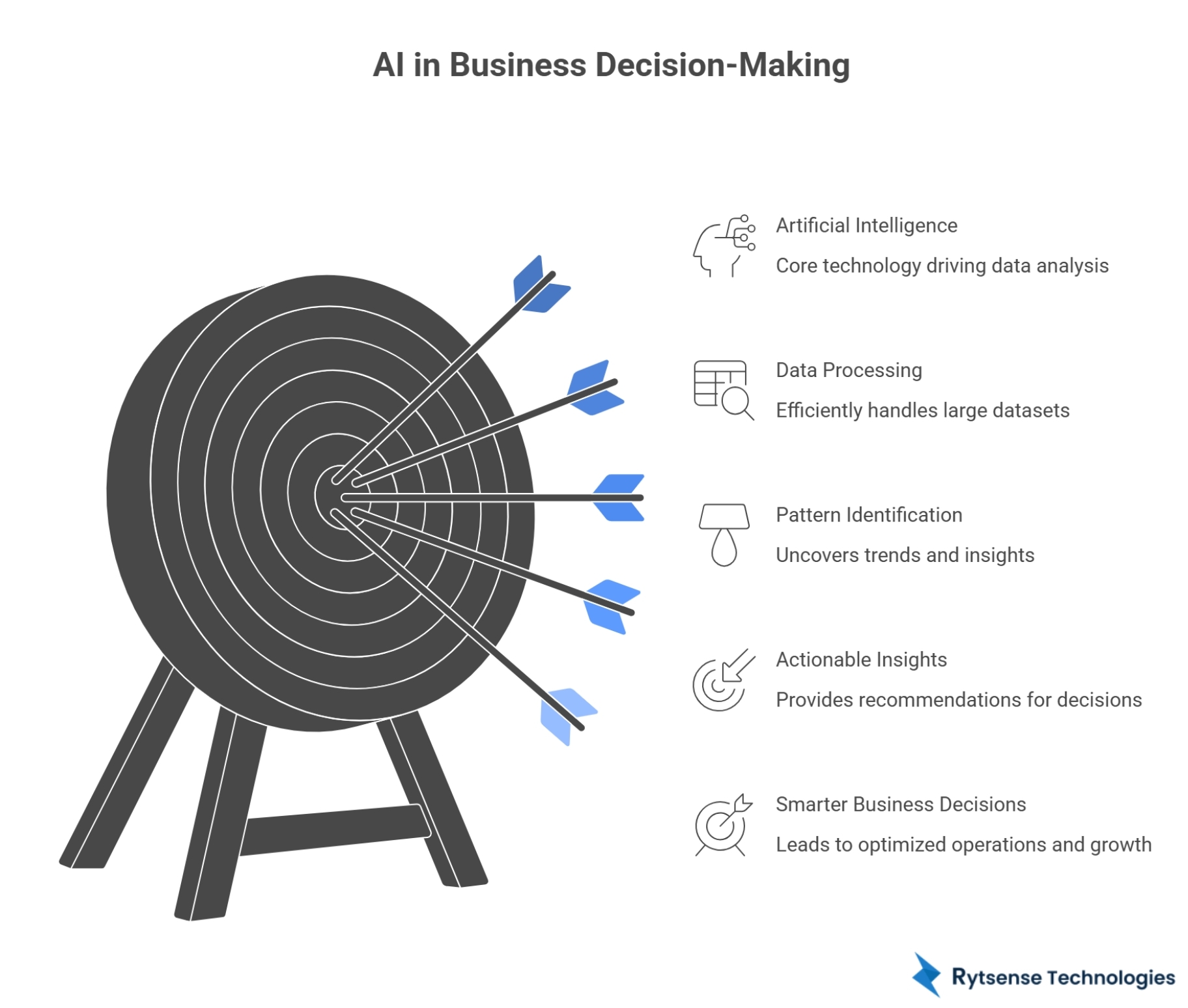
As companies produce huge volumes of data in a single day, the challenge of making it all make sense has become a pressing issue. To remain competitive and make sound decisions, organizations require smart tools capable of processing the growing amount of data in a short period, identifying patterns, and producing actionable insights. Processing this data manually may be time-consuming and may frequently result in the loss of opportunities.
Artificial intelligence is where this comes in. Using AI, companies are able to process vast amounts of data in a short time, identify correct trends, and make confident decisions.
Rytsense Technologies has been helping organizations implement custom AI agent development solutions that process operations, enhance insights, and support strategic decision-making.
Artificial intelligence can analyze past and future patterns, identify future occurrences, and make practical suggestions. AI enables companies to work smarter, minimize errors, and keep up with the fast-paced environment to optimize marketing campaigns, enhance the workflow, and the list goes on.
Understanding about AI-Driven Decision-Making
Artificial intelligence is not just a buzzword. A system that learns and gets better with time is a collection of technologies, among which are machine learning, natural language processing, and predictive analytics. Compared to conventional software that merely processes pre-programmed instructions, AI is able to adapt, identify patterns and to make recommendations using up-to-date data.
As an example, AI can be used in marketing showing the analysis of the behavior of customers and proposing specific campaigns. It may be used in the field of finance to identify any anomaly in transactions to prevent fraud. AI can be used by the operations teams to forecast maintenance requirements, saving on downtimes and expenses.
AI chatbots are useful in customer support departments where they can provide real-time answers to queries and can provide instant support to customers at the expense of the human agent who could handle more complicated tasks.
The applications show how AI transforms raw data into actionable intelligence, which helps businesses make informed decisions at a faster rate.
Important AI Decision Systems Elements
Three primary categories of data, algorithms and actionable insights are the main elements in the heart of AI decision-making.
Data Collection
AI systems require both structured and unstructured data that can be collected in various ways including sales history, customer interactions, social media and operational measurement.
Pattern Recognition and Analysis
Machine learning algorithms identify trends, correlations and anomalies that a human could easily overlook.
Actionable Recommendations
The insights produced by AI are given in a structured way that can be comprehended and implemented by the decision-makers in either form of dashboards, alerts, or predictive reports.
Companies that invest in AI are developing a feedback mechanism in which decisions are constantly updated with information and progressively being improved and strategic planning becoming more reliable.
The Way AI is Changing the Daily Businesses Operations
AI is already altering the way of operation of different functions of businesses:
- Marketing: Custom recommendations, segmentation, and optimization of the campaign.
- Operation: Predictive maintenance, automated workflow, and optimization of supply chain.
- Finance: Risk evaluation, fraud control and investment analysis.
- Customer Experience: Chatbots, sentiment analysis, and real-time support, which are AI-driven.
Companies that implement AI to achieve these goals enjoy quicker insights, low prices, and customer satisfaction. This shows that AI is not a fantasy product but rather an effective solution to any business that wants to remain competitive.
The Benefits of Custom AI Solutions in Improving Business Intelligence
The off-the-shelf solutions are not fully suitable to the operations of many companies. Developed AI solutions may be customized to meet unique business needs, and they fit into the existing workflows perfectly. Offers and services such as development of custom AI agents enable organizations to create AI systems which learn based on their own datasets and provide more relevant, actionable recommendations.
Additionally, Custom Generative AI Solutions enable businesses to generate realistic data simulations, automate content creation, and even design new strategies using AI-generated insights. Such methods can assist businesses to have a competitive advantage through the application of AI in a manner that cannot be delivered by conventional tools.
AI is a useful strategic tool because it enables the business to have highly efficient decision-making that is also aligned with the business objectives by applying specific AI systems.
Advantages and Challenges of Artificial Intelligence in Business Decisions
Benefits:
- Speed: AI can process a lot of data within minutes, accelerating the work of decisions.
- Precision: The presence of machine learning algorithms decreases the error of human beings because the algorithm finds patterns that are constant.
- Scalability: AI solutions are increased with the business and are then able to work with bigger datasets and complex processes.
- Cost Efficiency: automation eliminates man-hours of labor and makes work smoother.
Challenges:
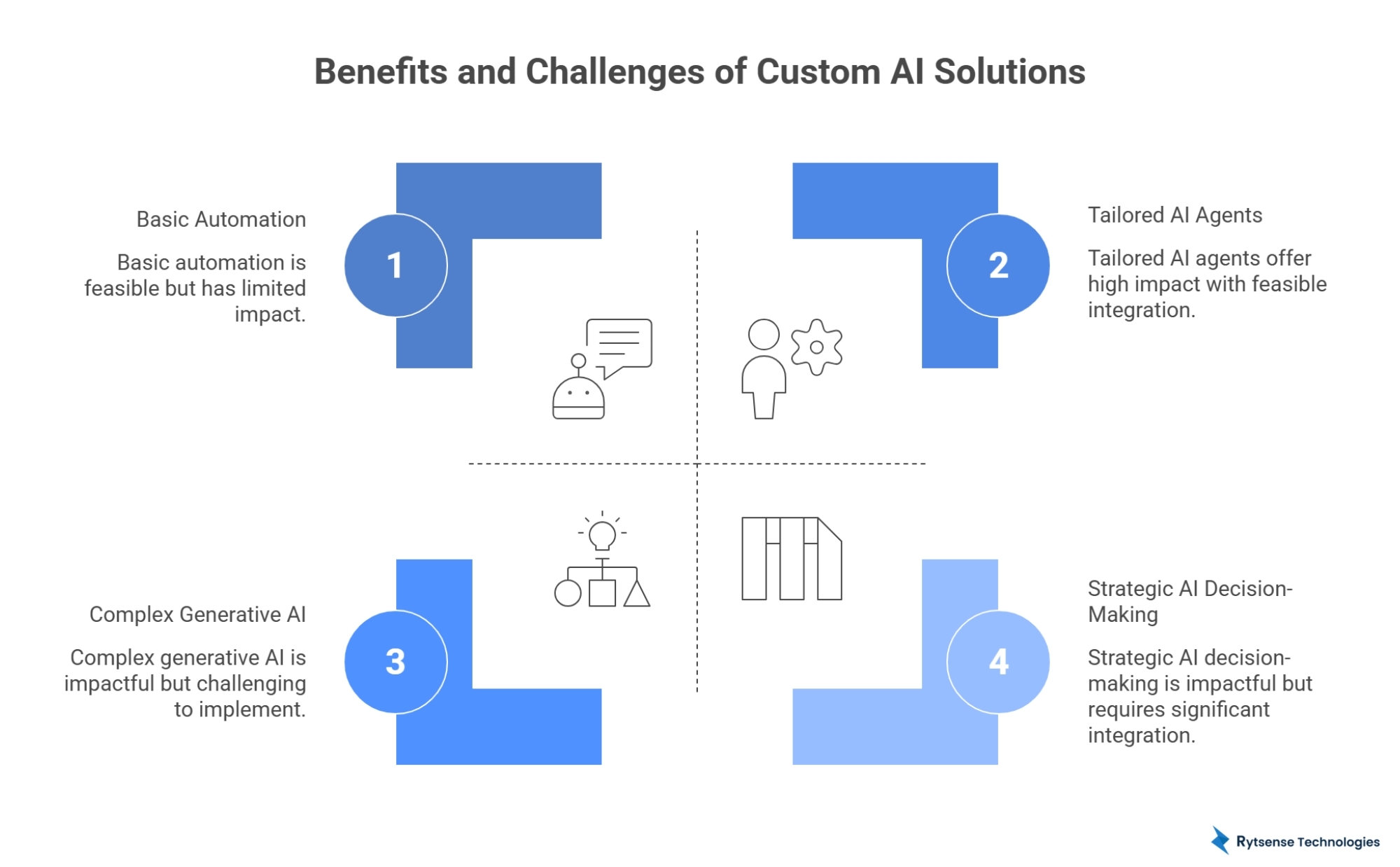
- Data Quality: Ineffective or partial data can lead to inaccurate recommendations.
- Integration: AI integration may be required to make technical adjustments to the existing system.
- Ethical Concerns: AI decisions should be regulated so that they become fair and compliant with the law.
The solutions to these problems need to be planned, controlled on a regular basis, and collaborate with AI experts and business executives.
Future Trends in AI Decision-Making
The future of AI in the business is bright. The trends that should be observed include:
- Artificial Intelligence-based Predictive Analytics: Systems will become predictive of market changes, consumer trends, and operational bottlenecks.
- Explainable AI: Companies will require greater disclosure to learn how AI comes up with suggestions.
- Real-Time Decision Support: AI will no longer be based on the analysis, but on-the-fly insights, delivering real-time recommendations in dynamic conditions.
- IoT and Edge Computing Integration: AI will be used together with connected devices to enable smarter, location-based, and automated decisions.
These technologies will ensure that the companies that embrace the emerging technologies early are in a good position to react to the prevailing market conditions and opportunities.
Conclusion
AI is changing the decision-making process of businesses and transforming raw data into actionable knowledge in marketing, operations, finance, and customer experience. The implementation of specialized AI solutions that are intended to be used in a particular business purpose and workflow, the organization can make sure that the process of making decisions will be smarter, faster, and more accurate.
Rytsense Technologies helps businesses implement AI in ways that align with their goals and operational needs, enabling a simple, results-oriented method to digital transformation.
Meet the Author

Co-Founder, Rytsense Technologies
Karthik is the Co-Founder of Rytsense Technologies, where he leads cutting-edge projects at the intersection of Data Science and Generative AI. With nearly a decade of hands-on experience in data-driven innovation, he has helped businesses unlock value from complex data through advanced analytics, machine learning, and AI-powered solutions. Currently, his focus is on building next-generation Generative AI applications that are reshaping the way enterprises operate and scale. When not architecting AI systems, Karthik explores the evolving future of technology, where creativity meets intelligence.